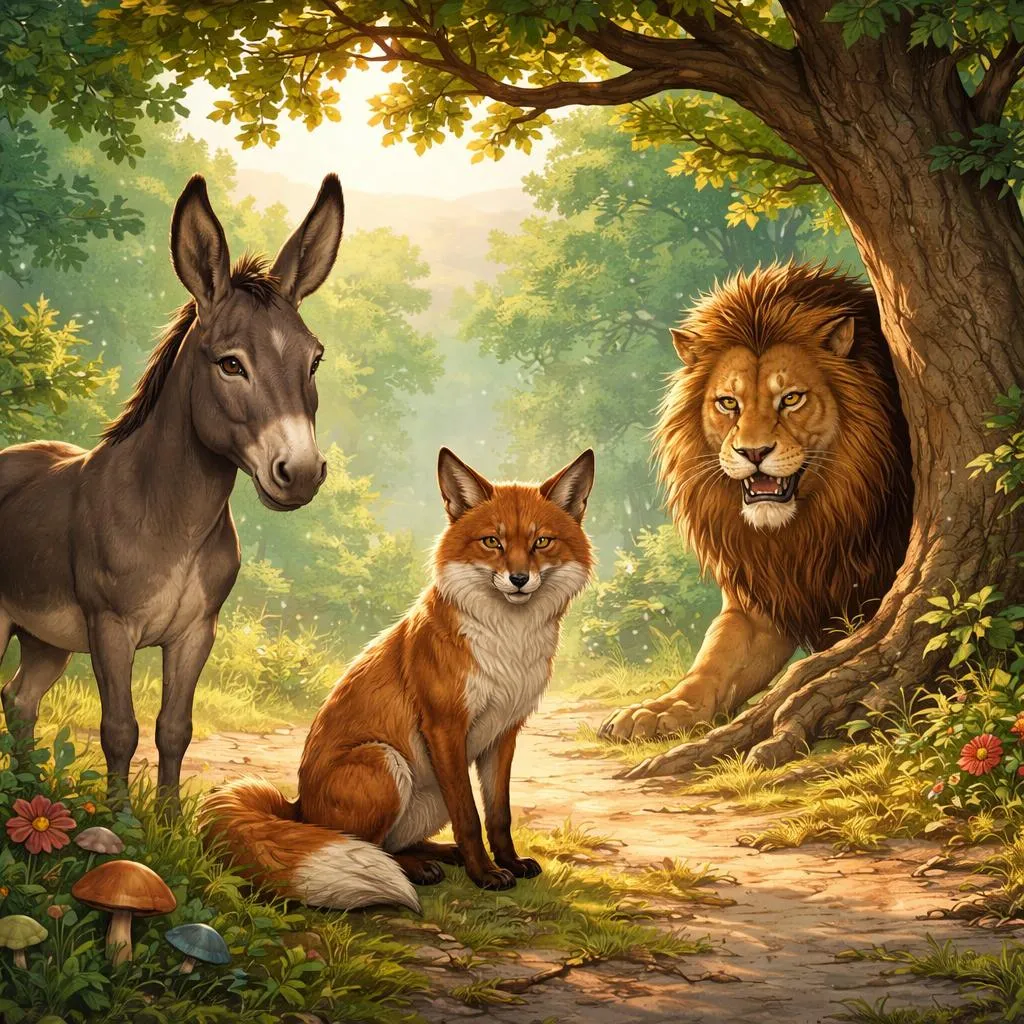

THE DONKEY and the Fox, having entered into partnership together for their mutual protection, went out into the forest to hunt. They had not proceeded far when they met a Lion. The Fox, seeing imminent danger, approached the Lion and promised to contrive for him the capture of the Donkey if the Lion would pledge his word not to harm the Fox. Then, upon assuring the Donkey that he would not be injured, the Fox led him to a deep pit and arranged that he should fall into it. The Lion, seeing that the Donkey was secured, immediately clutched the Fox, and attacked the Donkey at his leisure.
Background and Author Introduction
This story is a classic fable, a type of short tale that uses animals with human traits to teach moral lessons. Fables have been told for thousands of years across many cultures, often attributed to Aesop, a storyteller believed to have lived in ancient Greece around the 6th century BCE. Although the exact origins of this particular story are unclear, it shares themes common in Aesop’s fables: cunning, betrayal, and the consequences of misplaced trust.
Detailed Interpretation and Meaning
At its core, the story of the Donkey and the Fox warns against blind trust and the dangers of deceit. The Donkey and the Fox form a partnership for mutual protection, a symbol of cooperation. However, the Fox’s betrayal reveals how selfishness and cunning can undermine even the strongest alliances. The Lion, representing a powerful and dangerous force, exploits the Fox’s treachery to capture the Donkey. This story teaches that not everyone who appears to be a friend has good intentions, and that wisdom and caution are necessary when choosing partners or allies.
Lessons and Insights for Children and Students
-
The Importance of Trust and Caution: Students learn that while trust is essential in friendships and teamwork, it should be earned and not given blindly. It is important to observe others’ actions and intentions carefully.
-
Recognizing Deceit: The Fox’s behavior shows how some may use cleverness for selfish gain at the expense of others. Children can learn to be aware of such behaviors and avoid being manipulated.
-
Consequences of Betrayal: The story illustrates that betrayal harms not only the victim but also the betrayer in the long run. It encourages honesty and loyalty as virtues.
-
Critical Thinking and Decision Making: The Donkey’s failure to question the Fox’s assurances teaches the value of critical thinking. Students can be encouraged to ask questions and think independently rather than accepting things at face value.
Application in Daily Life
- In School: When working on group projects, students should choose teammates wisely and communicate openly to build trust and avoid misunderstandings.
- In Social Settings: The story encourages young people to be careful when making new friends and to watch for signs of dishonesty or manipulation.
- In Personal Growth: Understanding the consequences of deceit helps students develop integrity and empathy, essential qualities for healthy relationships.
Cultivating Positive Traits from the Story
- Honesty: Encourage children to be truthful in their words and actions, fostering trust with others.
- Loyalty: Teach the value of standing by friends and partners, especially in difficult times.
- Wisdom: Promote learning how to assess situations critically and make informed decisions.
- Courage: Inspire students to speak up if they notice unfair or harmful behavior.
Reflection and Appreciation
After reading this fable, students can reflect on times when they have trusted someone who let them down or when they have had to be cautious about whom to trust. They can discuss how they would act differently and how they can build stronger, more honest relationships. Appreciating the story’s simple yet powerful message helps develop emotional intelligence and moral reasoning.
By integrating these lessons into everyday life, young readers not only enjoy a timeless story but also grow into thoughtful, responsible individuals capable of navigating complex social environments with integrity and wisdom.
