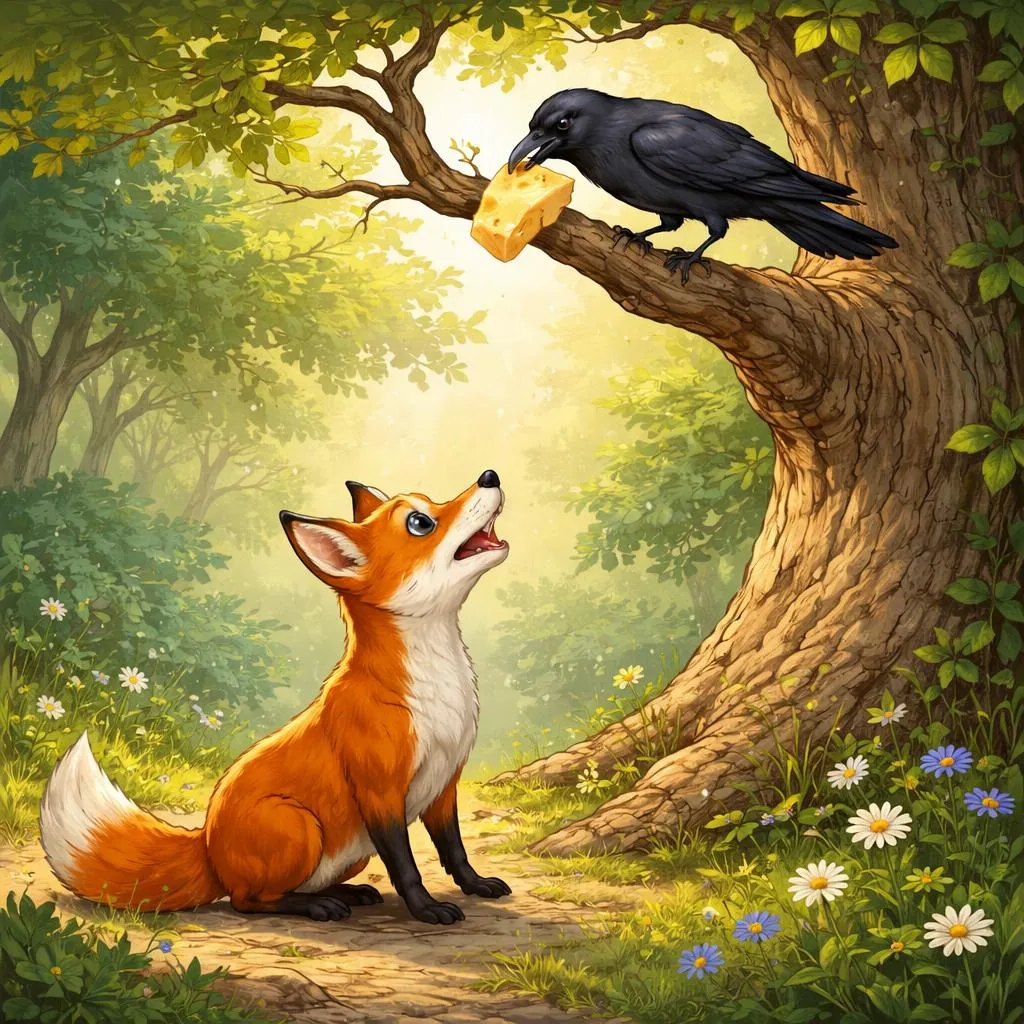

A Fox once saw a Crow fly off with a piece of cheese in its beak and settle on a branch of a tree. “That’s for me, as I am a Fox,” said Master Reynard, and he walked up to the foot of the tree. “Good-day, Mistress Crow,” he cried. “How well you are looking to-day: how glossy your feathers; how bright your eye. I feel sure your voice must surpass that of other birds, just as your figure does; let me hear but one song from you that I may greet you as the Queen of Birds.” The Crow lifted up her head and began to caw her best, but the moment she opened her mouth the piece of cheese fell to the ground, only to be snapped up by Master Fox. “That will do,” said he. “That was all I wanted. In exchange for your cheese I will give you a piece of advice for the future.
“Do not trust flatterers.”
Background and Author Introduction
This story is one of Aesop’s Fables, a collection of short tales attributed to Aesop, a storyteller believed to have lived in ancient Greece around the 6th century BCE. These fables have been passed down through generations and are famous worldwide for their moral lessons. The tale of "The Fox and the Crow" is a classic example of how simple stories can teach important truths about human nature and behavior.
Detailed Interpretation and Meaning
At its core, this fable warns against the dangers of vanity and gullibility. The crow, proud of her appearance and voice, falls victim to the fox’s cunning flattery. The fox, representing slyness and manipulation, uses sweet words to trick the crow into dropping her prize. The moral, “Do not trust flatterers,” teaches readers to be cautious when someone offers excessive praise, especially if it seems designed to benefit the flatterer.
This story also explores themes of wisdom versus foolishness. The crow’s foolishness lies in her desire for admiration, which clouds her judgment. The fox’s wisdom is in recognizing and exploiting this weakness. Readers learn that self-awareness and critical thinking are essential to avoid being deceived.
Lessons and Insights for Students and Young Readers
-
Recognizing Flattery: Students can learn to identify when compliments are genuine or when they might be used to manipulate. Understanding this helps build emotional intelligence and protects against deceit.
-
The Value of Humility: The crow’s downfall is her vanity. This teaches the importance of humility and not letting pride override common sense.
-
Critical Thinking: Before acting on others’ words, especially praise, it’s important to think critically about their motives. This skill is valuable in school, friendships, and everyday life.
-
Consequences of Actions: The story shows how a moment’s distraction or desire can lead to loss. It encourages mindfulness and careful decision-making.
Application in Daily Life
-
In Learning: Students should be wary of flattery from peers or even teachers that might be used to influence their decisions negatively. Instead, they should focus on honest feedback to improve themselves.
-
In Social Situations: Understanding the fable helps young people navigate social dynamics, recognizing when someone might be insincere or trying to manipulate them.
-
In Building Character: Embracing the lesson of humility and skepticism towards flattery helps cultivate strong, independent character traits.
How to Develop Positive Traits from the Story
-
Practice Self-Reflection: Encourage students to think about their reactions to compliments and whether they might be clouding their judgment.
-
Build Confidence Without Vanity: Teach children to appreciate their strengths without becoming boastful or arrogant.
-
Encourage Honesty: Promote honest communication and discourage manipulative behavior like flattery used for selfish gain.
-
Role-Playing Activities: Engage students in role-playing exercises where they practice responding to flattery or peer pressure, helping them develop resilience.
Conclusion
“The Fox and the Crow” is more than just a simple tale; it is a timeless lesson on human behavior and wisdom. By understanding its meaning and applying its lessons, young readers can grow into thoughtful, cautious, and humble individuals. This fable encourages students to look beyond surface appearances and words, fostering critical thinking and emotional maturity that will serve them throughout life.
