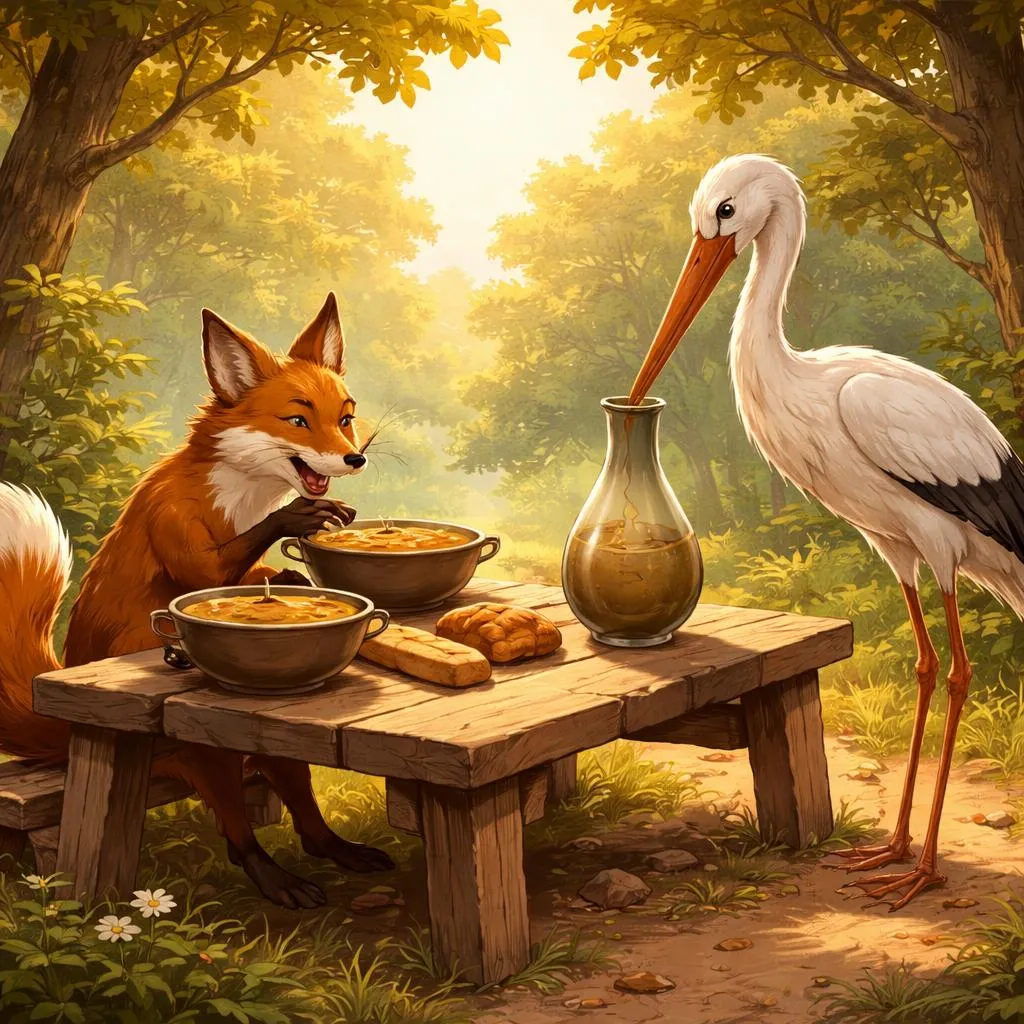

At one time the Fox and the Stork were on visiting terms and seemed very good friends. So the Fox invited the Stork to dinner, and for a joke put nothing before her but some soup in a very shallow dish. This the Fox could easily lap up, but the Stork could only wet the end of her long bill in it, and left the meal as hungry as when she began. “I am sorry,” said the Fox, “the soup is not to your liking.”
“Pray do not apologize,” said the Stork. “I hope you will return this visit, and come and dine with me soon.” So a day was appointed when the Fox should visit the Stork; but when they were seated at table all that was for their dinner was contained in a very long-necked jar with a narrow mouth, in which the Fox could not insert his snout, so all he could manage to do was to lick the outside of the jar.
“I will not apologize for the dinner,” said the Stork:
“One bad turn deserves another.”
Background and Author Introduction
This story, often known as "The Fox and the Stork," is one of Aesop's Fables, a collection of moral tales attributed to Aesop, a storyteller believed to have lived in ancient Greece around the 6th century BCE. Aesop's Fables have been passed down for centuries and are famous worldwide for teaching ethical lessons through simple yet powerful stories featuring animals with human traits.
Detailed Interpretation and Meaning
The story illustrates the principle of "tit for tat" or "one bad turn deserves another." The Fox plays a trick on the Stork by serving soup in a shallow dish that suits the Fox’s short tongue but not the Stork’s long bill, leaving the Stork unable to eat. In return, the Stork serves the Fox food in a long-necked jar that the Fox cannot access, demonstrating that the Fox experiences the same frustration it caused.
This tale teaches about fairness, empathy, and the consequences of one’s actions. It warns against selfishness and cruelty, showing that treating others poorly can lead to similar treatment in return. The story also highlights the importance of considering others' needs and perspectives before acting.
Lessons and Insights for Students and Children
-
Empathy and Understanding Others: The story encourages students to think about how their actions affect others. Just as the Fox failed to consider the Stork’s needs, we should be mindful of others’ feelings and circumstances.
-
Fairness and Reciprocity: It teaches that fairness is crucial in relationships and social interactions. If we treat others kindly and justly, we are more likely to receive the same in return.
-
Consequences of Actions: The story shows that negative behavior often leads to negative consequences. This is an important lesson for students to understand personal responsibility.
-
Problem-Solving and Creativity: Both animals use clever ways to teach each other a lesson. This can inspire students to think creatively and strategically in solving conflicts or challenges.
Applications in Daily Life
-
In School: Students can apply the lesson by being considerate classmates, sharing resources fairly, and avoiding pranks or actions that might hurt others emotionally or physically.
-
In Friendships: The story reminds young people to treat friends with kindness and respect, understanding that friendships require mutual care and fairness.
-
In Family: Children can learn to appreciate family members’ feelings and avoid selfish behavior that might cause hurt or misunderstanding.
-
In Social Settings: The fable encourages respectful communication and empathy, which are essential for healthy social interactions and conflict resolution.
Cultivating Positive Values from the Story
To nurture the positive spirit shown by the Stork and to avoid the Fox’s negative behavior, students can:
- Practice putting themselves in others’ shoes to develop empathy.
- Reflect on how their actions affect others before acting.
- Learn to forgive and respond to unfair treatment with kindness rather than revenge.
- Engage in group activities that promote cooperation and fairness.
- Discuss stories like this in class to deepen understanding of moral values.
Conclusion
"The Fox and the Stork" is more than just a simple fable; it is a timeless lesson on empathy, fairness, and the golden rule of treating others as we wish to be treated. By understanding and applying its teachings, students can grow into thoughtful, responsible, and kind individuals who contribute positively to their communities and relationships.
