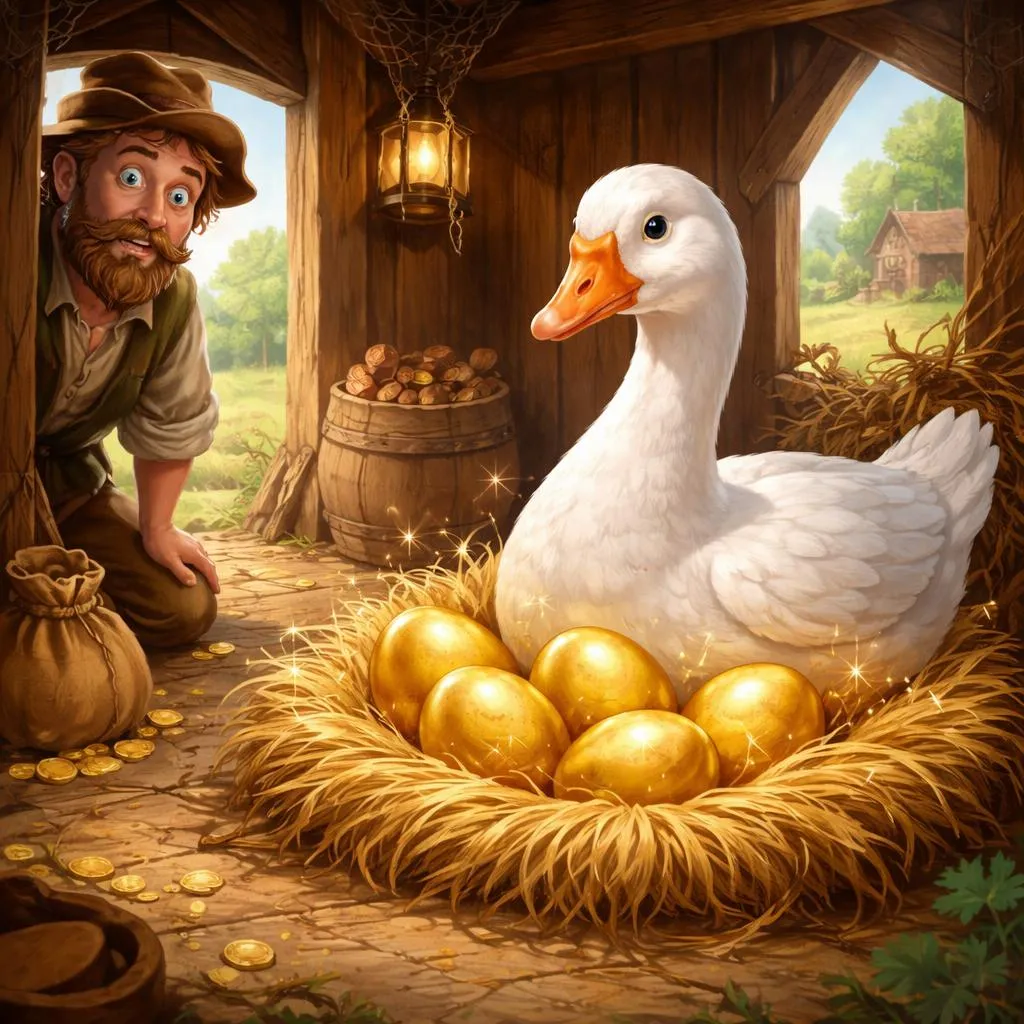

One day a countryman going to the nest of his Goose found there an egg all yellow and glittering. When he took it up it was as heavy as lead and he was going to throw it away, because he thought a trick had been played upon him. But he took it home on second thoughts, and soon found to his delight that it was an egg of pure gold. Every morning the same thing occurred, and he soon became rich by selling his eggs. As he grew rich he grew greedy; and thinking to get at once all the gold the Goose could give, he killed it and opened it only to find nothing.
Greed oft o’er reaches itself.
Background and Author Introduction
This story is a classic fable often known as "The Goose That Laid the Golden Eggs." It originates from Aesop's Fables, a collection of stories attributed to Aesop, a storyteller believed to have lived in ancient Greece around the 6th century BCE. These fables have been passed down through generations and are famous for teaching moral lessons through simple yet powerful narratives involving animals or common folk.
Detailed Interpretation and Meaning
The story tells of a countryman who discovers that his goose lays golden eggs. At first, he is delighted and benefits from the steady wealth the goose provides. However, his greed grows, and he kills the goose hoping to get all the gold at once, only to find nothing inside. This tale is a clear warning against greed and impatience. It illustrates how excessive desire for immediate gain can destroy valuable, ongoing benefits.
The phrase "Greed oft o’er reaches itself" means that greed often causes people to lose what they already have by trying to get more too quickly or recklessly. The story encourages readers to appreciate and nurture what they have rather than ruin it through selfishness or haste.
Lessons and Insights for Students
-
The Danger of Greed: The story teaches that greed can blind us to the value of what we already possess. Instead of being grateful for steady progress or small successes, greed pushes us to take risky actions that can lead to loss.
-
Patience and Long-term Thinking: The countryman would have been better off if he had patiently continued to collect the golden eggs daily. This teaches the importance of patience and thinking about long-term rewards rather than rushing for immediate gratification.
-
Appreciation and Care: The story also highlights the importance of taking care of valuable resources, whether they are people, relationships, or talents. Destroying something valuable out of impatience or selfishness can lead to regret.
How Students Can Apply These Lessons
-
In Learning: Students should understand that knowledge and skills develop gradually. Trying to rush through studies or cheat to get quick results can harm their learning. Instead, consistent effort and patience lead to lasting success.
-
In Social Relationships: Friendships and trust are like the golden goose. They need care and respect. Being greedy for attention or benefits from friends without giving back can damage these relationships.
-
In Personal Growth: Cultivating virtues like patience, gratitude, and self-control helps students grow into responsible and thoughtful individuals. Recognizing the value of what they have and nurturing it is essential for personal happiness and success.
Cultivating Positive Behaviors and Mindsets
-
Practice Gratitude: Encourage students to regularly reflect on what they have and appreciate it, whether it is knowledge, friendships, or opportunities.
-
Set Realistic Goals: Teach students to set achievable goals and understand that success often comes step by step, not all at once.
-
Develop Self-Control: Activities that build self-discipline can help students resist impulsive decisions motivated by greed or impatience.
-
Reflect on Consequences: Encourage students to think about the potential outcomes of their actions before making decisions, especially when tempted to take shortcuts.
Conclusion
"The Goose That Laid the Golden Eggs" is more than just a simple story; it is a timeless lesson about human nature and values. By understanding its message, students can learn to appreciate patience, avoid greed, and make wise choices in their studies, friendships, and daily lives. This fable reminds us that true wealth comes from nurturing and valuing what we have, not from reckless desire for more.
