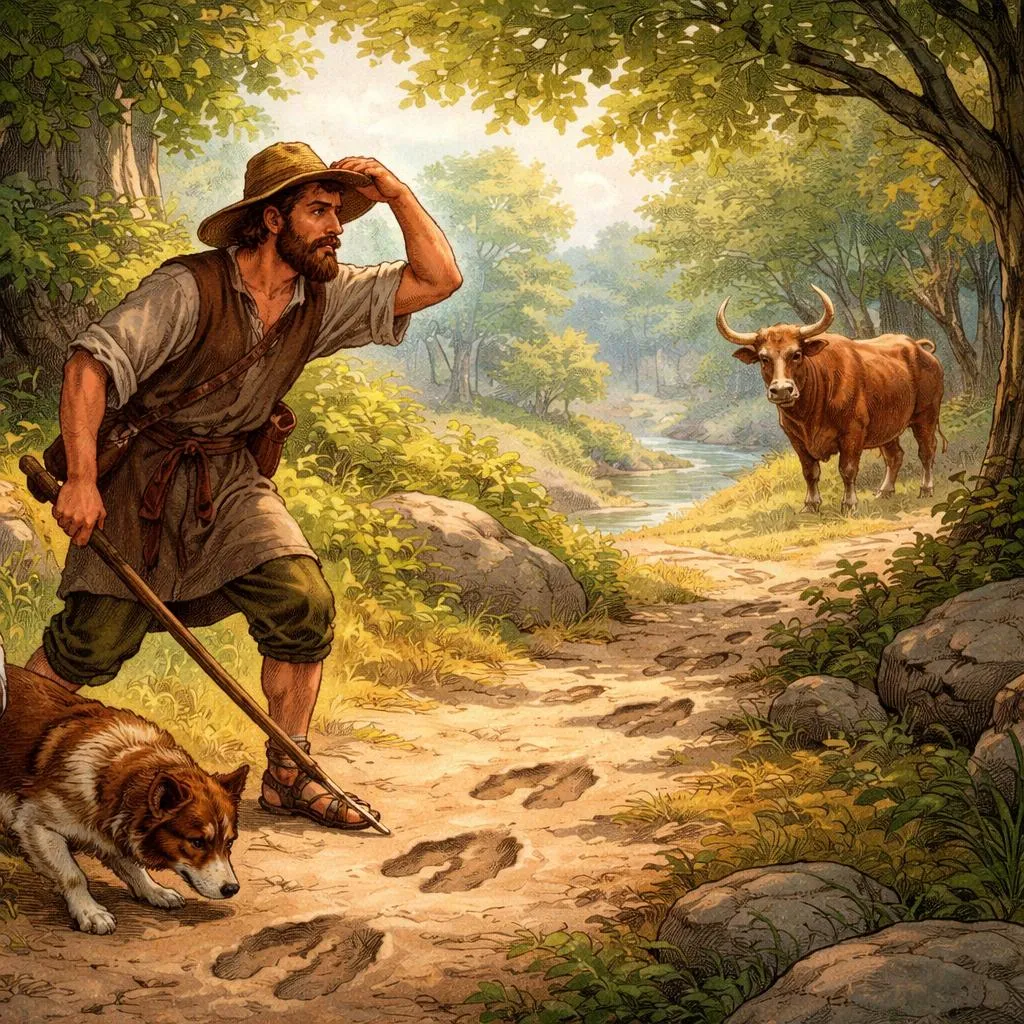

A herdsman tending his flock in a forest lost a Bull-calf from the fold. After a long and fruitless search, he made a vow that, if he could only discover the thief who had stolen the Calf, he would offer a lamb in sacrifice to Hermes, Pan, and the Guardian Deities of the forest. Not long afterwards, as he ascended a small hillock, he saw at its foot a Lion feeding on the Calf. Terrified at the sight, he lifted his eyes and his hands to heaven, and said: “Just now I vowed to offer a lamb to the Guardian Deities of the forest if I could only find out who had robbed me; but now that I have discovered the thief, I would willingly add a full-grown Bull to the Calf I have lost, if I may only secure my own escape from him in safety.”
Background and Author Introduction
This story is a fable, a type of short tale that often features animals and conveys a moral lesson. Fables have been a part of human culture for thousands of years, with famous collections such as those by Aesop, an ancient Greek storyteller believed to have lived around the 6th century BCE. Though the exact origin of this particular story is unclear, it shares the classic traits of Aesop’s fables: simple narrative, animal characters, and a clear moral message. These stories were originally passed down orally and later written down to teach values and wisdom to both children and adults.
Detailed Story Interpretation and Meaning
In this fable, the herdsman’s Bull-calf is stolen, and after a long search, the herdsman vows to offer a sacrifice to the gods if he can find the thief. When he finally discovers that a lion has taken the calf, he is terrified and prays for his own safety rather than focusing on punishment or justice. This story highlights a key human truth: sometimes, when faced with a powerful or dangerous adversary, survival and self-preservation become more important than revenge or recovering what was lost.
The herdsman’s change of heart—from wanting to punish the thief to wanting only to escape safely—teaches readers about humility and the limits of human control. It also reflects the idea that nature and fate are often beyond human power, and wisdom sometimes lies in knowing when to accept circumstances rather than resist them blindly.
Lessons and Insights for Children and Students
-
Understanding Courage and Fear: The herdsman’s initial determination turns into fear when faced with the lion. This teaches young readers that feeling fear is natural and does not mean weakness. Courage is not the absence of fear but the ability to act wisely despite it.
-
The Importance of Wisdom and Humility: The herdsman’s prayer shows humility—he recognizes his limits and asks for protection rather than confrontation. Students can learn that sometimes, the smartest choice is to avoid unnecessary conflict and seek peaceful solutions.
-
Respect for Nature and Higher Powers: The story references gods and guardian deities, reminding readers of the ancient belief in forces greater than humans. Today, this can be interpreted as respect for nature and the environment, encouraging children to be mindful of the world around them.
-
Moral Reflection: The story invites readers to reflect on what they would do in a similar situation. It encourages empathy and understanding, helping children think about how to handle difficult problems with calmness and prudence.
How to Apply These Lessons in Daily Life
-
In School: When facing challenges like difficult exams or conflicts with classmates, students can remember the herdsman’s humility and courage. Instead of reacting with anger or fear, they can seek help, stay calm, and make thoughtful decisions.
-
In Social Situations: The story teaches the value of peaceful resolution. If a disagreement arises, children can learn to avoid escalating conflicts and instead look for ways to resolve issues safely and respectfully.
-
In Personal Growth: Understanding one’s limits and being humble are important traits. Students can practice self-awareness by recognizing when to ask for help and when to stand firm, building emotional intelligence.
Cultivating Positive Values from the Story
-
Respect for All Creatures: The herdsman’s respect for the forest deities can inspire children to appreciate animals and nature, fostering kindness and environmental responsibility.
-
Learning from Fear: Instead of running away from fear, children can learn to face it with wisdom, understanding that fear can guide them to make safer choices.
-
Gratitude and Promises: The herdsman’s vow to offer a sacrifice teaches the importance of keeping promises and showing gratitude, values that are essential in building trust and character.
Conclusion
This simple yet profound fable offers timeless wisdom that is highly relevant to young readers today. It encourages them to balance courage with humility, to respect the natural world, and to approach life’s challenges with thoughtful calmness. By reflecting on the herdsman’s experience, students can develop emotional strength, ethical values, and practical skills that will help them navigate their studies, friendships, and personal growth in positive ways.
