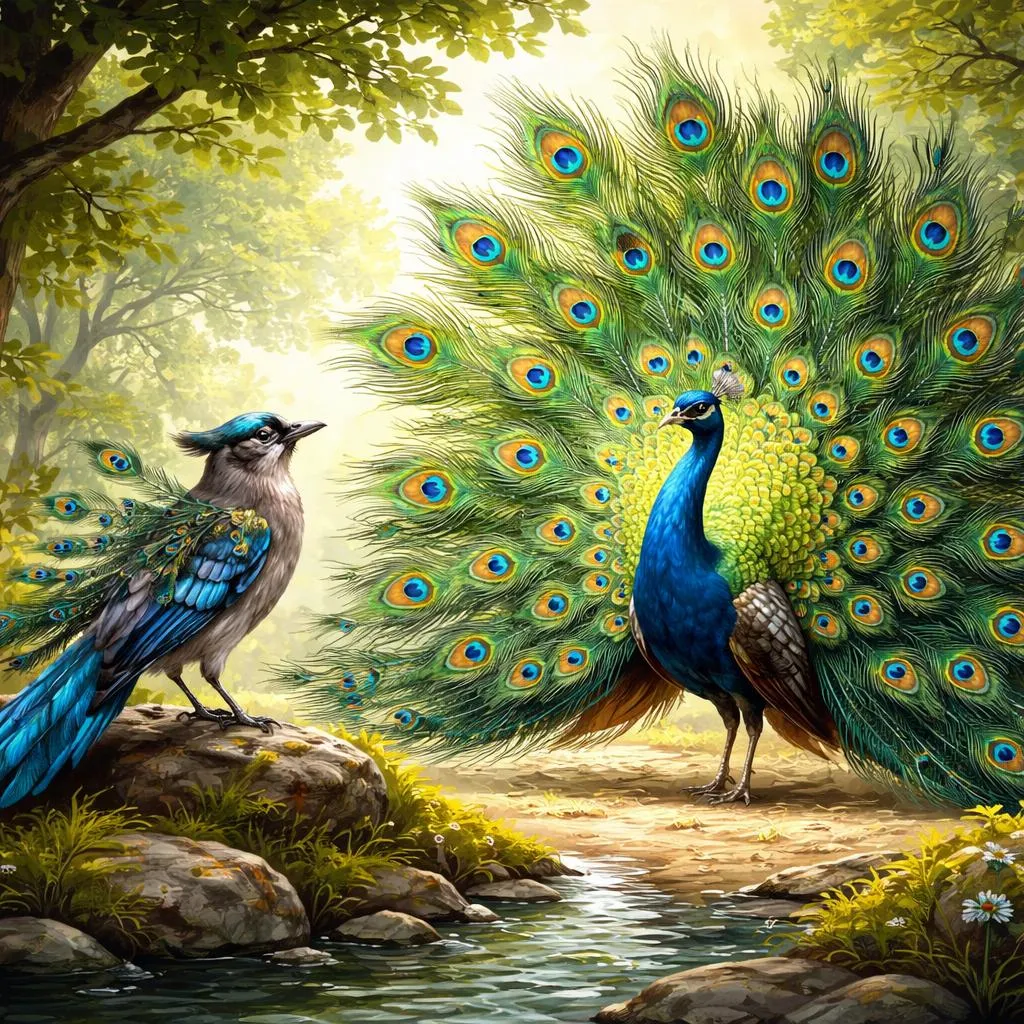

A Jay venturing into a yard where Peacocks used to walk, found there a number of feathers which had fallen from the Peacocks when they were moulting. He tied them all to his tail and strutted down towards the Peacocks. When he came near them they soon discovered the cheat, and striding up to him pecked at him and plucked away his borrowed plumes. So the Jay could do no better than go back to the other Jays, who had watched his behaviour from a distance; but they were equally annoyed with him, and told him:
“It is not only fine feathers that make fine birds.”
Background and Origin of the Story
This story is a classic fable attributed to Aesop, a storyteller believed to have lived in ancient Greece around the 6th century BCE. Aesop’s fables are short tales that convey moral lessons through the actions of animals with human-like traits. These fables have been passed down through generations and remain popular worldwide because of their simple yet profound messages.
The tale of the Jay and the Peacock is one of many stories in Aesop’s collection that teaches the importance of authenticity and warns against pretension. The Jay, by adorning himself with peacock feathers, tries to appear more magnificent than he truly is, only to be exposed and humiliated. The moral, “It is not only fine feathers that make fine birds,” reminds readers that true worth comes from within, not from outward appearances.
Detailed Interpretation and Meaning
At its core, this fable highlights the dangers of vanity and deceit. The Jay’s attempt to imitate the peacock’s beauty symbolizes people who try to gain admiration or status by pretending to be something they are not. However, such superficial efforts are easily uncovered, leading to embarrassment and loss of respect.
The peacock feathers represent external beauty or material possessions, which alone do not define a person’s value or character. The Jay’s failure teaches that genuine qualities like integrity, kindness, and self-confidence are what truly make someone admirable.
Moreover, the reaction of the other Jays, who are annoyed with the Jay’s behavior, shows that dishonesty can alienate one from their own community. Pretending to be someone else can damage relationships and trust.
Lessons and Insights for Students and Young Readers
-
Be Yourself: The story encourages young readers to embrace their unique qualities rather than trying to copy others. Authenticity builds self-esteem and earns genuine respect.
-
Avoid Pretending or Lying: Trying to impress others by dishonesty can backfire. It’s better to be honest about who you are.
-
Value Inner Qualities: Focus on developing kindness, courage, and wisdom rather than just appearance or possessions.
-
Understand Consequences: The Jay’s experience shows that actions have consequences, and deceit can lead to social rejection.
-
Respect Your Community: Being accepted by peers and friends requires trust and sincerity.
Applying the Story’s Wisdom in Daily Life
-
In School: Students can learn to focus on their own strengths and efforts instead of comparing themselves to others or pretending to be more talented. This mindset fosters genuine learning and confidence.
-
In Social Situations: Being honest and true to oneself helps build strong friendships. Pretending to be someone else can lead to misunderstandings and hurt feelings.
-
In Personal Growth: Developing inner virtues like patience, kindness, and responsibility is more valuable than superficial achievements.
-
Handling Peer Pressure: When tempted to imitate others to fit in, remember the Jay’s story and choose authenticity over false appearances.
Cultivating Positive Traits from the Story
To nurture the positive spirit reflected in this fable, students can:
-
Practice self-reflection to understand their own strengths and areas for growth.
-
Celebrate diversity and appreciate differences in others without feeling the need to imitate.
-
Build self-confidence through honest effort and learning.
-
Encourage friends to be authentic and support them in their true selves.
-
Recognize that mistakes and failures are part of growth, and it’s better to be genuine than perfect.
Conclusion
The story of the Jay and the Peacock offers timeless wisdom for young readers. It teaches that true beauty and worth come from within, and that pretending to be someone else only leads to trouble. By embracing authenticity and cultivating inner virtues, students can build meaningful relationships, succeed in their studies, and grow into confident, respected individuals. This fable remains a valuable guide for life, encouraging honesty, self-respect, and respect for others.
