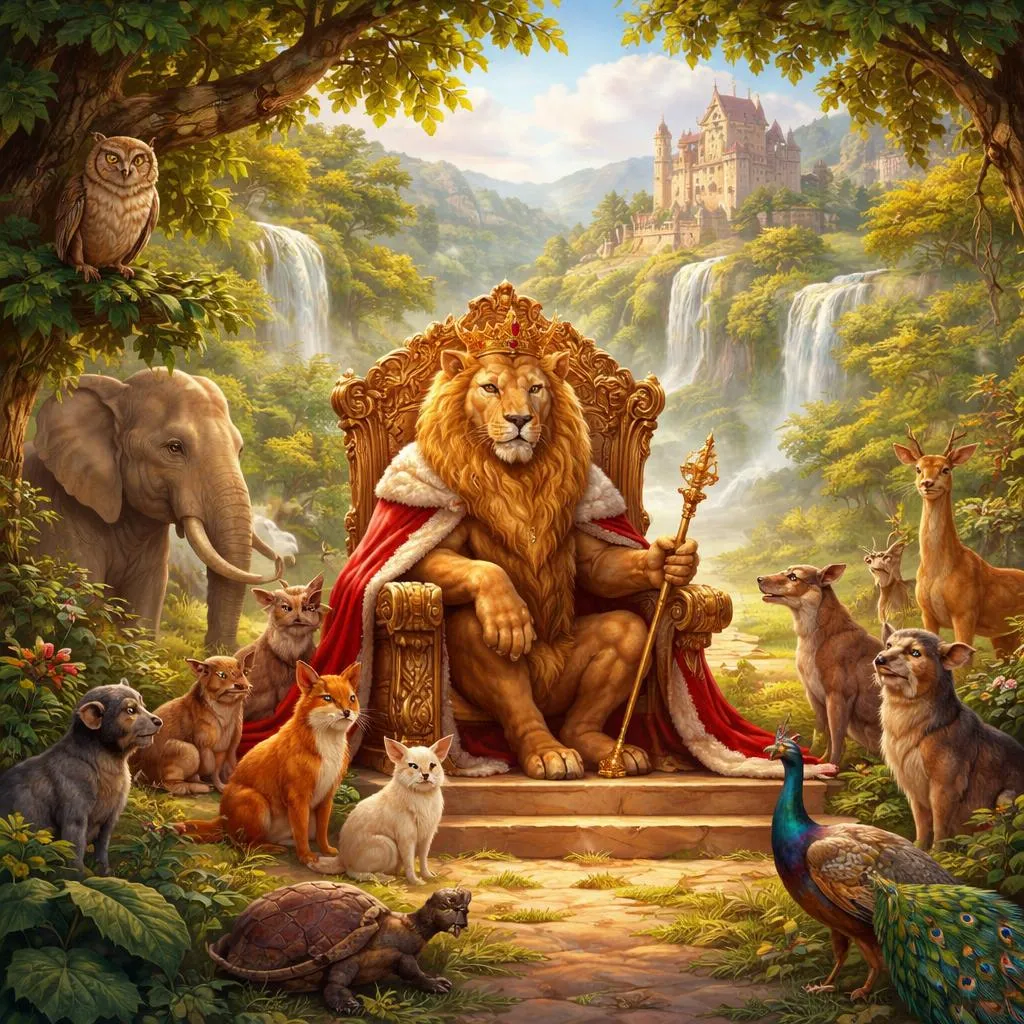

THE BEASTS of the field and forest had a Lion as their king. He was neither wrathful, cruel, nor tyrannical, but just and gentle as a king could be. During his reign he made a royal proclamation for a general assembly of all the birds and beasts, and drew up conditions for a universal league, in which the Wolf and the Lamb, the Panther and the Kid, the Tiger and the Stag, the Dog and the Hare, should live together in perfect peace and amity. The Hare said, “Oh, how I have longed to see this day, in which the weak shall take their place with impunity by the side of the strong.” And after the Hare said this, he ran for his life.
Background and Author Introduction
This story is a classic fable that belongs to the rich tradition of animal tales used to teach moral lessons. Such fables often come from collections like Aesop’s Fables, attributed to Aesop, a storyteller believed to have lived in ancient Greece around the 6th century BCE. These stories use animals with human traits to reflect on human nature and society, making complex ideas easier for children and young readers to understand.
Detailed Interpretation and Meaning
At its core, this story illustrates the idea of justice, peace, and coexistence among different groups, even those naturally seen as enemies. The Lion, as king, represents wise and fair leadership, promoting harmony among all creatures. The assembly and the proposed league symbolize the hope for a society where strength does not oppress weakness, and where natural enemies can live in peace.
However, the Hare’s reaction—expressing hope but then fleeing—introduces a note of realism and caution. It suggests that while ideals of peace and equality are noble, fear and mistrust often remain obstacles. The story encourages readers to reflect on the challenges of building true harmony and trust in any community.
Lessons and Insights for Students
-
Justice and Fairness: The Lion’s reign shows that leadership should be just and kind, not harsh or cruel. Students can learn the importance of fairness in their interactions and leadership roles, whether in school or social groups.
-
Peaceful Coexistence: The idea of a universal league teaches the value of peace and cooperation, even among those who seem very different or opposed. This is a vital lesson in today’s diverse world.
-
Courage and Caution: The Hare’s mixed reaction reminds us that hope for change must be balanced with awareness of reality. It encourages critical thinking about when to trust and how to protect oneself.
Application in Daily Life
- In School: Students can practice fairness by including others, resolving conflicts peacefully, and standing up for those who are weaker or bullied.
- In Social Settings: Learning to accept differences and seek common ground helps build friendships and community harmony.
- In Personal Growth: Understanding the balance between hope and caution can help young people navigate new situations wisely.
Cultivating Positive Values
To develop the spirit of justice and peace shown in the story, students can:
- Engage in group activities that require cooperation and respect.
- Reflect on their own behavior and consider how it affects others.
- Discuss stories like this one to explore moral dilemmas and solutions.
- Practice empathy by imagining the feelings of others, just as the animals in the story symbolize different perspectives.
Conclusion
This fable remains a powerful tool for teaching timeless values. By understanding its deeper meanings and applying its lessons, students can grow into thoughtful, fair, and compassionate individuals, ready to contribute positively to their communities and the wider world.
