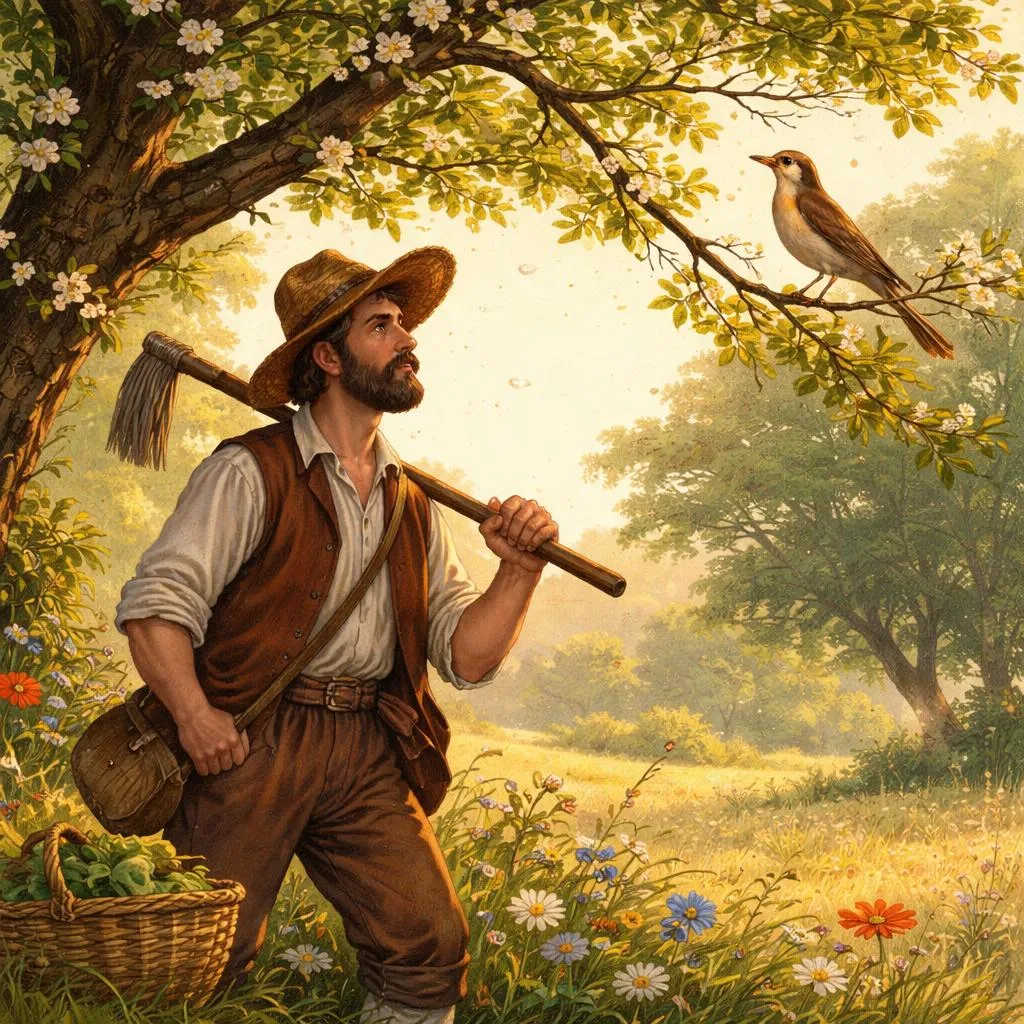

A Labourer lay listening to a Nightingale’s song throughout the summer night. So pleased was he with it that the next night he set a trap for it and captured it. “Now that I have caught thee,” he cried, “thou shalt always sing to me.”
“We Nightingales never sing in a cage.” said the bird.
“Then I’ll eat thee.” said the Labourer. “I have always heard say that a nightingale on toast is dainty morsel.”
“Nay, kill me not,” said the Nightingale; “but let me free, and I’ll tell thee three things far better worth than my poor body.” The Labourer let him loose, and he flew up to a branch of a tree and said: “Never believe a captive’s promise; that’s one thing. Then again: Keep what you have. And third piece of advice is: Sorrow not over what is lost forever.” Then the song-bird flew away.
Background and Author Introduction
This story is a classic example of a fable—a short tale that teaches a moral lesson, often using animals as characters. While the exact origin of this particular nightingale story is unclear, it shares themes common in folklore and literature worldwide. Nightingales have long symbolized beauty, freedom, and the power of song in poetry and stories. The story’s simple yet profound message reflects the wisdom found in many traditional tales passed down through generations.
Detailed Interpretation and Meaning
At its core, this story contrasts freedom with captivity and the true value of intangible gifts over physical possession. The labourer, enchanted by the nightingale’s song, tries to capture and own the bird, believing that possession will guarantee endless joy. However, the nightingale’s refusal to sing in captivity highlights that true beauty and happiness cannot be forced or owned.
The nightingale’s three pieces of advice carry deep meaning:
- Never believe a captive’s promise: When someone or something is trapped, their promises may be made out of desperation rather than sincerity.
- Keep what you have: Appreciate and safeguard what is truly yours instead of chasing after what you cannot hold.
- Sorrow not over what is lost forever: Accept loss and move forward instead of dwelling on what cannot be regained.
These lessons encourage readers to value freedom, cherish what they possess, and develop resilience in the face of loss.
Lessons and Insights for Students
Students and young readers can learn several important lessons from this story:
- Respect for Freedom: Just as the nightingale refuses to sing in a cage, people too need freedom to express themselves and thrive. This can apply to friendships, creativity, and personal growth.
- Value of Non-material Gifts: The nightingale’s song is priceless, unlike physical possession. Students can learn to appreciate qualities like kindness, knowledge, and talents, which cannot be bought or owned.
- Wisdom in Letting Go: The advice to not sorrow over what is lost teaches emotional maturity. Whether it’s a lost opportunity, friendship, or possession, learning to accept and move on is vital.
- Critical Thinking about Promises: Understanding that promises made under pressure or captivity may not be trustworthy helps students develop discernment in relationships and situations.
Applying the Story’s Wisdom in Daily Life
- In School: Students can apply the lesson of valuing what they have by appreciating their education and opportunities rather than envying others. They can also respect classmates’ freedom to express different ideas.
- In Friendships: Respecting others’ freedom and individuality strengthens friendships. Trying to control or possess friends can harm relationships.
- In Facing Challenges: The story’s advice about not grieving forever over loss encourages resilience. When facing setbacks, students can learn to accept and grow from experiences.
- In Personal Growth: Embracing freedom and valuing intangible qualities like creativity and kindness help students develop a balanced and healthy personality.
Cultivating Positive Values from the Story
To nurture the positive spirit of this story, students can:
- Practice gratitude daily to appreciate what they have.
- Reflect on times they felt restricted and how they overcame it.
- Discuss the meaning of freedom and respect in group activities.
- Write or create their own stories emphasizing kindness, freedom, and resilience.
- Observe nature and the beauty of animals like birds to connect with the idea of freedom and natural joy.
Conclusion
This timeless tale of the nightingale and the labourer offers rich lessons about freedom, appreciation, and emotional strength. By understanding and applying these lessons, students can grow into thoughtful, resilient individuals who value both themselves and others. The story encourages young readers to cherish the intangible gifts of life and to face challenges with wisdom and courage.
