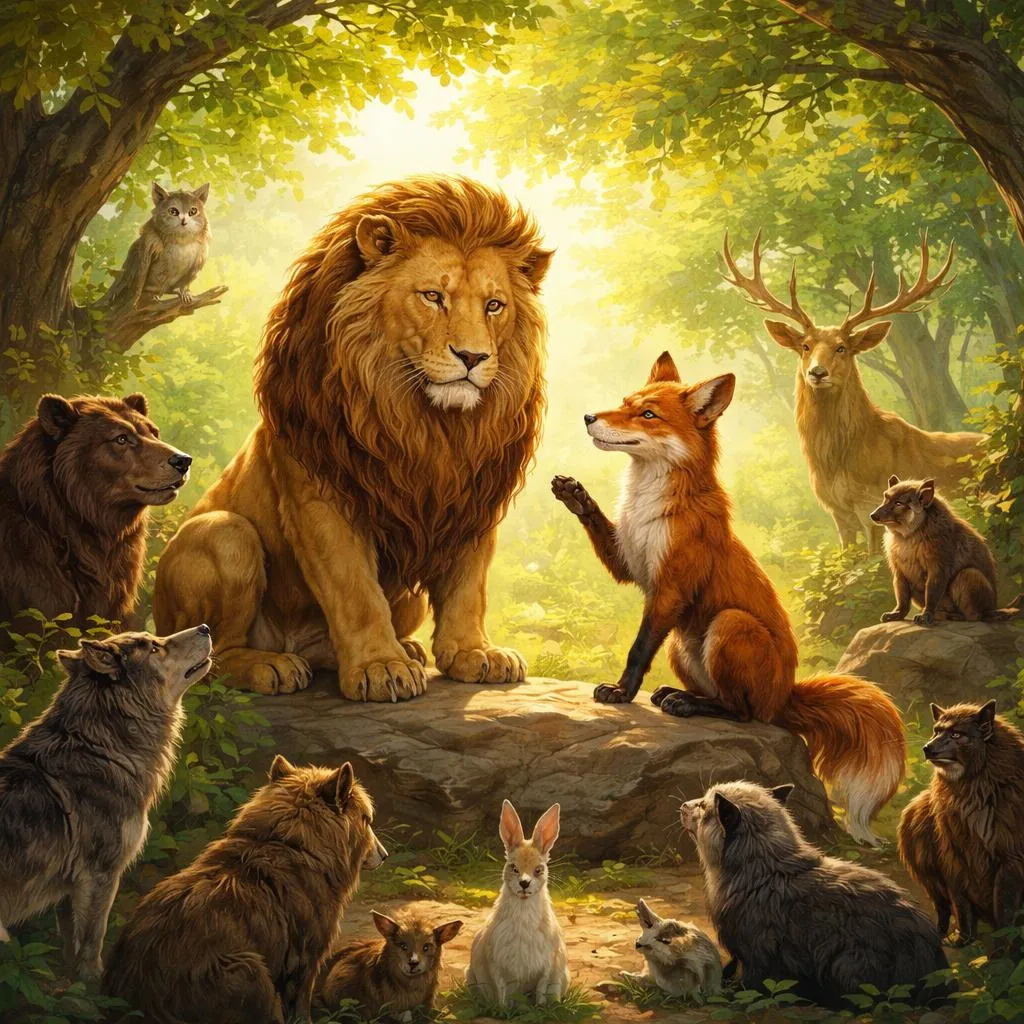

The Lion once gave out that he was sick unto death and summoned the animals to come and hear his last Will and Testament. So the Goat came to the Lion’s cave, and stopped there listening for a long time. Then a Sheep went in, and before she came out a Calf came up to receive the last wishes of the Lord of the Beasts. But soon the Lion seemed to recover, and came to the mouth of his cave, and saw the Fox, who had been waiting outside for some time. “Why do you not come to pay your respects to me?” said the Lion to the Fox.
“I beg your Majesty’s pardon,” said the Fox, “but I noticed the track of the animals that have already come to you; and while I see many hoof-marks going in, I see none coming out. Till the animals that have entered your cave come out again I prefer to remain in the open air.”
It is easier to get into the enemy’s toils than out again.
Background and Author Introduction
This fable is one of the many timeless stories attributed to Aesop, a storyteller believed to have lived in ancient Greece around the 6th century BCE. Aesop’s fables are short tales that use animals with human traits to teach moral lessons. These stories have been passed down for centuries because of their simple yet profound insights into human nature and behavior. The particular story here, often called "The Lion’s Last Will," highlights themes of caution, wisdom, and the importance of critical thinking.
Detailed Interpretation and Meaning
At first glance, the story seems straightforward: the Lion pretends to be dying to lure animals into his cave, presumably to eat them. The Goat, Sheep, and Calf are naive enough to enter without suspicion, but the Fox, known for its cleverness, notices something suspicious—many animals enter but none come out. The Fox’s decision to stay outside symbolizes prudence and skepticism in the face of danger.
The moral, "It is easier to get into the enemy’s toils than out again," warns readers about the risks of blindly trusting appearances or authority without questioning motives. It encourages vigilance and the ability to think critically before acting, especially in situations that could be harmful.
Lessons for Children and Students
-
Critical Thinking and Caution: The Fox’s behavior teaches students to observe carefully and think before they act. In life, not every offer or situation is as it seems, and it’s important to assess risks and gather information before making decisions.
-
Awareness of Danger: Just like the animals entering the cave, children should learn to recognize potential dangers in their environment—whether physical, social, or emotional—and respond wisely.
-
The Value of Wisdom over Blind Trust: The story shows that wisdom and prudence can protect us from harm, while blind trust can lead to trouble.
-
Understanding Consequences: The animals who entered the cave likely faced dire consequences, illustrating that our choices have outcomes and we must consider them carefully.
How This Story Applies to Everyday Life
-
In School: Students can apply the lesson by thinking critically about the information they receive from various sources. Whether it’s evaluating facts in a research project or deciding whom to trust in group work, being cautious and thoughtful is key.
-
In Social Situations: The story encourages young people to be careful about peer pressure and to question situations that seem suspicious or unsafe. Just like the Fox, they should trust their instincts and seek advice if uncertain.
-
In Personal Growth: Developing the habit of careful observation and reflection helps build wisdom. Students can learn to pause and analyze situations before reacting, which is a valuable skill in all aspects of life.
Cultivating Positive Traits from the Story
To nurture the qualities exemplified by the Fox, children and students can:
- Practice asking questions and seeking more information before making decisions.
- Learn to recognize signs of danger or dishonesty in stories, media, and real life.
- Develop problem-solving skills by discussing hypothetical scenarios where caution is needed.
- Encourage open conversations about trust, safety, and making wise choices.
Reflection and Appreciation
Reading this fable invites young readers to appreciate the power of intelligence and prudence. It also highlights the importance of being mindful of one’s surroundings and the intentions of others. By internalizing these lessons, students can become more thoughtful, responsible individuals who navigate life’s challenges with care and wisdom.
In summary, "The Lion’s Last Will" is not just a simple animal story but a profound lesson on vigilance, wisdom, and the importance of thinking critically. It serves as a valuable tool for teaching children how to protect themselves and make sound decisions, both in their studies and in everyday life.
