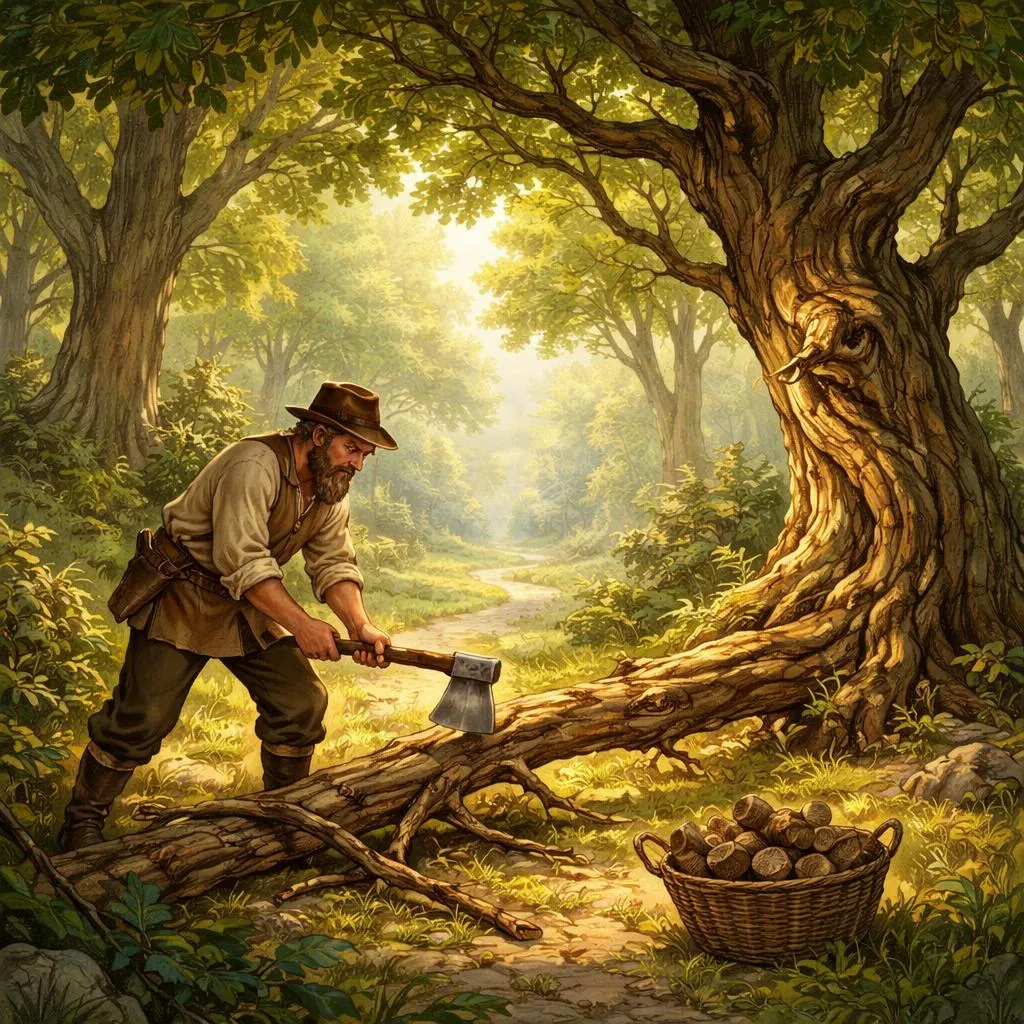

A Man came into a Wood one day with an axe in his hand, and begged all the Trees to give him a small branch which he wanted for a particular purpose. The Trees were good-natured and gave him one of their branches. What did the Man do but fix it into the axe head, and soon set to work cutting down tree after tree. Then the Trees saw how foolish they had been in giving their enemy the means of destroying themselves.
Background and Author Introduction
This story is a classic fable that has been told in various cultures around the world, often attributed to Aesop, the ancient Greek storyteller famous for his moral tales. Aesop’s fables date back to around the 6th century BCE and have been passed down through generations because of their simple yet profound lessons about human nature and ethics. Although the exact author of this particular fable is unknown, it shares the timeless qualities of Aesop’s work: brevity, clarity, and a moral message that resonates across ages.
Detailed Interpretation and Meaning
At its core, this story is a cautionary tale about naivety and the consequences of misplaced trust. The trees, representing innocent and trusting beings, willingly give a branch to the man, not suspecting that it would be used against them. The man, symbolizing a cunning adversary or destructive force, uses the very gift from the trees to harm and destroy them.
This fable teaches the importance of wisdom and caution in dealing with others, especially when those others might have conflicting interests. It warns against enabling or empowering those who may harm us, even if their requests seem harmless or reasonable at first. The trees’ mistake lies in their failure to foresee the consequences of their generosity.
Lessons and Insights for Students and Young Readers
-
Critical Thinking and Awareness:
Students can learn to think critically about the intentions behind requests and actions. Not everyone who asks for help or a favor has good intentions, so it’s important to evaluate situations carefully before acting. -
The Importance of Boundaries:
Just like the trees should have set boundaries to protect themselves, young readers can understand the value of setting personal boundaries in friendships and relationships to avoid being hurt or taken advantage of. -
Consequences of Actions:
This story highlights how actions, even those that seem small or kind, can have big consequences. It encourages readers to consider the potential outcomes before making decisions. -
Trust and Caution:
Trust is vital in relationships, but it should be given wisely. Blind trust can lead to harm, so it’s important to balance kindness with caution.
Applying the Story’s Lessons in Daily Life
-
In School:
Students can apply this lesson by being thoughtful about whom they trust and share information with. They should be aware of peer pressure and avoid situations where their kindness might be exploited. -
In Friendships:
Young people can learn to recognize healthy friendships where trust is mutual and respect is maintained, rather than relationships where one party might be taking advantage of the other. -
In Family and Community:
Understanding the importance of protecting oneself while being kind can help students navigate family dynamics and community interactions more wisely.
Cultivating Positive Traits from the Story
-
Wisdom and Prudence:
Encourage students to develop the habit of thinking ahead and considering the impact of their actions on themselves and others. -
Empathy Balanced with Caution:
While kindness is essential, it should be balanced with awareness. Teaching young readers to be empathetic but not naive helps them grow into thoughtful and discerning individuals. -
Responsibility:
The story also teaches responsibility—both for oneself and for the community. Students can learn to take responsibility for their decisions and understand how their choices affect others.
Reflection and Appreciation
After reading this story, students might reflect on times when they have trusted someone who did not have their best interests at heart or when they have been too generous without considering the consequences. This reflection can foster deeper emotional intelligence and personal growth.
Encouraging students to discuss the story and share their thoughts can also enhance their comprehension and critical thinking skills. They might write essays or create projects illustrating the story’s moral or relate it to real-life experiences.
Conclusion
This simple yet powerful fable offers valuable lessons for young readers about trust, caution, and the consequences of our actions. By understanding and internalizing these messages, students can better navigate their social environments, make wiser decisions, and cultivate positive personal qualities that will benefit them throughout life.
