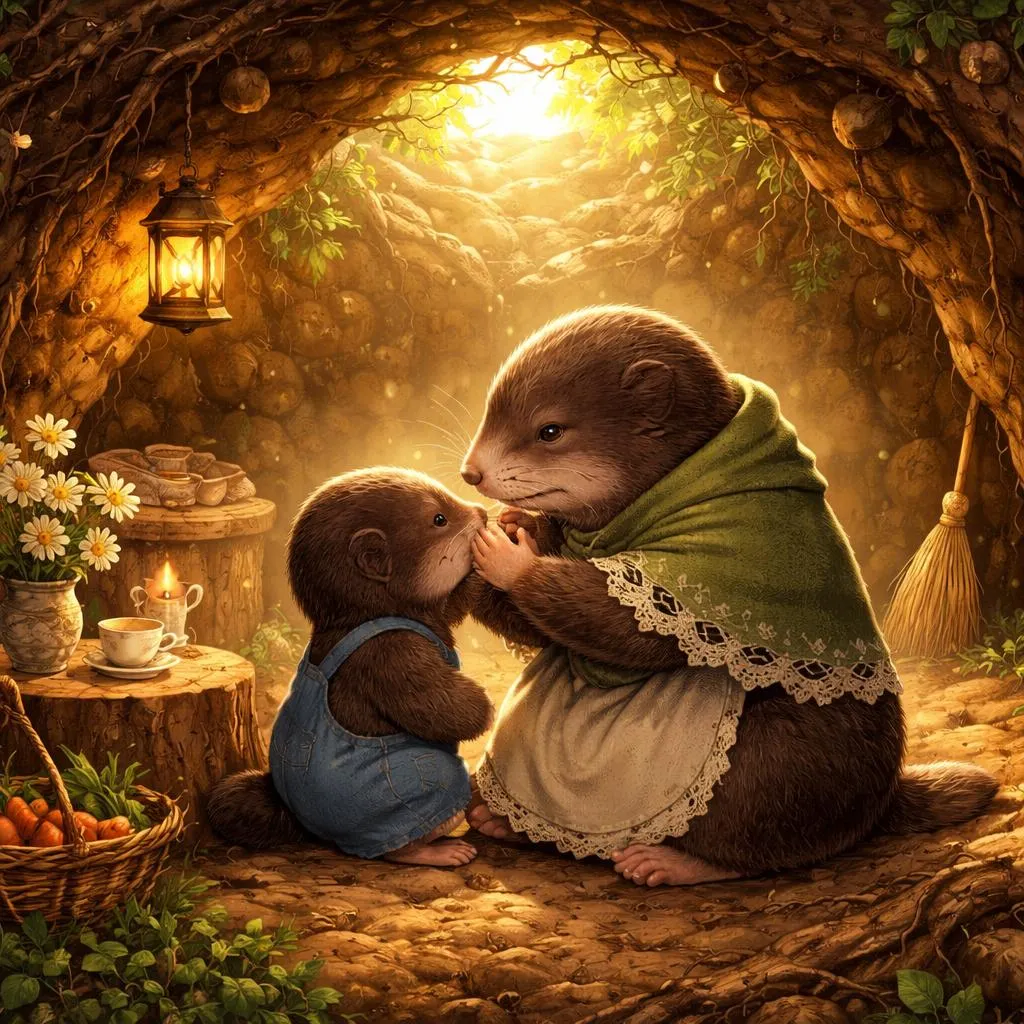

A MOLE, a creature blind from birth, once said to his Mother: “I am sure than I can see, Mother!” In the desire to prove to him his mistake, his Mother placed before him a few grains of frankincense, and asked, “What is it?” The young Mole said, “It is a pebble.” His Mother exclaimed: “My son, I am afraid that you are not only blind, but that you have lost your sense of smell.”
Background and Author Introduction
This brief yet profound story about the mole and his mother is a classic example of fables or allegorical tales often used to teach moral lessons. While the exact author of this particular story is unknown, it belongs to a rich tradition of storytelling where animals are anthropomorphized to convey human truths. Such stories have been passed down through generations, often found in collections like Aesop’s Fables or other folklore traditions worldwide. These narratives serve as simple but powerful tools to help young readers understand complex ideas about perception, knowledge, and self-awareness.
Detailed Interpretation of the Story
At its core, this story explores the theme of perception versus reality. The mole, blind from birth, confidently claims he can see, illustrating how sometimes people may be unaware of their own limitations or misunderstand their abilities. The mother’s test with the frankincense is a gentle way to reveal the mole’s mistake, not only about sight but also about his other senses, like smell. This interaction highlights the importance of humility and openness to learning.
The frankincense, a fragrant resin, symbolizes something that should be easily recognized by smell, yet the mole mistakes it for a pebble, showing how limited or false perceptions can lead to incorrect conclusions. The story encourages readers to question their assumptions and to be aware that what we believe to be true may not always align with reality.
Lessons and Insights for Students and Children
-
Self-awareness and Humility: The mole’s confidence despite his blindness teaches us that it is important to recognize our own limitations. Students can learn that admitting what they don’t know or cannot do is a strength, not a weakness.
-
The Value of Multiple Perspectives: Just as the mole’s other senses could have helped him understand the frankincense better, students are encouraged to use all their abilities and senses to gain a fuller understanding of the world.
-
Critical Thinking: The story invites young readers to think critically about their beliefs and perceptions. It encourages questioning and verifying information rather than accepting things at face value.
-
Learning from Mistakes: The mother’s gentle correction shows that making mistakes is part of learning. Students should see errors as opportunities to grow rather than reasons for shame.
Practical Applications in Daily Life
-
In Learning: Students can apply the lesson by being open to feedback from teachers and peers, and by being willing to revise their understanding when new information is presented.
-
In Social Situations: Recognizing that others may have different perspectives or experiences helps foster empathy and better communication.
-
In Personal Growth: Developing self-awareness about one’s strengths and weaknesses helps in setting realistic goals and seeking help when needed.
Cultivating Positive Traits from the Story
-
Curiosity and Open-mindedness: Encourage children to explore beyond their immediate senses or initial impressions, promoting a mindset of lifelong learning.
-
Respect for Guidance: The mother’s role in gently correcting the mole can inspire students to appreciate the guidance of mentors, parents, and teachers.
-
Patience and Reflection: The story shows that understanding takes time and reflection, teaching children to be patient with themselves and others as they learn.
Conclusion
This simple yet meaningful story of the mole and his mother offers valuable lessons on perception, humility, and learning. For students and young readers, it serves as a reminder to be thoughtful about what they believe, to embrace their limitations, and to remain open to growth and understanding. By applying these lessons in their studies, relationships, and personal development, children can build a strong foundation for success and empathy in life.
