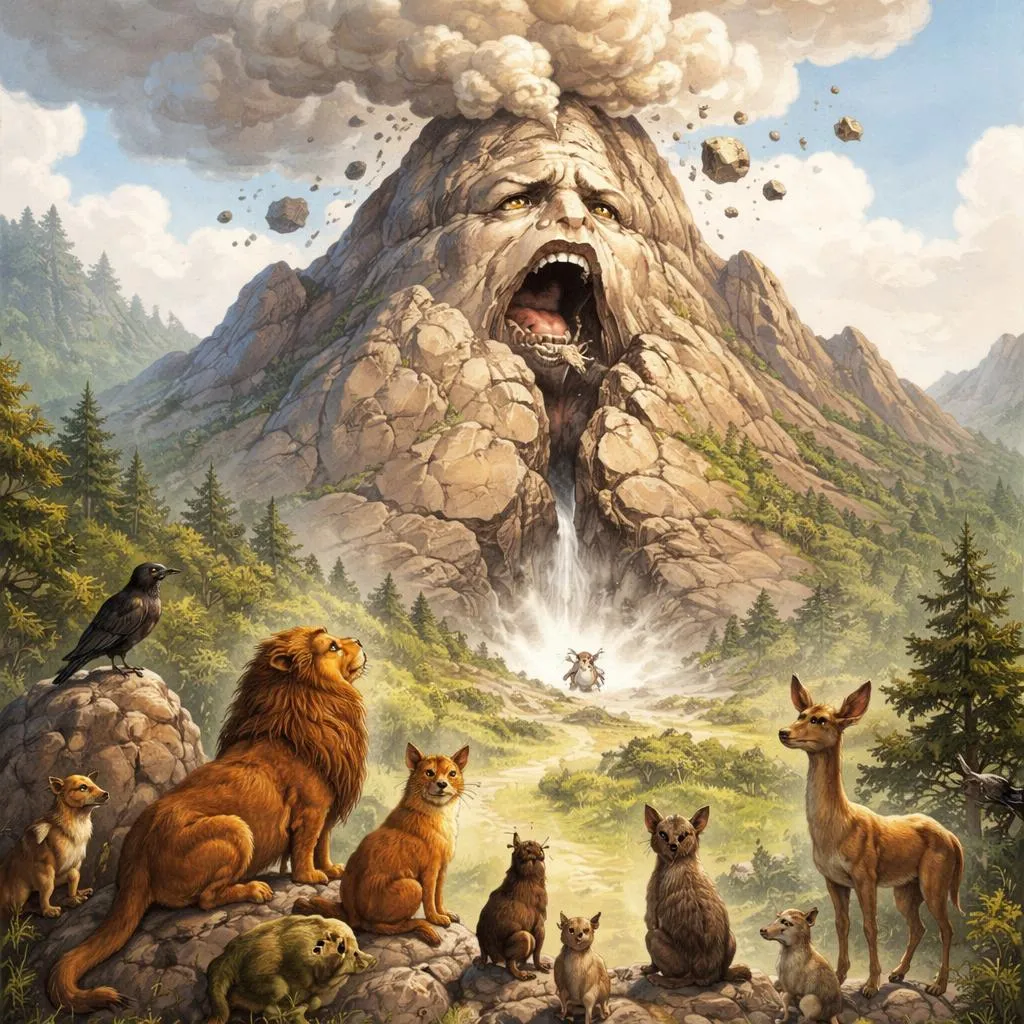

A MOUNTAIN was once greatly agitated. Loud groans and noises were heard, and crowds of people came from all parts to see what was the matter. While they were assembled in anxious expectation of some terrible calamity, out came a Mouse.
Don’t make much ado about nothing.
Background and Author Introduction
This brief fable is a classic example of a traditional Aesop’s fable, often titled "The Mountain in Labour" or "The Mountain and the Mouse." Aesop is believed to have lived in ancient Greece around the 6th century BCE and is famous for his collection of fables that use animals and nature to teach moral lessons. These stories have been passed down through generations and remain popular worldwide due to their simplicity and profound messages.
Detailed Interpretation and Meaning
At first glance, this story appears to be a simple tale about a mountain making loud noises and causing a crowd to gather in fear, only for a tiny mouse to emerge in the end. The mountain’s loud groans and the crowd’s anxious expectation symbolize how people can sometimes overreact or become overly worried about something that turns out to be insignificant. The mouse represents the small, often unimpressive reality behind big fears or rumors.
The moral of the story is often interpreted as “Don’t make a mountain out of a molehill,” meaning don’t exaggerate problems or worries beyond their true importance. It teaches us to keep calm and assess situations carefully before jumping to conclusions.
Lessons for Students and Young Readers
-
Critical Thinking and Emotional Control
Students can learn the importance of not giving in to panic or fear without understanding the facts. In school or life, it’s easy to feel overwhelmed by challenges or rumors, but this story encourages taking a step back and analyzing the situation calmly. -
Avoiding Exaggeration
The story warns against blowing problems out of proportion. This is a valuable lesson in communication and social interactions. When students learn to express themselves clearly and avoid unnecessary drama, they build better relationships and reduce misunderstandings. -
Perspective and Reality Check
Sometimes things seem bigger or scarier than they really are. This fable helps young readers develop perspective, teaching them to distinguish between real threats and imagined ones.
Applications in Daily Life
- In Learning: When faced with difficult subjects or exams, students might feel anxious and imagine failure. Remembering this story can help them focus on the actual task rather than their fears.
- In Social Situations: Gossip or rumors can spread quickly and cause unnecessary worry. Students who understand this fable may be less likely to believe or spread exaggerated stories.
- In Personal Growth: Developing patience and calmness in the face of uncertainty is a key life skill. This story encourages young people to cultivate these qualities.
Cultivating Positive Values
- Patience: Waiting calmly for the truth instead of rushing to judgment.
- Humility: Recognizing that sometimes what seems important may actually be small or trivial.
- Rationality: Using reason to evaluate situations rather than emotions alone.
Reflection and Appreciation
Encourage students to reflect on moments when they have felt worried or scared about something that turned out to be less serious. How did they react? Could they have handled it differently by remembering the lesson of the mountain and the mouse? Such reflection helps deepen understanding and personal growth.
Conclusion
This simple yet powerful fable offers timeless wisdom for young readers. It teaches the importance of measured reactions, critical thinking, and emotional control. By applying these lessons, students can navigate their studies, friendships, and daily lives with greater confidence and calmness. The story’s enduring appeal lies in its ability to communicate a vital truth through a memorable and easy-to-understand narrative.
