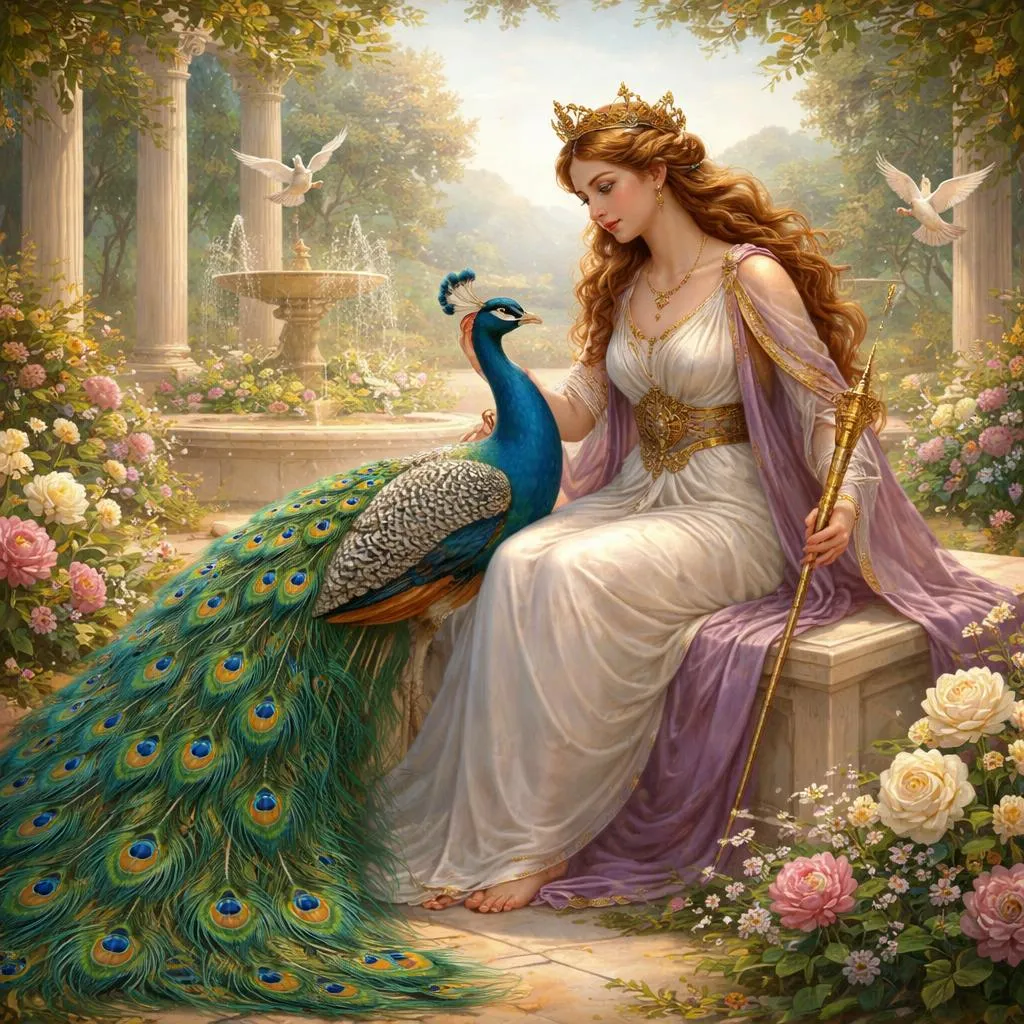

A Peacock once placed a petition before Juno desiring to have the voice of a nightingale in addition to his other attractions; but Juno refused his request. When he persisted, and pointed out that he was her favourite bird, she said:
“Be content with your lot; one cannot be first in everything.”
Background and Author Introduction
This brief fable about the peacock and Juno is a classic example of a moral story rooted in ancient mythology. Juno, in Roman mythology, is the queen of the gods, often associated with protection and authority. The peacock, known for its magnificent feathers, symbolizes pride and vanity. This story likely originates from collections of fables designed to teach ethical lessons, such as those by Aesop or similar storytellers, though the exact author is anonymous. These fables have been passed down through generations to educate children and young readers about virtues and human nature.
Detailed Interpretation and Significance
At its core, this story illustrates the importance of contentment and recognizing one’s unique qualities. The peacock, proud of his splendid feathers, desires to add the melodious voice of a nightingale to his attributes, seeking to be perfect in every way. However, Juno’s refusal and her wise words remind us that no one can excel at everything. Each individual has their own strengths and limitations, and true happiness comes from appreciating what one has rather than yearning for impossible perfection.
This tale also highlights the dangers of envy and dissatisfaction. The peacock’s desire to change what he already possesses shows a lack of gratitude and acceptance. Juno’s response encourages humility and self-awareness, virtues that are crucial for personal growth.
Lessons and Insights for Students
-
Contentment and Self-Acceptance: Students learn that it is important to accept themselves as they are, recognizing their unique talents and qualities without constantly comparing themselves to others.
-
Understanding Limitations: Everyone has strengths and weaknesses. Trying to be perfect in every aspect is unrealistic and can lead to frustration.
-
Gratitude: Appreciating what one already has can lead to greater happiness and peace of mind.
-
Humility: Being humble about one’s abilities and accepting constructive criticism helps in personal development.
Application in Daily Life
-
In Learning: Students can apply this lesson by focusing on their own progress rather than competing unnecessarily with peers. They should celebrate their achievements and work on areas of improvement without feeling inferior.
-
In Social Situations: Understanding that everyone has different talents fosters respect and empathy among friends and classmates. It encourages cooperation instead of jealousy.
-
In Personal Growth: Embracing contentment helps reduce stress and anxiety caused by unrealistic expectations. It encourages setting achievable goals and appreciating small successes.
Cultivating Positive Traits from the Story
-
Practice Gratitude: Keep a journal to note daily things you are thankful for, helping to build a positive mindset.
-
Recognize Your Strengths: Make a list of your talents and skills. Celebrate these qualities and use them to contribute positively to your community.
-
Learn from Others: Instead of envying others’ abilities, admire and learn from them. This attitude promotes growth and builds friendships.
-
Accept Imperfection: Understand that mistakes and limitations are part of learning and growing. This acceptance fosters resilience.
Conclusion
This simple yet profound fable teaches young readers the timeless lesson of being content with oneself and understanding that perfection is neither possible nor necessary. By embracing their unique qualities and appreciating what they have, students can lead happier, more fulfilling lives. The story encourages humility, gratitude, and self-awareness—values that are essential not only in childhood but throughout life.
