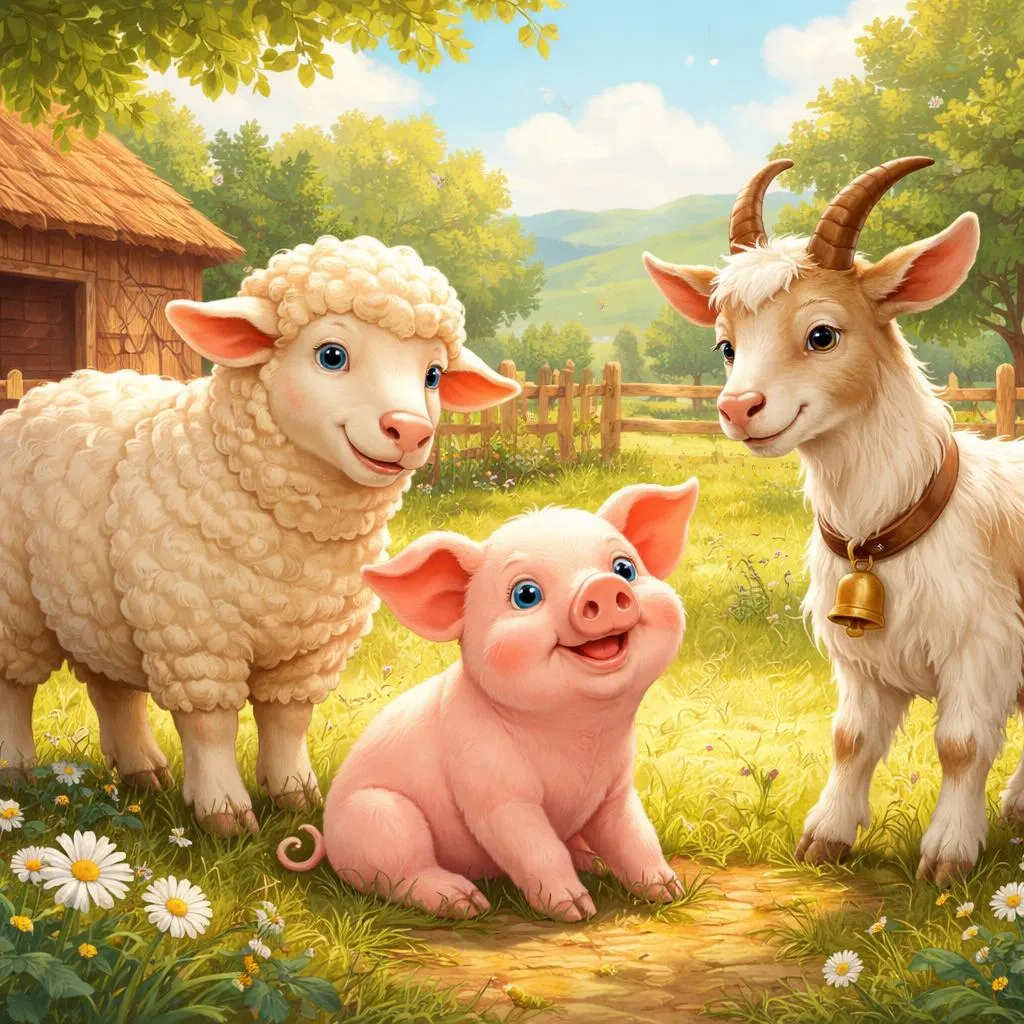

A YOUNG PIG was shut up in a fold-yard with a Goat and a Sheep. On one occasion when the shepherd laid hold of him, he grunted and squeaked and resisted violently. The Sheep and the Goat complained of his distressing cries, saying, “He often handles us, and we do not cry out.” To this the Pig replied, “Your handling and mine are very different things. He catches you only for your wool, or your milk, but he lays hold on me for my very life.”
Background and Author Introduction
This story is a classic fable, a type of short tale that uses animals with human traits to teach moral lessons. Fables have been passed down through generations and are often attributed to ancient storytellers like Aesop, a Greek storyteller believed to have lived around 600 BCE. Although this particular story may not be directly from Aesop’s original collection, it follows the same tradition of using simple narratives to reveal deeper truths about life and human nature.
The story’s setting—a fold-yard where farm animals live—reflects a common rural environment familiar to many readers, especially children. The animals’ dialogue and reactions help convey important lessons about empathy, fairness, and understanding others’ perspectives.
Detailed Interpretation and Meaning
At first glance, the story seems straightforward: a young pig struggles and cries out when the shepherd grabs him, while the sheep and goat remain calm despite similar treatment. The sheep and goat criticize the pig for being noisy and ungrateful, but the pig explains that the reason for his distress is much more serious. Unlike the sheep and goat, who are taken for their wool or milk and then released, the pig is caught because he is going to be slaughtered.
This story highlights the importance of empathy—understanding the feelings and experiences of others. The sheep and goat fail to recognize the pig’s fear because they only see their own experiences. The pig’s response teaches us that even if situations look similar on the surface, the underlying reasons can be very different, and we should not judge others without knowing their full story.
Lessons and Insights for Students
-
Empathy and Understanding:
Students learn that it is important to listen carefully and try to understand other people’s feelings and situations before making judgments. Just like the sheep and goat misunderstood the pig, we might misunderstand friends or classmates if we don’t consider their perspective. -
Respect for Differences:
Everyone’s experiences are unique. What might seem easy or normal for one person could be very difficult for another. This story encourages respect for these differences. -
Courage to Express Feelings:
The pig bravely voices his fear and pain, even though others criticize him. This teaches students that it’s okay to express emotions and stand up for oneself when facing difficulties.
Practical Applications in Life, Learning, and Social Situations
-
In School:
When working in groups or interacting with classmates, students should remember to be patient and considerate. If someone seems upset or behaves differently, take time to understand why instead of jumping to conclusions. -
In Friendships:
Friends may face challenges that are not visible to others. By practicing empathy, students can become better friends who offer support and kindness. -
In Family Life:
Family members may have different worries or responsibilities. Recognizing these differences can improve communication and reduce conflicts.
Cultivating Positive Traits from the Story
-
Empathy:
Encourage students to ask questions like “How would I feel if I were in their place?” or “What might they be going through?” This habit helps develop deeper empathy. -
Courage and Honesty:
Promote open communication where students feel safe to share their feelings and challenges without fear of judgment. -
Non-Judgmental Attitude:
Teach students to avoid making quick assumptions about others’ behavior. Instead, they should seek to understand the reasons behind actions.
Reflection and Appreciation
Reading this story invites students to reflect on how they treat others and how they respond when others express emotions. It also reminds them that life is complex, and kindness often requires effort and understanding. Appreciating such fables helps develop emotional intelligence, a crucial skill for personal growth and social harmony.
By learning from the young pig’s experience, students can better navigate their own challenges and relationships, becoming more compassionate and thoughtful individuals.
