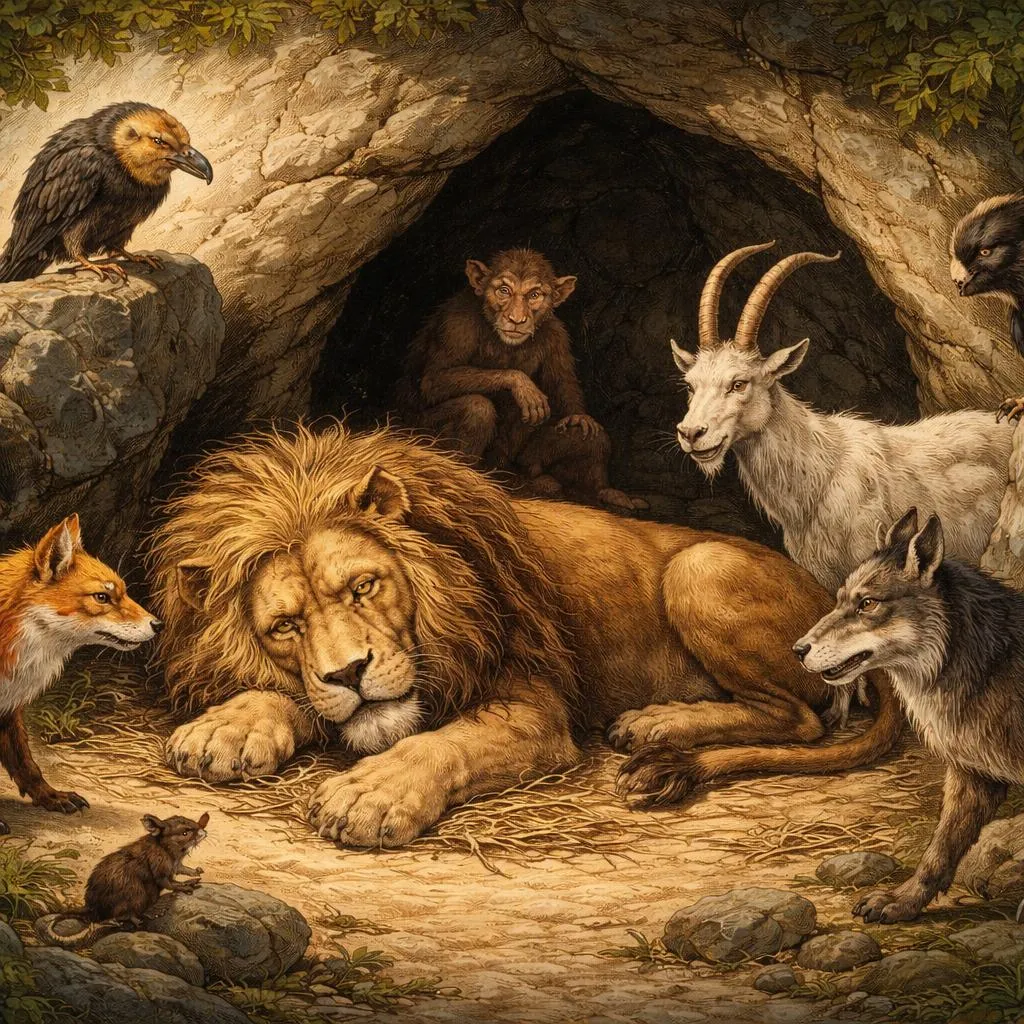

A Lion had come to the end of his days and lay sick unto death at the mouth of his cave, gasping for breath. The animals, his subjects, came round him and drew nearer as he grew more and more helpless. When they saw him on the point of death they thought to themselves: “Now is the time to pay off old grudges.” So the Boar came up and drove at him with his tusks; then a Bull gored him with his horns; still the Lion lay helpless before them: so the Ass, feeling quite safe from danger, came up, and turning his tail to the Lion kicked up his heels into his face. “This is a double death,” growled the Lion.
Only cowards insult dying majesty.
Background and Author Introduction
This story is a classic fable attributed to Aesop, a storyteller believed to have lived in ancient Greece around the 6th century BCE. Aesop’s fables are short tales that use animals as characters to teach moral lessons. These stories have been passed down through generations and remain popular worldwide for their simplicity and profound wisdom.
The fable of "The Lion and the Ass" reflects human nature and social behavior through the interactions of animals. It illustrates how those who once feared or respected a powerful figure may take advantage of their weakness or downfall. Aesop’s fables often use such scenarios to encourage reflection on virtues like courage, respect, and justice.
Detailed Interpretation and Meaning
In this story, the Lion represents power, authority, and majesty. As the king of the jungle, the Lion commands respect and fear from the other animals. However, when he is old and dying, his strength fades, and the animals, who were once loyal subjects, reveal their true feelings. They attack him, settling old scores and showing disrespect.
The Boar, Bull, and Ass symbolize different attitudes toward power and vulnerability. The Boar and Bull act aggressively, using their weapons to hurt the Lion, while the Ass, confident that it is safe, insults the Lion by kicking him. The Lion’s final words, “Only cowards insult dying majesty,” highlight a key moral: true courage and honor involve respecting others, even when they are weak or near the end.
This fable warns against cruelty and cowardice. It teaches that taking advantage of someone’s misfortune is dishonorable, and that respect should be maintained regardless of a person’s status or condition.
Lessons and Insights for Students
-
Respect for Others: One of the most important lessons is to respect everyone, no matter their situation. Just as the Lion deserved respect even in his weakness, people deserve kindness and dignity at all times.
-
Courage and Integrity: The story contrasts bravery with cowardice. True courage is not about attacking the weak but standing up for what is right and showing honor.
-
Consequences of Resentment: Holding grudges and seeking revenge can lead to harmful behavior. Instead, forgiveness and understanding build stronger relationships.
-
Humility: The Lion’s fall from power reminds us that life is unpredictable. Being humble and compassionate toward others, regardless of their status, is a valuable character trait.
Application in Daily Life
-
In School: Students can learn to treat classmates with kindness, even those who may be struggling or less popular. Bullying or mocking others when they are vulnerable is harmful and unfair.
-
In Friendships: Respecting friends during difficult times strengthens bonds. Offering support rather than criticism helps build trust and empathy.
-
In Family: Family members should care for each other, especially when someone is going through challenges. Showing patience and respect fosters a loving environment.
-
In Social Situations: Understanding that everyone faces hardships encourages tolerance and reduces judgmental attitudes. Standing up against unfair treatment of others reflects courage and integrity.
Cultivating Positive Values from the Story
To develop the virtues highlighted in this fable, students can:
- Practice empathy by imagining themselves in others’ situations.
- Reflect on moments when they have shown or lacked respect and consider how to improve.
- Discuss the story with peers or teachers to deepen understanding of honor and courage.
- Engage in role-playing activities to explore how to respond to others with kindness, even in difficult circumstances.
- Set personal goals to act with integrity and avoid participating in harmful behavior like gossip or exclusion.
Conclusion
“The Lion and the Ass” is more than just a simple animal tale; it is a timeless lesson about respect, courage, and the human spirit. By studying this fable, students can gain valuable insights into how to treat others with dignity and how to act honorably in their own lives. These lessons are essential not only for personal growth but also for creating a kinder, more just society.
