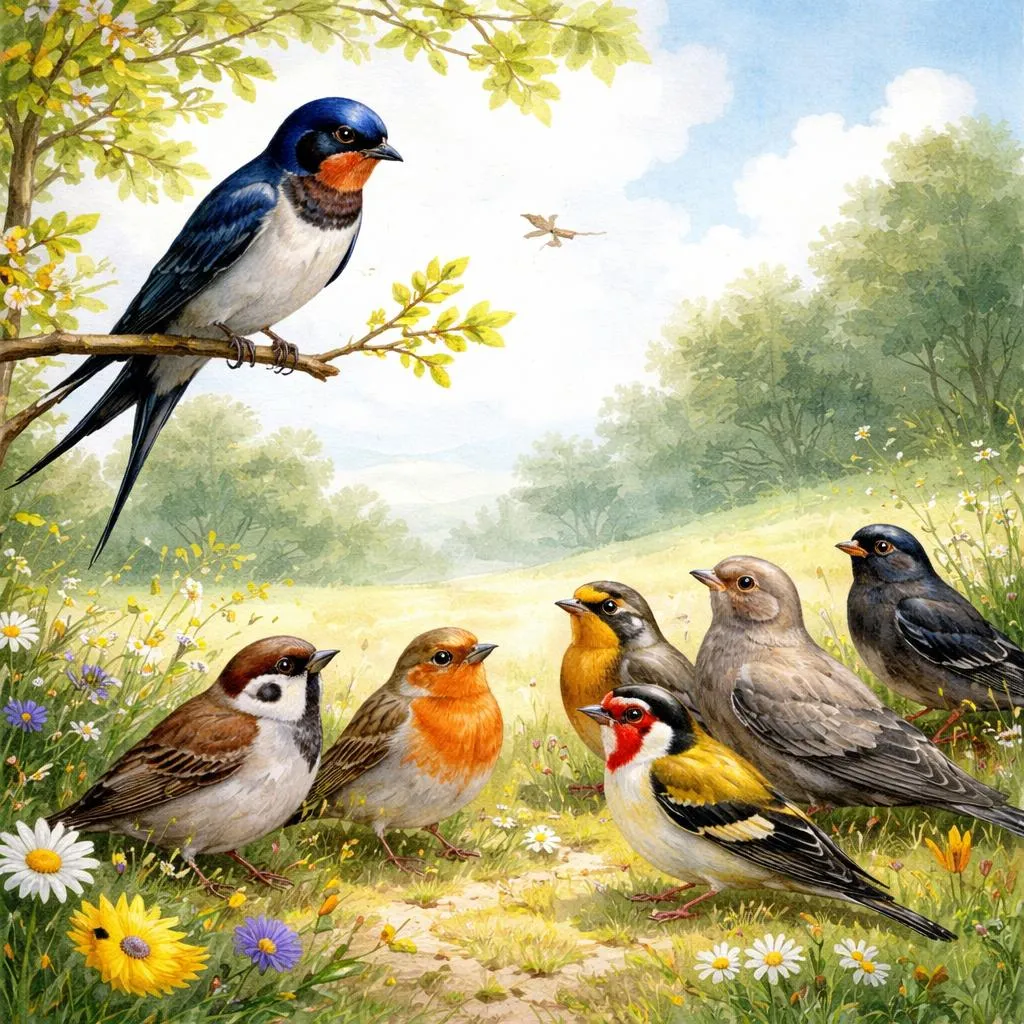

It happened that a Countryman was sowing some hemp seeds in a field where a Swallow and some other birds were hopping about picking up their food. “Beware of that man,” quoth the Swallow. “Why, what is he doing?” said the others. “That is hemp seed he is sowing; be careful to pick up every one of the seeds, or else you will repent it.” The birds paid no heed to the Swallow’s words, and by and by the hemp grew up and was made into cord, and of the cords nets were made, and many a bird that had despised the Swallow’s advice was caught in nets made out of that very hemp. “What did I tell you?” said the Swallow.
Destroy the seed of evil, or it will grow up to your ruin.
Background and Author Introduction
This story is a classic fable that originates from Aesop’s Fables, a collection of tales attributed to Aesop, a storyteller believed to have lived in ancient Greece around the 6th century BCE. These fables are short stories that use animals and nature to teach moral lessons. The tale of the Countryman and the Swallow is one such fable, designed to convey wisdom through simple yet powerful storytelling.
Detailed Interpretation and Meaning
At its core, this story warns about the consequences of ignoring early warnings and the dangers of allowing harmful things to take root. The hemp seeds represent harmful actions or bad influences that may seem harmless at first but can grow into serious problems if left unchecked. The Swallow, who warns the other birds, symbolizes wisdom and foresight, urging caution and awareness.
The birds that ignore the Swallow’s advice suffer because they fail to act on the warning. Their careless behavior leads them to be trapped by the very cords made from the hemp they neglected to avoid. This illustrates how ignoring small problems or warnings can lead to bigger troubles later on.
The final moral, “Destroy the seed of evil, or it will grow up to your ruin,” serves as a reminder that early intervention and vigilance are essential to prevent harm.
Lessons and Insights for Students and Young Readers
-
The Importance of Heeding Warnings: Just like the birds who ignored the Swallow’s advice, students can learn that ignoring advice or warnings—whether from teachers, parents, or friends—can lead to negative consequences. It teaches the value of listening carefully and thinking ahead.
-
Early Action Prevents Bigger Problems: The story encourages young readers to address small issues before they grow into serious troubles. This can apply to personal habits, schoolwork, or relationships. For example, dealing with misunderstandings early can prevent conflicts from escalating.
-
Wisdom and Foresight: The Swallow represents the voice of wisdom. Students can learn to cultivate foresight by thinking about the long-term effects of their actions rather than just immediate gratification.
-
Responsibility and Consequences: The birds’ failure to take responsibility for their safety leads to their downfall. This teaches children that their choices have consequences, and they need to be responsible for their actions.
Applying the Story’s Teachings in Daily Life
-
In School: Students should pay attention to teachers’ advice and warnings about their studies or behavior. Procrastination or neglecting small tasks can lead to poor performance later, just as ignoring the hemp seeds led to trouble for the birds.
-
In Social Situations: The story encourages young people to be mindful of the company they keep and the influences they allow into their lives. Just as the birds should have been careful about the seeds, students should be cautious about negative peer pressure or harmful habits.
-
In Personal Growth: Developing the habit of reflecting on one’s actions and their potential consequences can help students make better decisions. They can learn to recognize “seeds of evil” such as dishonesty, laziness, or jealousy and work to eliminate them before they cause harm.
Cultivating Positive Traits from the Story
-
Awareness: Encourage students to be observant and attentive to their surroundings and the advice given by trusted individuals.
-
Critical Thinking: Teach them to evaluate situations carefully and foresee possible outcomes before acting.
-
Courage to Act: Sometimes, it takes bravery to act on warnings or to speak up, just like the Swallow did. Students can learn to stand firm in their convictions and make wise choices.
-
Responsibility: Emphasize that everyone has a role in preventing harm, not just waiting for others to act.
Conclusion
This fable, though brief, carries a timeless message about vigilance, responsibility, and the importance of listening to wise counsel. For students and young readers, it offers valuable lessons that extend beyond the story into everyday life. By understanding and applying these lessons, they can grow into thoughtful, responsible individuals who recognize the importance of addressing small problems early and making wise decisions for their future.
