
Are Similar Words Really Interchangeable?
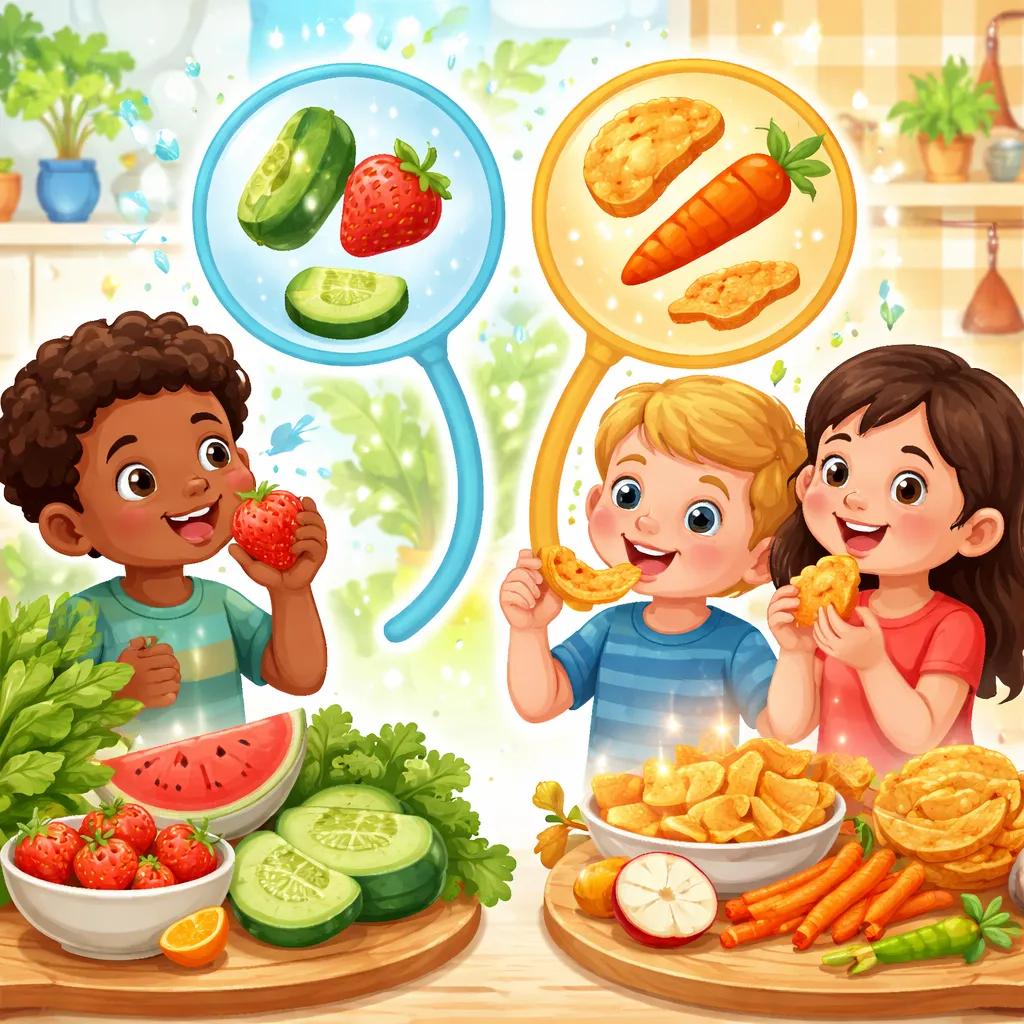
Many English words seem similar at first. “Fresh and crisp” is a good example. Both words often appear when we talk about food, air, or experiences. Yet they do not always mean the same thing.
Children may say “fresh apples” or “crisp apples” without noticing a difference. In some cases, both work. In others, the meaning changes slightly.
Learning these differences helps children describe the world more clearly. It also builds strong speaking and writing skills. Parents can guide children gently through examples.
With practice, children begin to notice small details. These details make language richer and more precise.
Set 1: Fresh vs Crisp — Which One Is More Common?
“Fresh” is very common. Children hear it early and often. It appears in daily life, especially when talking about food.
For example, “fresh fruit” or “fresh milk” sounds natural. The word suggests something new, clean, or recently made.
“Crisp” is less common but still important. It appears often when describing texture or weather. For example, “crisp chips” or “crisp air.”
Because “fresh” is more frequent, children learn it quickly. “Crisp” comes later and adds detail. It helps children describe how something feels or tastes.
Both words are useful, but “fresh” appears more often in daily conversation.
Set 2: Fresh vs Crisp — Same Meaning, Different Contexts
“Fresh” often describes time and quality. It means something is new, clean, or recently prepared.
For example, “fresh bread” means the bread was just made. It may be soft and warm. The focus is on how recent it is.
“Crisp” describes texture or feeling. It often means firm, light, and slightly crunchy.
For example, “crisp lettuce” suggests a fresh and crunchy texture. It feels firm when you bite it.
This difference is important. Something can be fresh but not crisp. For example, fresh bread is usually soft. At the same time, something can be crisp but not fresh, like packaged snacks.
Children can learn that “fresh” relates to time and quality, while “crisp” relates to texture and sensation.
Set 3: Fresh vs Crisp — Which Word Is “Bigger” or More Emphatic?
“Fresh” is a broad word. It covers many meanings. It can describe food, air, ideas, and even feelings.
For example, “fresh ideas” means new and creative thoughts. The word works in many situations.
“Crisp” is more specific. It focuses on a clear sensory experience. It often relates to touch, taste, or sound.
For example, “crisp leaves” suggests a light, sharp sound when touched. It creates a vivid image.
In this way, “crisp” can feel more expressive. It adds detail and clarity. “Fresh” remains more general and flexible.
Children can learn that “crisp” gives stronger sensory detail, while “fresh” gives a general idea.
Set 4: Fresh vs Crisp — Concrete vs Abstract
“Fresh” can be both concrete and abstract. It describes real objects like food, but also ideas.
For example, “fresh vegetables” is concrete. “Fresh thinking” is abstract. This makes the word very flexible.
“Crisp” is more concrete. It usually describes things we can touch, taste, or hear.
For example, “crisp apples” or “crisp paper” relates to physical experience. The word connects strongly to the senses.
Because of this, “crisp” helps children explore sensory language. It encourages them to describe how things feel and sound.
Parents can support this by asking children to notice textures and sensations in daily life.
Set 5: Fresh vs Crisp — Verb or Noun? First Understand the Role
Both “fresh” and “crisp” are adjectives. They describe nouns. They do not act as verbs in most cases.
“Fresh” is very flexible in sentences. For example, “This juice is fresh” or “fresh flowers look beautiful.”
“Crisp” also works as an adjective. For example, “crisp air feels cool” or “crispy snacks taste good.”
Sometimes, “crisp” connects to the form “crispy,” which children may hear more often. This variation helps describe food clearly.
Understanding these roles helps children build correct sentences. It also improves their confidence in speaking.
Set 6: Fresh vs Crisp — American English vs British English
Both words appear in American and British English. Their meanings remain consistent across regions.
“Fresh” is used everywhere. It is common in both everyday speech and formal writing.
“Crisp” has an interesting detail. In British English, “crisps” means what Americans call “chips.” This difference can be fun for children to learn.
In American English, “crisp” still describes texture, such as “crisp apples” or “crisp air.”
Learning these small differences helps children understand global English. It also makes language learning more interesting.
Set 7: Fresh vs Crisp — Which Fits Formal Situations?
“Fresh” works well in both casual and formal situations. It appears in menus, advertisements, and writing.
For example, “fresh ingredients” sounds clear and professional. It suggests quality and care.
“Crisp” can also appear in formal contexts, but it often focuses on description. For example, “crisp design” or “crisp presentation” suggests clarity and neatness.
In formal writing, “crisp” may describe something clear and well-organized. It goes beyond physical texture.
Children can learn that both words work in formal situations, but they serve different purposes.
Set 8: Fresh vs Crisp — Which One Is Easier for Kids to Remember?
“Fresh” is easier for young learners. It is short and used often. Children quickly connect it to daily experiences like food and air.
“Crisp” is slightly more complex. It requires understanding of texture and sensation. Children may need more examples.
Parents can use real-life experiences to teach the word. For example, let children touch a crisp apple or listen to crisp leaves.
These experiences create strong memory connections. Over time, children remember the word more easily.
Both words become part of a child’s vocabulary with practice and exposure.
Mini Exercise: Can You Spot the Differences Between These Similar Words?
Try these simple activities to build understanding.
Choose the correct word: “This salad tastes ______ and crunchy.” (fresh / crisp) Fill in the blank: “I like to drink ______ juice in the morning.” (fresh / crisp) Choose the best sentence: a) The bread is crisp and soft. b) The bread is fresh and soft. Match the words: Fresh → ______ (recent and clean) Crisp → ______ (firm and crunchy) Think and answer: Can something be fresh but not crisp? Give an example.
These exercises help children notice differences. They also encourage thinking and discussion.
Parent Tips: How to Help Kids Learn and Remember Similar Words
Parents can support learning in simple ways. Daily experiences offer many opportunities.
Use real objects. Show children fresh fruit and crisp snacks. Let them see, touch, and taste the difference.
Encourage description. Ask children how food feels or tastes. Guide them to use “fresh” and “crisp” correctly.
Read books together. Look for descriptive words. Discuss why the author chooses “fresh” or “crisp.”
Use comparison often. Place two items side by side. For example, a soft fruit and a crisp vegetable. Ask children to describe each one.
Make learning natural and calm. Children learn best when they feel relaxed. Over time, they build strong vocabulary and clear expression skills.