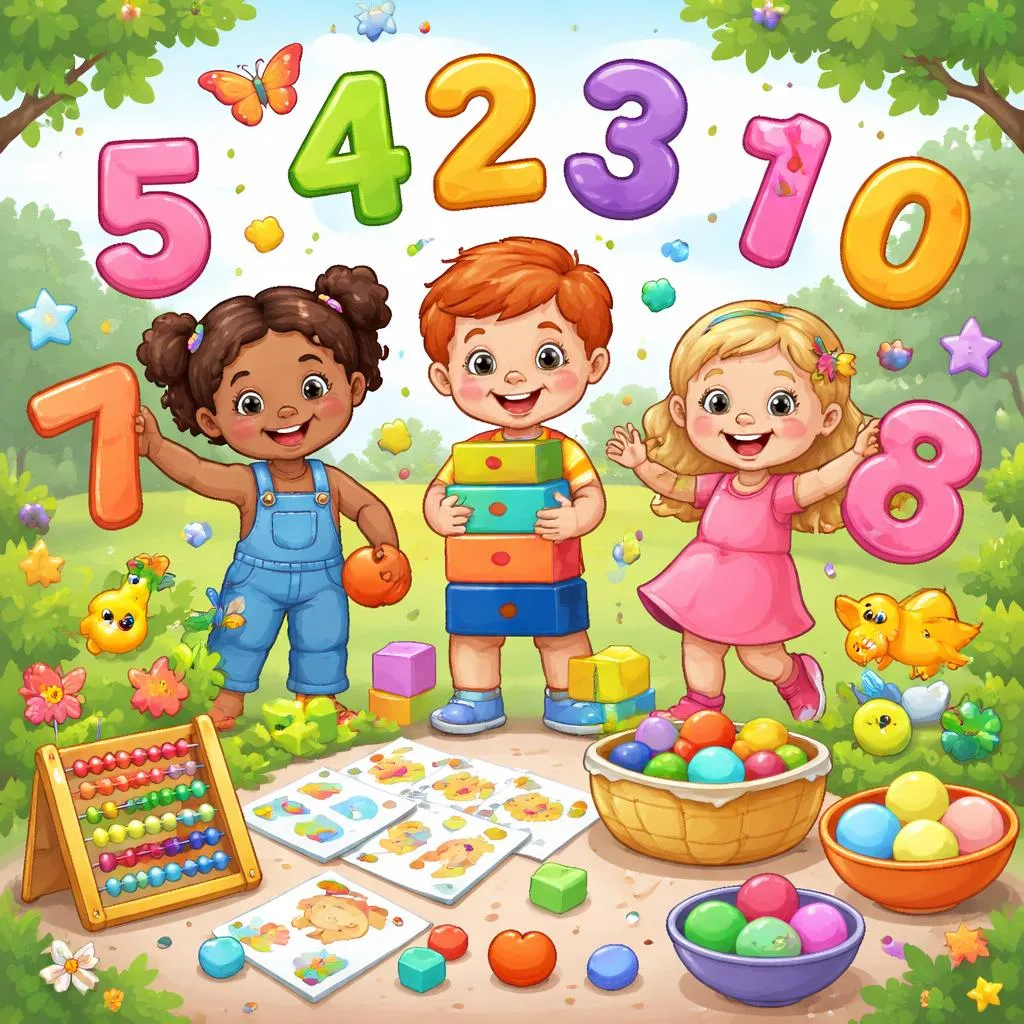

What Are Numbers in English? Numbers in English are used to count things, tell time, and describe how many there are of something. In English, we use different words for numbers. For example, one is the word for the number 1, and five is the word for the number 5. Learning numbers in English is very important because we use them every day. Whether we are talking about how many toys we have, how old we are, or how much something costs, we use numbers all the time.
Why Are Numbers in English Important? Numbers in English help us understand and communicate with others. Here are some reasons why learning numbers is important:
Counting: We use numbers to count things, like how many apples are in a basket or how many people are in a room.
Telling Time: Numbers are used to tell the time. For example, 3:00 means 3 o'clock.
Money: We use numbers to talk about money. For example, if you buy something for $5, you are using numbers to explain how much it costs.
Age: We use numbers to talk about how old we are. For example, if you are 8 years old, you would say, "I am 8 years old."
Numbers in English help us understand the world around us, and we use them for many things in our daily lives.
Basic Numbers in English Let’s start by learning the first few numbers in English. Here are the basic numbers:
One
Two
Three
Four
Five
Six
Seven
Eight
Nine
Ten
These are the first 10 numbers in English. Once you learn these, you can start counting higher and higher!
Tens, Hundreds, and Beyond After ten, numbers continue to get bigger. We learn how to say numbers like twenty, thirty, and so on. Here’s how the numbers go:
Twenty (20)
Thirty (30)
Forty (40)
Fifty (50)
Sixty (60)
Seventy (70)
Eighty (80)
Ninety (90)
When we reach one hundred (100), we continue by saying one hundred one (101), one hundred two (102), and so on.
Fun Vocabulary with Numbers Numbers in English are used with different types of words. Here are some examples of vocabulary that can be used with numbers:
Count: To say how many things there are. For example, "Let's count the apples!"
Total: The full amount. For example, "The total is ten dollars."
More: Used to compare. For example, "I have more toys than you."
Less: The opposite of more. For example, "I have less candy than my friend."
Using numbers with words helps us explain different amounts and values.
Phonics Fun with Numbers Phonics is how we learn the sounds of words. Let’s practice the sounds of numbers:
The /t/ sound in two sounds like the t in top.
The /f/ sound in four sounds like the f in fun.
The /s/ sound in six sounds like the s in sun.
The /n/ sound in nine sounds like the n in nose.
By practicing these sounds, you can get better at saying numbers clearly and correctly.
Simple Sentences with Numbers Vocabulary Here are some fun sentences using numbers vocabulary:
I have five apples.
There are ten books on the table.
I am eight years old.
I can count to twenty.
My sister is three years old.
These sentences will help you practice using numbers in everyday situations. Try making your own sentences with numbers!
Learning Activities with Numbers Here are some fun activities to help you learn numbers in English:
- Number Bingo
Create bingo cards with numbers from 1 to 20. As your teacher calls out the numbers, mark them on your card. The first person to get five numbers in a row wins!
- Count and Color
Get a piece of paper with pictures of objects like apples or toys. Count how many there are and color the right number of pictures. For example, color five apples if the card says five.
- Number Race
Write numbers on the floor. Call out a number, and have the kids race to step on the right number. For example, when you say three, they should jump to number three!
Fun Games with Numbers Vocabulary Games make learning numbers even more fun! Here are some games you can play:
- Number Matching
Write down numbers and pictures of objects on cards. Try to match the number to the correct picture. For example, match the number four to four apples.
- Guess the Number
Think of a number and describe it using words. For example, “I am thinking of a number that is greater than five but less than ten. What number is it?" Let others guess the number!
- Memory Game
Make cards with numbers and pictures. Lay them face down and take turns flipping over two cards at a time. Try to match the numbers to the correct pictures. This helps you remember numbers and their meanings!
Connecting Numbers to Real Life Numbers are used in real-life situations every day. Here are some examples:
Counting money: When you go to the store, you use numbers to buy things. For example, if you want to buy a toy that costs ten dollars, you’ll need ten dollars to pay for it.
Telling time: We use numbers to tell the time. For example, 3:00 means three o'clock.
Age: We use numbers to talk about age. For example, you can say, "I am seven years old" to tell others your age.
Numbers are everywhere in our daily lives!
Classroom Practice with Numbers In the classroom, you can practice number sentences and vocabulary:
How many apples do you have?
I have three pencils.
My brother is five years old.
These simple questions will help you practice numbers in conversation.
Extending Learning Beyond the Classroom You can keep learning about numbers even outside of school:
Count the objects around you, like toys, books, or even the steps you take.
Watch videos in English that talk about counting and numbers. There are many fun songs and cartoons that teach numbers.
Practice with your family. Ask them to help you count items around the house, like fruits, chairs, or pencils.