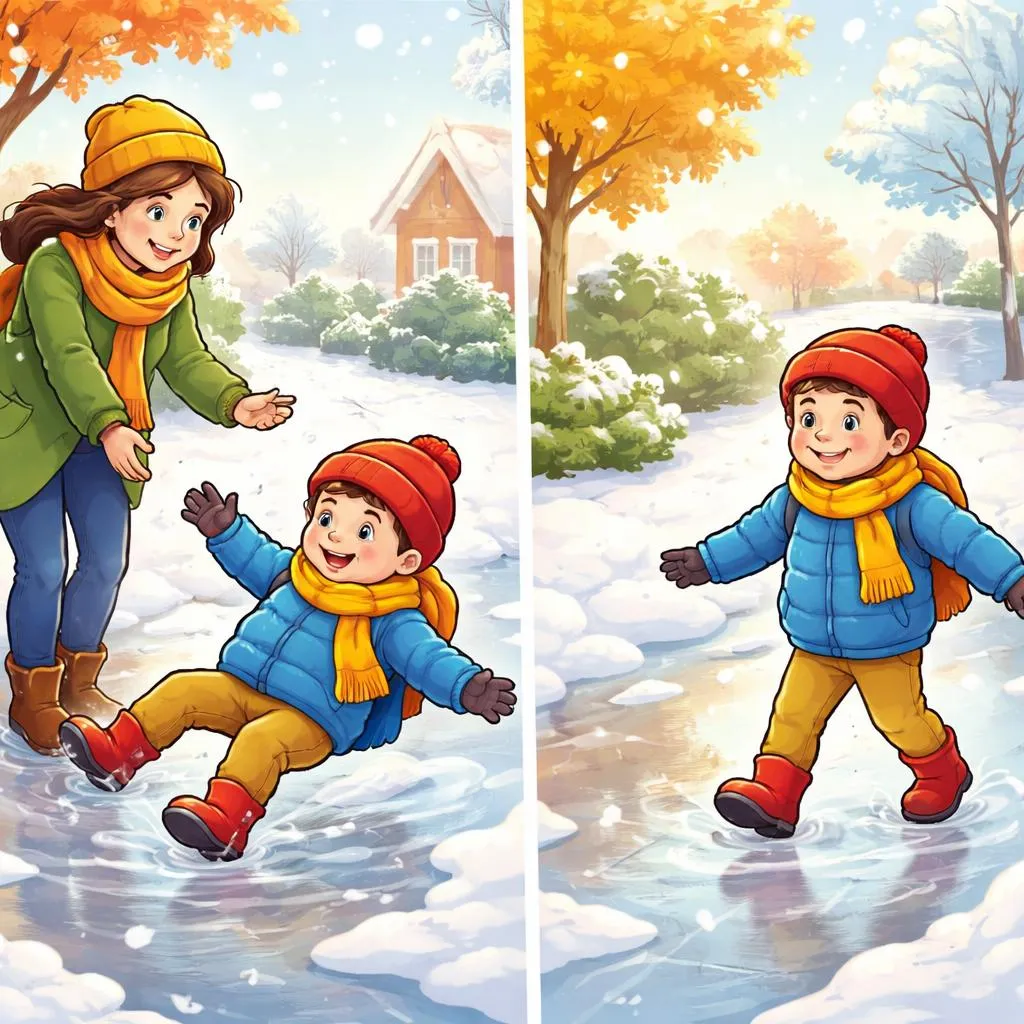

What Do These Expressions Mean? “Don't fall” and “stay upright” both warn someone to keep their body off the ground. They tell a person to maintain balance and avoid falling down. Children hear these words on ice, ladders, or wobbly surfaces. Both prevent injury.
“Don't fall” means do not lose your balance and hit the ground. It is common and direct. A parent says it when a child stands on a chair. It is a clear command.
“Stay upright” means keep your body in a vertical position. It sounds more formal and instructional. A gymnastics coach might say it during a balance beam exercise. It feels like a technical instruction.
These expressions seem similar. Both mean “keep your body off the ground.” Both prevent falls. But one is everyday warning while one is formal instruction.
What's the Difference? One is for everyday warnings. One is for formal or skill instructions. “Don't fall” works for almost every situation. Ice, ladders, wet floors, climbing trees. It is the natural thing to say.
“Stay upright” sounds like a coach or a manual. You might hear it in gymnastics, skating, or yoga. A child saying “stay upright” on a ladder sounds strange. It is correct but unusual.
Think of a child walking on ice. “Don't fall, sweetie” is right. “Stay upright on the ice” sounds like a robot. One matches the moment. One is too formal.
One is for quick warnings. The other is for skill building. “Don't fall” is for immediate danger. “Stay upright” is for practicing balance over time. Use the first for urgent moments. Use the second for lessons.
Also, “stay upright” is less common in everyday speech. Most parents have never said it. “Don't fall” is what real people say. Keep it simple for safety.
When Do We Use Each One? Use “don't fall” for most fall prevention warnings. Use it on ice, ladders, stairs, or wobbly surfaces. Use it when a child is in immediate danger of falling. It fits urgent moments.
Examples at home: “Don't fall. Hold the railing.” “Don't fall. That chair is wobbly.” “Don't fall. The floor is slippery.”
Use “stay upright” very rarely. Use it in balance training, gymnastics, or physical therapy. Use it as an instruction for skilled movement. Children almost never need this phrase.
Examples for balance training: “Stay upright on the balance beam.” (gymnastics) “Stay upright as you ride your bike slowly.” (skill practice) “Stay upright. Keep your back straight.” (yoga)
Most children should just hear “don't fall.” It is clear, urgent, and natural. “Stay upright” is good to understand for balance activities. But for safety warnings, “don't fall” is best.
Example Sentences for Kids Don't fall: “Don't fall. The ladder is high.” “Don't fall. Hold my hand on the ice.” “Don't fall. That log is round and wobbly.”
Stay upright: “Stay upright on the balance board.” (skill practice) “The coach said ‘stay upright’ during the routine.” (gymnastics) “Stay upright as you learn to skate.” (instruction)
Notice “don't fall” sounds like a caring parent. “Stay upright” sounds like a coach. Children learn both. But they should hear “don't fall” for safety.
Parents can use “don't fall” every day. Save “stay upright” for gymnastics or skating lessons. “The coach says ‘stay upright.’ That means don't fall.” Learning happens in small moments.
Common Mistakes to Avoid Some parents say “stay upright” instead of “don't fall.” That sounds strange in daily life. At home, say “don't fall.” Save “stay upright” for sports practice.
Wrong: “Stay upright on that wobbly chair.” Right: “Don't fall. That chair is wobbly.”
Another mistake: saying “don't fall” when no fall risk exists. If you say it too much, children stop listening. Save it for real risks. For small bumps, say “be careful.”
Wrong: “Don't fall” (child walking on flat carpet). Better: “Watch where you are going.”
Some learners forget that “don't fall” is a negative command. Children hear “fall” and might think about falling. Instead, say “hold on tight” or “steady yourself.” Positive instructions work better.
Also avoid shouting “don't fall” in a panicked voice. Panic makes children lose focus. Say it calmly but firmly. Calm warnings prevent falls better than screams.
Easy Memory Tips Think of “don't fall” as a hand reaching out. The hand says “I will catch you, but try not to fall.” Urgent and caring. For immediate danger.
Think of “stay upright” as a balance beam. The beam is narrow. You concentrate. Skill and practice. For training, not emergencies.
Another trick: remember the situation. “Don't fall” is for danger. “Stay upright” is for practice. Danger gets “don't fall.” Practice gets “stay upright.”
Parents can say: “Fall for danger. Upright for a ranger of balance.” That means immediate risk gets “don't fall.” Balance training gets “stay upright.”
Practice at home. Wobbly chair: “don't fall.” Walking a straight line for fun: “stay upright.” Two different balance moments. Two different phrases.
Quick Practice Time Let us try a small exercise. Choose the better phrase for each situation.
Your child is walking on a slippery wet floor. They could fall any second. a) “Stay upright on the wet floor.” b) “Don't fall. The floor is very slippery.”
Your child is practicing walking on a low balance beam at gymnastics class. a) “Don't fall off the beam.” b) “Stay upright. Keep your arms out for balance.”
Answers: 1 – b. Immediate danger on a wet floor fits “don't fall.” 2 – b. A gymnastics skill practice fits the instructional “stay upright.”
Fill in the blank: “When my child climbs a tall ladder, I call out ______.” (“Don't fall” is the immediate, urgent warning.)
One more: “When the coach teaches a skating class, she says ______ on your skates.” (“Stay upright” fits a balance instruction in a skill class.)
Preventing falls keeps children safe. “Don't fall” is for real danger. “Stay upright” is for balance practice. Teach your child both. A child who knows balance stays on their feet.
Wrap-up “Don't fall” is an urgent, everyday warning for immediate fall risks. “Stay upright” is a formal instruction for balance training and skill practice. Use “don't fall” on ice, ladders, and slippery floors. Use “stay upright” in gymnastics, skating, or balance exercises. Both phrases prevent falls. A child who learns balance grows up steady and strong.