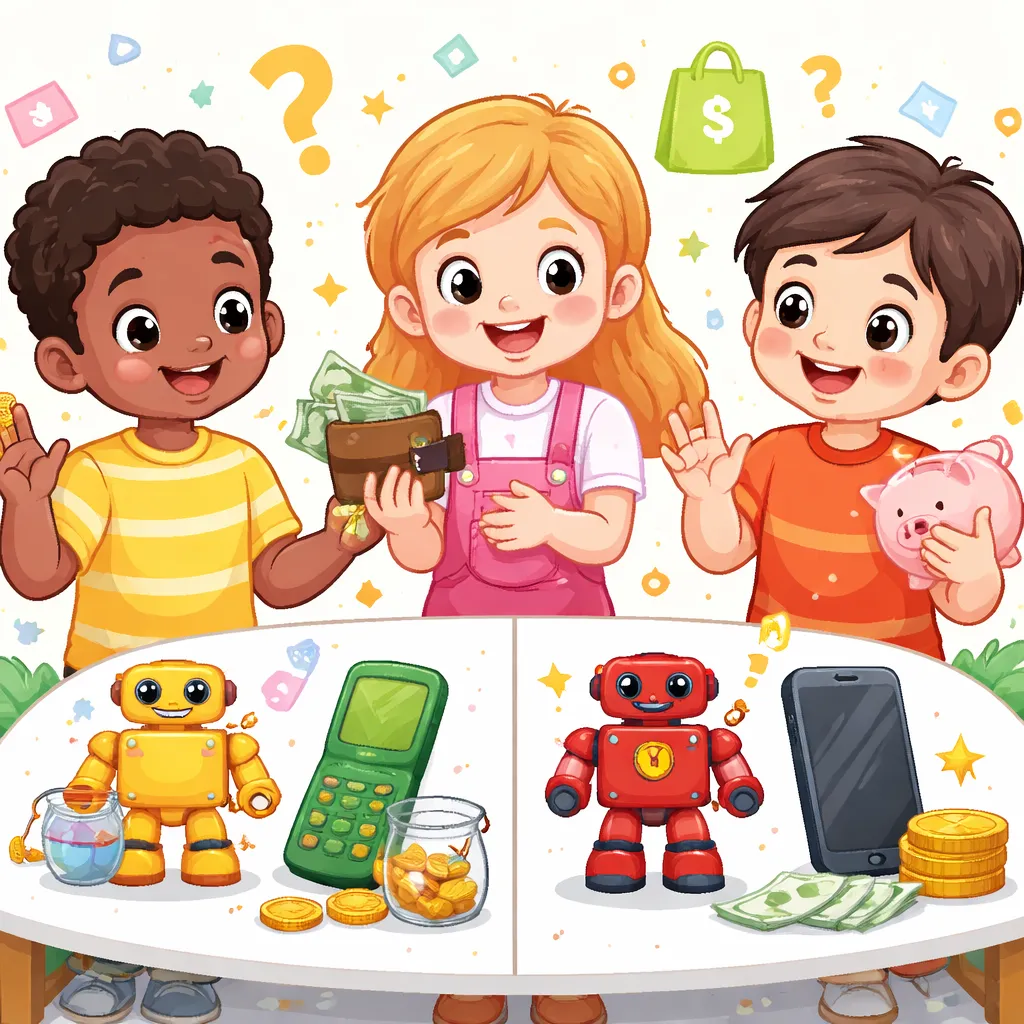

Are Similar Words Really Interchangeable?
Many English words share similar meanings. This often creates confusion for young learners. “Cheap and inexpensive” both describe something that does not cost much money. At first, they seem interchangeable.
However, these two words carry different tones. “Inexpensive” is neutral and polite. “Cheap” can sometimes sound negative.
Understanding this difference helps children use language more carefully. It also supports polite communication.
When children learn subtle differences, they improve both speaking and writing. This builds confidence over time.
Set 1: cheap vs inexpensive — Which One Is More Common?
“Cheap” is more common in everyday speech. Children hear it often in daily life.
Examples:
a cheap toy a cheap snack a cheap shirt
These examples are simple and easy to understand.
“Inexpensive” appears less often in casual conversation. It is longer and more formal.
Examples:
an inexpensive product an inexpensive meal an inexpensive option
Because “cheap” is shorter and easier, children usually learn it first. “Inexpensive” develops later.
Set 2: cheap vs inexpensive — Same Meaning, Different Contexts
Both words describe low price. However, they differ in tone.
“Cheap” can sometimes suggest low quality. It may sound slightly negative.
Example:
This toy is cheap. (It may break easily.)
“Inexpensive” focuses only on price. It does not suggest poor quality.
Example:
This toy is inexpensive. (It costs little, but quality is not judged.)
If a child says “cheap product,” the meaning is clear. But in polite conversation, “inexpensive product” sounds better.
Context matters. Tone affects how others feel.
Set 3: cheap vs inexpensive — Which Word Is “Bigger” or More Emphatic?
“Cheap” often feels stronger. It may carry emotion or judgment.
“Inexpensive” feels softer and more neutral. It simply describes price.
Compare:
a cheap restaurant an inexpensive restaurant
The first may suggest poor quality. The second suggests good value at a low price.
“Cheap” can sometimes sound critical. “Inexpensive” sounds more respectful.
Teaching this difference helps children communicate politely.
Set 4: cheap vs inexpensive — Concrete vs Abstract
Both “cheap and inexpensive” usually describe concrete things. These are objects we can buy.
Examples:
cheap clothes inexpensive books
Children can easily understand these.
However, “cheap” can also describe behavior. This is more abstract.
Example:
a cheap action
This use suggests poor character or unfair behavior.
“Inexpensive” does not usually describe behavior. It focuses only on price.
This difference helps children understand deeper meanings.
Set 5: cheap vs inexpensive — Verb or Noun? First Understand the Role
Both “cheap” and “inexpensive” are adjectives. They describe nouns.
Examples:
a cheap bag an inexpensive gift
“Cheap” can also appear in expressions:
cheap price cheap deal
“Inexpensive” remains more formal and structured.
Their related noun forms include:
cheapness expense
Example:
The cheapness surprised us. The expense is low.
Understanding these forms helps children expand vocabulary.
Set 6: cheap vs inexpensive — American English vs British English
Both words appear in American and British English. There are no spelling differences.
“Cheap” is widely used in both regions. It appears in daily conversation.
“Inexpensive” is also used in both varieties. It is more common in formal speech and writing.
Usage patterns are similar across regions. Learners can use both words in either variety.
The main difference lies in tone, not location.
Set 7: cheap vs inexpensive — Which Fits Formal Situations?
“Inexpensive” fits formal situations better. It sounds polite and neutral.
Examples:
an inexpensive solution an inexpensive option
These phrases appear in business or academic contexts.
“Cheap” is more casual. It may sound negative in formal writing.
Examples:
a cheap product a cheap service
In professional settings, “inexpensive” is usually the safer choice.
Teaching children this difference helps them adjust their language.
Set 8: cheap vs inexpensive — Which One Is Easier for Kids to Remember?
“Cheap” is easier for children. It is short and simple. It appears often in daily life.
Children learn it through:
shopping conversations stories
“Inexpensive” is longer and more complex. It may take more time to remember.
Adults can explain: “Cheap means low price, sometimes low quality.” “Inexpensive means low price, but not bad quality.”
Simple explanations help children understand clearly.
Mini Exercise: Can You Spot the Differences Between These Similar Words?
Practice helps children learn effectively.
Exercise 1: Choose the correct word
This bag is very _____. (cheap / inexpensive) The hotel is ____ but nice. (cheap / inexpensive) That toy looks ____ and breaks easily. (cheap / inexpensive)
Answers:
cheap inexpensive cheap
Exercise 2: Match the meaning
A. cheap product B. inexpensive product
low price, good value low price, possibly low quality
Answers: A → 2 B → 1
Exercise 3: Create your own sentences
Ask children to write:
one sentence with “cheap” one sentence with “inexpensive”
Encourage simple and clear ideas.
Parent Tips: How to Help Kids Learn and Remember Similar Words
Parents can support vocabulary learning through daily interaction. Simple actions are very effective.
Use real-life examples. Talk about shopping and prices. Use “cheap” naturally.
Then introduce “inexpensive” in polite contexts: “This toy is cheap.” “This book is inexpensive but good.”
Keep explanations short. Avoid complex definitions.
Read together often. Books provide natural examples.
Encourage children to ask questions. Curiosity supports learning.
Repeat words in daily conversation. Repetition builds memory.
Use games and simple exercises. Matching and sentence building make learning fun.
Be patient. Language learning takes time. Each new word adds confidence.
As children grow, they begin to understand the difference between “cheap and inexpensive.” They learn to choose words based on tone, meaning, and situation. This awareness helps them communicate clearly and respectfully in English.