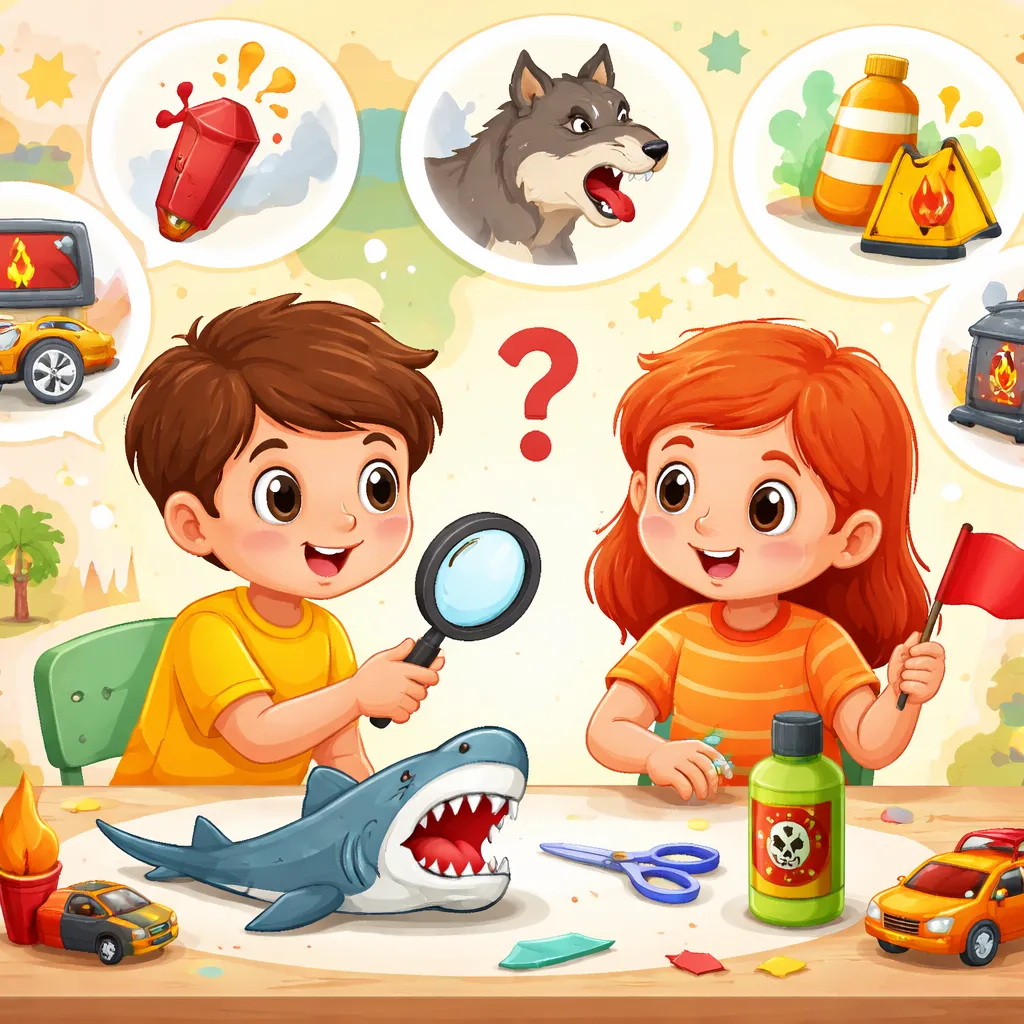

Are Similar Words Really Interchangeable?
Many English words share similar meanings. This can make vocabulary learning challenging for children. Words like dangerous and risky both relate to harm or possible danger.
At first, they seem interchangeable. However, they are not always used in the same way. Small differences affect meaning, tone, and usage.
When children understand these differences, they improve both language and thinking skills. They also become more aware of safety in real life.
Set 1: dangerous and risky — Which One Is More Common?
The word dangerous is very common in daily English. Children hear it in safety rules and everyday talk. For example, “That road is dangerous.”
Risky is also common, but slightly less frequent in early learning. For example, “That choice is risky.”
Because of this, dangerous becomes part of early vocabulary. Children use it naturally to describe clear danger.
Parents can introduce dangerous first. Then they can add risky to build deeper understanding.
Set 2: dangerous and risky — Same Meaning, Different Contexts
Both words describe situations with possible harm. Yet they appear in different contexts.
Dangerous describes something that can cause harm directly:
The fire is dangerous. The animal is dangerous.
It focuses on real and clear danger.
Risky describes actions or choices that may lead to harm:
It is risky to run on wet ground. That plan is risky.
It focuses on possibility and decision-making.
Children should learn that dangerous describes things. Risky often describes actions.
Set 3: dangerous and risky — Which Word Is “Bigger” or More Emphatic?
When comparing strength, dangerous often sounds stronger than risky.
Dangerous suggests a high chance of harm.
Risky suggests a chance of harm, but not always certain.
For example:
Swimming in a storm is dangerous. Climbing without checking equipment is risky.
The first situation sounds more serious.
This helps children understand levels of danger.
Set 4: dangerous and risky — Concrete vs Abstract
Both dangerous and risky can describe concrete and abstract ideas.
Dangerous often describes physical things:
dangerous roads dangerous animals
It is easy to see or imagine.
Risky often describes decisions or actions:
risky choices risky plans
It is more abstract.
This shows that dangerous is more physical. Risky is more about thinking and decisions.
Set 5: dangerous and risky — Verb or Noun? First Understand the Role
Understanding parts of speech helps children use words correctly.
Dangerous is an adjective:
a dangerous place a dangerous situation
It connects to the noun danger:
There is danger ahead.
Risky is also an adjective:
a risky move a risky decision
It connects to the noun risk:
There is a risk of falling.
Learning these forms helps children expand vocabulary step by step.
Set 6: dangerous and risky — American English vs British English
Both words appear in American and British English. Their meanings remain the same.
Dangerous is very common in both regions. It appears in daily speech.
Risky also appears in both, especially when talking about decisions or chances.
Children can use both words confidently in either variety of English.
Set 7: dangerous and risky — Which Fits Formal Situations?
Word choice matters in formal communication.
Dangerous works in both informal and formal contexts:
“This is a dangerous situation” sounds clear and direct.
Risky often appears in discussions about decisions:
“This is a risky investment” sounds thoughtful and analytical.
In formal writing, risky may appear in discussions about planning or judgment.
Teaching this difference helps children express ideas clearly in different contexts.
Set 8: dangerous and risky — Which One Is Easier for Kids to Remember?
Children learn best with simple and clear words.
Dangerous is easier because:
it appears often it connects to visible danger it is taught in safety rules
Risky is slightly more abstract. It may take more time to understand.
However, once children learn about choices and consequences, they can use risky naturally.
Parents can use everyday examples to explain both words.
Mini Exercise: Can You Spot the Differences Between These Similar Words?
Try these exercises together.
Choose the correct word: dangerous or risky.
Playing with fire is ______. It is ______ to cross the street without looking. The cliff is very ______. That decision is ______ without enough information.
Answers:
dangerous risky dangerous risky
Encourage children to explain their choices. This builds deeper understanding.
Parent Tips: How to Help Kids Learn and Remember Similar Words
Parents can support vocabulary learning with simple steps.
Start with dangerous. Use it in safety discussions. Talk about things that can cause harm.
Then introduce risky. Explain that it describes choices that may lead to danger.
Ask guiding questions:
Is this something clearly dangerous, or a choice that could be risky? Can we avoid the situation or make a better decision?
Use real-life examples. Fire is dangerous. Running on a wet floor is risky.
Encourage children to use both words in speaking and writing. Practice builds confidence.
Keep learning positive and meaningful. When children understand words like dangerous and risky, they gain stronger tools to describe safety, think carefully, and make better decisions in daily life.