
What Is This Animal?
A cockroach is a flat, oval-shaped insect with long antennae. It has six legs covered in tiny spines. Most cockroaches have wings. Some can fly. Others use their wings for gliding. Cockroaches are fast runners. They can scurry out of sight in seconds.
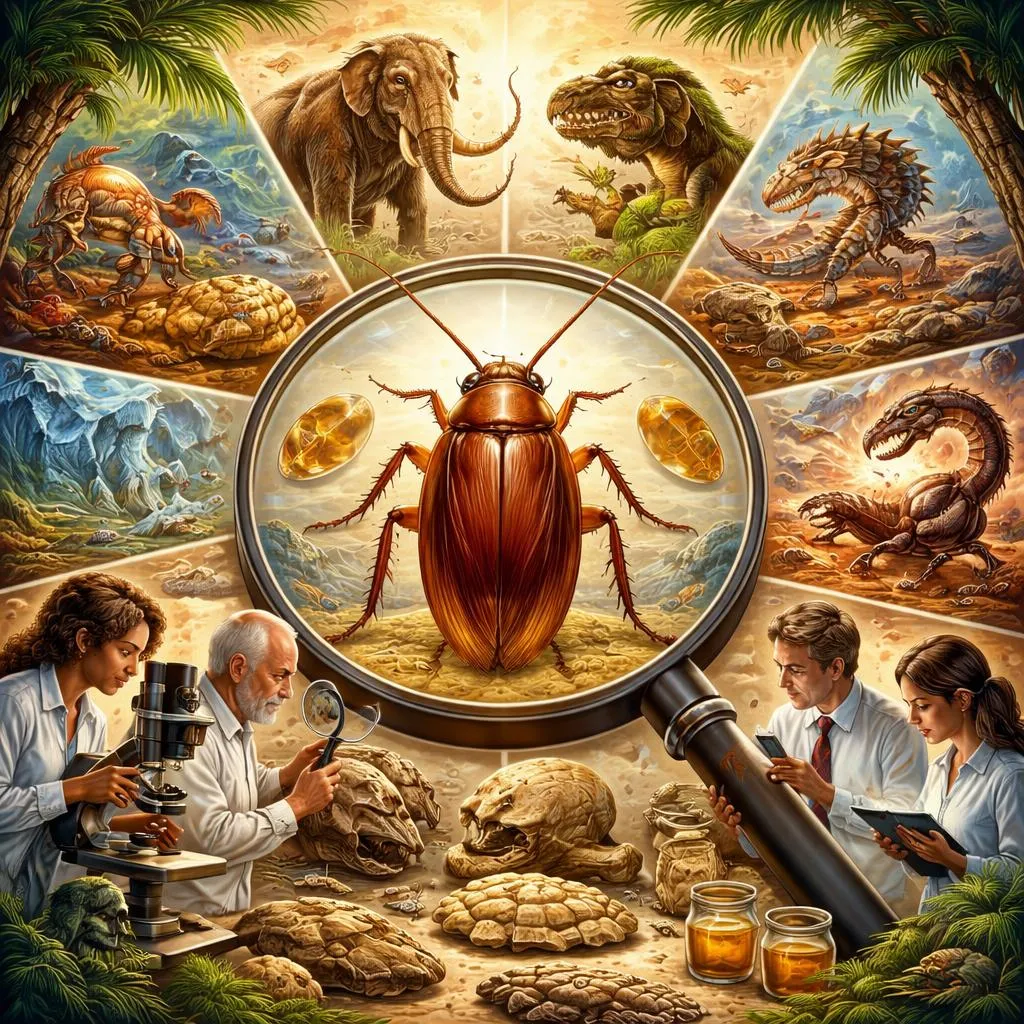
Cockroaches have been on Earth for a very long time. They lived alongside dinosaurs. They survived changes that many other creatures could not. Their ability to adapt makes them one of the most successful insect groups.
These insects live in many places around the world. Some live in forests. Others live in deserts. A few species live near humans. They seek warm, dark spaces. They come out at night to find food.
For children, cockroaches are best understood from a distance. Learning about them teaches children about cleanliness, prevention, and the amazing survival skills of ancient creatures.
English Learning About This Animal
Let us learn the English word cockroach. We say it like this: /ˈkɒkrəʊtʃ/. The word has two parts. Cock sounds like “kok.” Roach sounds like “roach.” Put them together: cockroach. Say it three times. Cockroach. Cockroach. Cockroach.
Now let us learn words about a cockroach’s body. The head holds the eyes and long antennae. The antennae help the cockroach sense its surroundings. The thorax is the middle section where legs and wings attach. The abdomen is the flat back part. The legs have spines for quick movement. The wings lie flat over the body.
There is an old saying about cockroaches. People say, “Cockroaches will survive anything.” This refers to their amazing resilience. Another saying is, “A clean home is the best defense.” This reminds us that cleanliness prevents pests.
These English words help children understand cockroach anatomy. When they say antennae, they learn about the sensing tools. When they say spines, they understand how cockroaches move quickly. Parents can practice these words while looking at pictures. Point to the parts. Say the words together.
Animal Facts and Science Knowledge
Cockroaches belong to the insect order Blattodea. There are over four thousand cockroach species. Most live in the wild. Only about thirty species live near humans. Cockroaches are among the oldest insects on Earth. Fossil evidence shows they existed over three hundred million years ago.
Cockroaches live in many habitats. Wild cockroaches live in forests, under leaves, and in soil. They help break down dead plants. Pest cockroaches live in warm, damp places near humans. They hide in kitchens, bathrooms, and basements. They come out at night.
Cockroaches eat almost anything. They eat crumbs, grease, paper, and even soap. They are scavengers. They help clean up waste in nature. In homes, they seek food left out. They can survive without food for a month. They can survive without water for about one week.
Cockroaches have special abilities. They can run very fast. Some species run up to three miles per hour. They can flatten their bodies to squeeze through tiny cracks. They can hold their breath for up to forty minutes. They can live without their head for a week. Their bodies continue to function until they starve.
Cockroaches go through simple metamorphosis. Females lay eggs in a case called an ootheca. The case holds many eggs. Nymphs hatch from the eggs. Nymphs look like small adults without wings. They shed their skin several times as they grow. Adults have wings and can reproduce.
How to Interact With This Animal Safely
Cockroaches are not dangerous, but they can carry germs. The best way to interact is to prevent them from entering the home. Teach children to keep food in sealed containers. Clean up crumbs after eating. Do not leave dirty dishes overnight.
Teach children to keep the home clean. Sweep floors regularly. Wipe counters. Take out trash. A clean home does not attract cockroaches. These habits keep families healthy.
If you see a cockroach, stay calm. They are fast. They run to dark places. Do not chase them with bare hands. Use a vacuum or call for help. Teach children that some tasks are for adults.
If your home has cockroaches, use safe control methods. Keep food areas clean. Seal cracks where they enter. Use traps or professional help if needed. Do not leave food out for pets overnight. These steps reduce cockroach populations.
Teach children that cockroaches in the wild are part of nature. They help break down dead plants. They feed birds and other animals. In the forest, they have important jobs. The difference is where they live—in nature or in our homes.
What Can We Learn From This Animal
Cockroaches teach us about resilience. They have survived for millions of years. Children learn that adapting to change is a powerful skill. When things are hard, finding new ways helps us survive and thrive.
Cockroaches teach us about cleanliness. They remind us that a clean home keeps pests away. Children learn that daily habits matter. Putting food away, wiping spills, and taking out trash are small actions with big results.
Cockroaches teach us about survival skills. They can live without food for a long time. They fit into tiny spaces. Children learn that having skills helps in difficult times. Learning, practicing, and being prepared are all survival skills.
Cockroaches teach us that every creature has a role. In nature, they are decomposers. In homes, they are unwanted. Children learn that context matters. The same creature can be helpful in one place and a pest in another.
Fun Learning Activities
Let us make learning about cockroach fun. One activity is the cockroach run game. Ask your child to crawl quickly on hands and knees. Change direction fast. Hide under a table or behind a chair. Say “cockroach runs fast” and “cockroach hides in the dark.”
Another activity is exploring where cockroaches live in nature. Go for a walk in the woods. Look under logs and leaves. You may find wild cockroaches. Observe them from a distance. Talk about how they help break down dead plants.
Draw a cockroach and label its parts. Draw the head, antennae, thorax, abdomen, legs, and wings. Write the words next to each part. Say them aloud. For younger children, draw the cockroach first. Let them point to the parts as you say the words.
Create a story about a cockroach in the wild. Ask your child where the cockroach lives. Does it hide under leaves? Does it eat fallen fruit? Does it escape a bird? Write a few sentences together. Let your child draw pictures. Read the story aloud.
Make a cockroach craft. Use an oval-shaped paper for the body. Add long antennae from pipe cleaners. Add six paper legs. Draw spines on the legs. Talk about how cockroaches are built for running and hiding.
Learn about ancient insects. Look at pictures of prehistoric insects. Talk about how cockroaches lived with dinosaurs. Use words like “ancient,” “adapt,” and “survive.” This connects the insect to Earth’s long history.
These simple activities bring learning to life. Children build English vocabulary while playing. They learn science through understanding adaptation. They develop good habits through cleanliness discussions. Learning about cockroach becomes a lesson in resilience, prevention, and the amazing survival stories hidden in tiny bodies. Each moment spent together strengthens language, curiosity, and a growing appreciation for creatures that have walked the Earth since before the dinosaurs, reminding us that survival takes many forms.