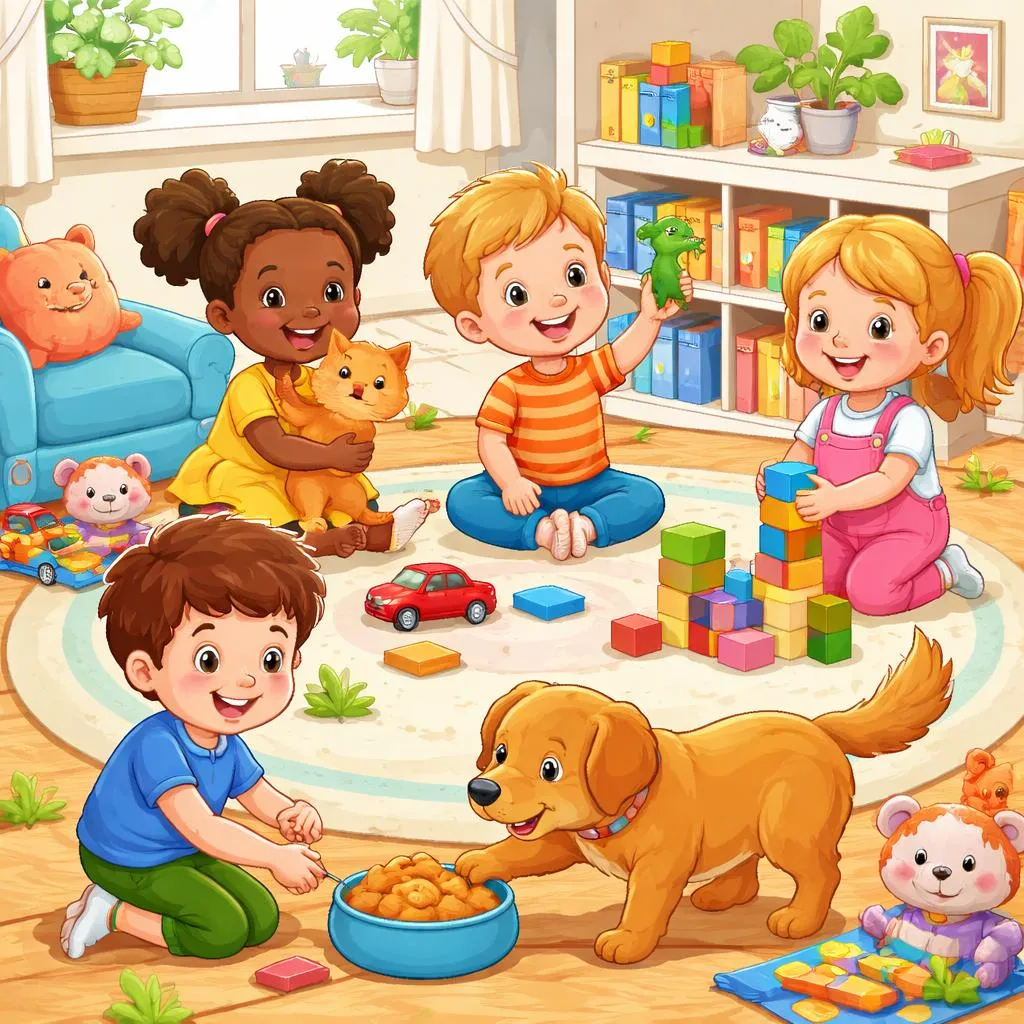

Four-year-olds love to tell you things. They share what they see, feel, and want. These statements are called declarative sentences. A declarative sentence makes a statement. It gives information. It ends with a period. Most of what young children say is declarative. Teaching your child common declarative sentences helps them share their world. This article shares the 50 most common declarative sentences for 4-year-olds. These will help your child make clear statements every day.
What Is a Declarative Sentence for a Four-Year-Old?
A declarative sentence tells something. It states a fact or an opinion. It ends with a period. "The sky is blue." That is a declarative sentence. "I like ice cream." That is another. Four-year-olds use declarative sentences all the time. They say "My dog is brown." They say "I am tired." These sentences share information. They help children express what they know and how they feel.
Meaning and Explanation of Declarative Sentences
Declarative sentences are the most common type of sentence. They make statements. They can be short or long. They can be simple or complex. For young children, declarative sentences are usually simple. They follow a pattern. Someone or something does something or is something. "The cat sleeps." "Mommy is nice." These sentences build the foundation for all communication. They let children participate in conversations by sharing information.
Categories of Declarative Sentences for Preschoolers
We group these declarative sentences into categories. This helps children learn different kinds of statements. Here are the main groups:
Sentences About Self: Statements about what the child does, feels, or wants.
Sentences About Family: Statements about parents, siblings, and home.
Sentences About Toys and Play: Statements about things they play with.
Sentences About Animals: Statements about pets and creatures they see.
Sentences About Food: Statements about what they eat and like.
Sentences About Nature: Statements about the world outside.
Sentences About Daily Routines: Statements about their day.
Sentences About Feelings: Statements about emotions.
Daily Life Examples of Declarative Sentences
Declarative sentences fill every conversation. In the morning, a child says "I am awake." At breakfast, they say "This cereal is good." During play, they say "My tower is tall." At the park, they say "The swing is fun." At bedtime, they say "I am sleepy." Parents use declarative sentences too. "The sun is shining." "Dinner is ready." Your child hears statements all day long.
Sentences About Self
I am four years old.
My name is Lily.
I like to play.
I have a blue shirt.
I can jump high.
I want milk.
I see a bird.
I made this tower.
I am tired now.
I love my family.
Sentences About Family
Mommy is cooking.
Daddy is at work.
My sister is little.
My brother is funny.
Grandma has a dog.
Grandpa reads books.
We live in this house.
My family is nice.
Baby is sleeping.
We go to the park.
Sentences About Toys and Play
This ball is red.
My doll has hair.
Blocks are fun.
The car goes fast.
I have a new toy.
This puzzle is hard.
My teddy bear is soft.
The train is long.
Crayons are for drawing.
Bubbles float away.
Sentences About Animals
The dog barks.
Cats say meow.
Birds fly high.
Fish swim in water.
My bunny is soft.
Elephants are big.
Ducks like water.
The cow says moo.
Bugs are small.
Horses run fast.
Sentences About Food
Milk is white.
Apples are yummy.
Pizza is my favorite.
This soup is hot.
Cookies are sweet.
I like bananas.
Juice is cold.
Bread is soft.
Cheese is yellow.
Water is good.
Sentences About Nature
The sky is blue.
The sun is warm.
Rain is wet.
Flowers are pretty.
Trees are tall.
Grass is green.
The moon is round.
Stars twinkle.
Clouds are fluffy.
Snow is cold.
Sentences About Daily Routines
I wake up in the morning.
I eat breakfast now.
I brush my teeth.
I put on my shoes.
We go to the store.
I take a bath.
I wear pajamas.
I read a book.
I go to sleep.
It is bedtime.
Sentences About Feelings
I am happy today.
I feel sad.
I am scared of loud noises.
I feel sleepy.
I am excited for the park.
I love you, Mommy.
That makes me mad.
I feel better now.
I am proud of my picture.
I miss Grandma.
Printable Flashcards for Declarative Sentences
Flashcards help children recognize and read declarative sentences. Create cards with one sentence on each. Use clear writing. On the back, draw a simple picture that matches the sentence. For "The sky is blue," draw a blue sky. For "I like pizza," draw a pizza. Show the card and read the sentence. Have your child repeat. You can also play a matching game. Match the sentence to the picture.
Another idea is to make a sentence book. Write several declarative sentences. Let your child draw pictures for each one. Staple the pages together. Read the book together. Your child will feel proud of their work.
Learning Activities with Declarative Sentences
Activities help children use declarative sentences naturally. Try these at home:
Morning News: Each morning, have your child share one statement. "Today I will play with my friend." Write it down. Read it together.
Picture Talk: Look at a picture book. Ask your child to make statements about what they see. "The bear is brown." "The bird is flying."
Show and Tell: Have your child choose a toy. They make statements about it. "This is my car. It is red. It goes fast."
Feelings Check: Throughout the day, ask "How do you feel?" Your child makes a statement. "I feel happy."
Observation Walk: Go for a walk. Stop and make statements about what you see. "I see a big tree." "The flowers are pretty."
Learning Activities for Specific Declarative Sentence Types
For sentences about self, make an "All About Me" book. Help your child write statements about themselves. "I am four." "I like pizza." "I have a dog." For sentences about family, look at photos. Make statements about each person. "Grandma has glasses." "Daddy is tall." For sentences about nature, collect leaves or rocks. Make statements about them. "This leaf is green." "This rock is smooth."
Educational Games Using Declarative Sentences
Games make learning declarative sentences fun. Here are some favorites:
Statement Bingo: Make bingo cards with pictures. Call out declarative sentences that match the pictures. "The cat is sleeping." Your child covers the picture of a sleeping cat.
I Spy Statements: Play I Spy using statements. "I spy something that is round and bouncy." Your child guesses and makes a statement. "The ball is round!"
Memory Match: Make pairs of sentence cards and picture cards. Mix them up and lay them face down. Take turns flipping two. If they match, read the sentence together.
Story Chain: Take turns adding declarative sentences to make a story. "Once there was a little dog." Next person adds "The dog was brown." Next adds "He liked to run."
Sentence Scavenger Hunt: Hide sentence cards around the room. Your child finds them and reads each one aloud.
Game Ideas for Different Settings
In the car, play "I See Statements." Look out the window and make statements. "I see a red car." "The sky is cloudy." Your child joins in. At the park, play "Park Statements." Make statements about what you see and do. "The slide is fast." "I am swinging high." At mealtime, play "Food Statements." Take turns making statements about the food. "This soup is hot." "Milk is cold."
How to Teach Declarative Sentences Naturally
You are the best model. Use declarative sentences throughout the day. Narrate what you do. "I am making dinner." "I am folding clothes." "The mail came." Your child hears how statements work.
When your child speaks, expand their words into declarative sentences. If they say "dog," you say "Yes, the dog is brown." If they say "tired," you say "You are tired." This models complete statements.
Why Declarative Sentences Matter for Four-Year-Olds
Declarative sentences are how we share our world. They let children tell you what they think and feel. They let them describe what they see. Without declarative sentences, children could only ask questions or give commands. They could not share information. Declarative sentences build connection. They let children participate in conversations as equals.
Declarative sentences also build thinking skills. To make a statement, children must observe and form an idea. They must put that idea into words. This process strengthens cognitive development.
Tips for Parents to Support Declarative Sentence Learning
Talk with your child, not at them. Have real conversations. Listen to their statements. Respond to them. This shows that their words matter.
Read books together. Point to pictures and make statements. "This bear is big." "This house is yellow." Ask your child to make statements too. "What can you tell me about this picture?"
Encourage your child to make statements about their day. At dinner, ask "What did you do today?" Listen to their statements. Ask follow-up questions. This builds narrative skills.
The Power of Repetition with Declarative Sentences
Children learn through repetition. They will say the same statements again and again. This is good. Each repetition strengthens the pattern. They are practicing. They are mastering the form.
Use songs and rhymes that are full of statements. "Old MacDonald had a farm" is full of statements. "The itsy bitsy spider went up the water spout" is a statement. Singing makes repetition joyful.
Create routines around statements. At bedtime, have your child make a statement about their day. "Today I played with blocks." Write it down. Read it back. This builds a habit of sharing.
Connecting Declarative Sentences to Books and Media
Choose books with simple declarative sentences. Many early reader books use only statements. Point to each sentence as you read. "See, this sentence tells us something." After many readings, let your child "read" the statements they remember.
Educational videos can also help. Watch together and pause to make statements about what you see. "The character is happy." "The car is blue." This builds active viewing.
Making a Declarative Sentence-Rich Environment
Label things around your home with declarative sentences. On the fridge, put "The fridge is cold." On the bed, put "This bed is soft." On the toy box, put "Toys are in here." Read these with your child. They see that written words make statements.
Create a "statement of the day" board. Each day, write a new declarative sentence. Read it together throughout the day. By evening, your child will know it by heart.
Encouraging Your Child to Use Declarative Sentences
Ask open-ended questions that invite statements. Instead of "Did you have fun?" ask "What did you do at the park?" This invites a statement. Instead of "Are you tired?" ask "How do you feel?" This invites a statement about feelings.
Praise your child's statements. "That was a great sentence! You told me exactly what you did." This positive feedback encourages more sharing.
Celebrating Progress with Declarative Sentences
Keep a journal of your child's statements. Write down the ones they say. Date them. Look back together. "Look, when you were three, you said 'I like milk.' Now you say 'I want cold milk please.'" This shows growth.
Remember that every child develops at their own pace. Some make long statements early. Some use short statements longer. Both are normal. Your support and encouragement make the difference.
By teaching your child these 50 most common declarative sentences, you give them the power to share their world. They can tell you what they see, feel, and think. They can participate fully in conversations. Enjoy each new statement together. Every "I love you" and "The sky is blue" is a gift.