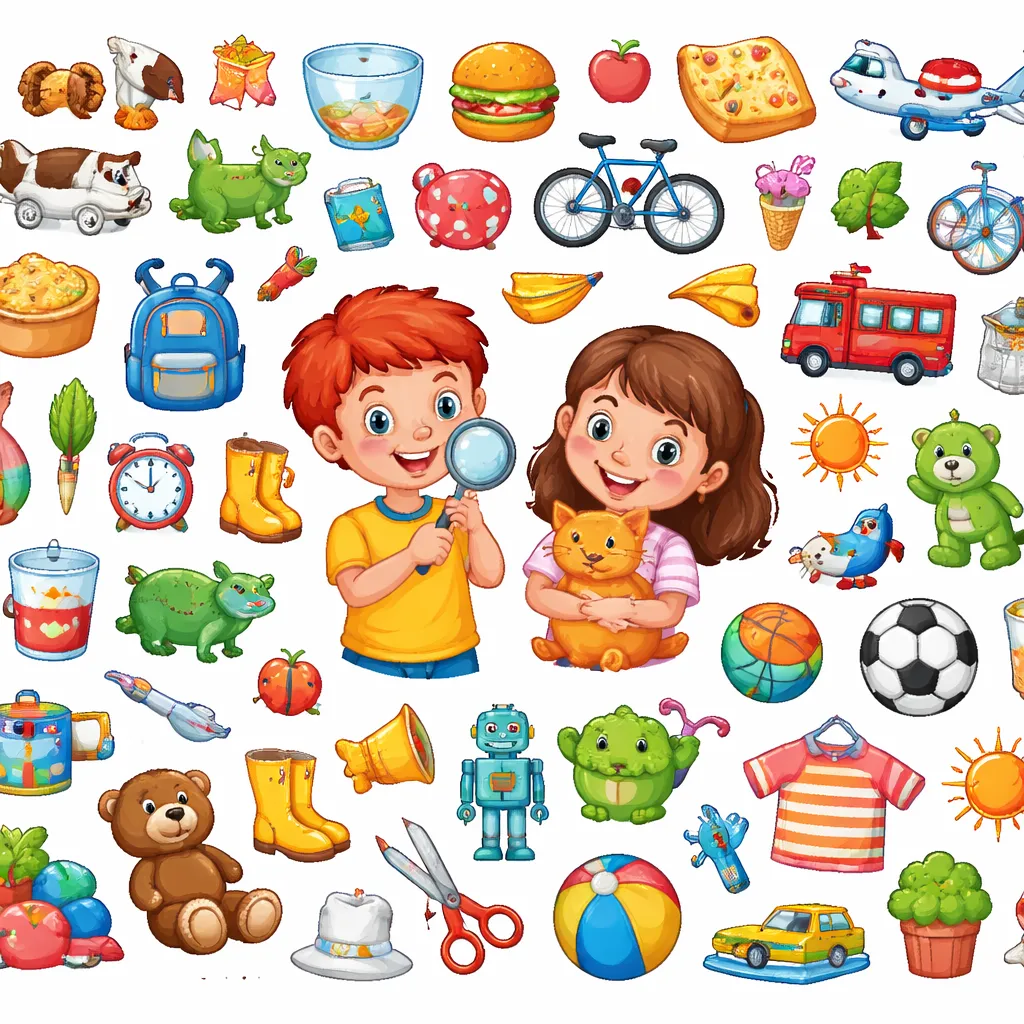

Every sentence has a star. That star is the subject. Every sentence has action. That action is the verb. But sometimes the action needs a target. Something receives the action. That something is the object.
This guide explores the 90 essential object for 8-year-old learners. We will look at what objects are, how they work, and why they matter. Together, you and your child can discover how objects complete the action of sentences. Let us find out who or what receives the action.
What Is an Object? The Receiver of the Action
An object is a noun or pronoun that receives the action of the verb. It answers the question "what?" or "whom?" after the verb. Not every sentence has an object. But when an action transfers from the subject to something else, that something is the object.
In the sentence "The dog eats the bone," the object is "the bone." The bone receives the eating.
In "My sister reads books," the object is "books." The books receive the reading.
In "I hug my mom," the object is "my mom." She receives the hug.
Objects make sentences more complete. They tell us what the action is happening to. Without objects, we have actions that go nowhere. "The dog eats." Eats what? We do not know. Add an object, and the picture becomes clear.
For an 8-year-old, understanding objects helps them add details to their sentences. Their writing becomes more specific. Readers know exactly what is happening.
Meaning and Explanation: Why Objects Matter
Objects are where the action lands. The subject does something. The verb is the action. The object is what gets acted upon. Together, they tell a complete story.
Think of it this way. The subject is the giver. The verb is the giving. The object is the receiver. Without the receiver, the giving feels incomplete.
"I bought" leaves us wondering. Bought what? "I bought a gift." Now we know. The gift is the object. It completes the thought.
The 90 essential object for 8-year-old learners covers many kinds of objects. Food objects like "pizza" and "cookies." Toy objects like "ball" and "doll." School objects like "pencil" and "book." People objects like "my friend" and "the teacher." Each one helps children complete their thoughts.
There are two main types of objects. Direct objects receive the action directly. "I threw the ball." The ball is the direct object. Indirect objects tell us who or what receives the direct object. "I threw my friend the ball." My friend is the indirect object. They receive the ball.
Categories or Lists: The 90 Essential Objects
We have grouped these objects into categories. Each category represents things children interact with every day. Practice a few from each group.
Food and Drink Objects
These objects are things we eat and drink.
an apple
a banana
an orange
a sandwich
pizza
a burger
hot dogs
mac and cheese
spaghetti
soup
cereal
oatmeal
pancakes
waffles
eggs
toast
yogurt
cheese
crackers
cookies
cake
ice cream
pudding
juice
milk
water
hot chocolate
lemonade
a lollipop
candy
Toy and Game Objects
These objects are things we play with.
31. a ball
32. a doll
33. an action figure
34. a stuffed animal
35. a puzzle
36. LEGOs
37. blocks
38. a board game
39. a card game
40. a video game
41. a remote control car
42. a bike
43. a scooter
44. a skateboard
45. a jump rope
46. a kite
47. bubbles
48. sidewalk chalk
49. a coloring book
50. crayons
School Objects
These objects are things we use for learning.
51. a pencil
52. a pen
53. an eraser
54. a ruler
55. scissors
56. glue
57. a notebook
58. a folder
59. a backpack
60. a lunch box
61. a book
62. a worksheet
63. a calculator
64. a tablet
65. a computer
Household Objects
These objects are things around the house.
66. a cup
67. a plate
68. a bowl
69. a spoon
70. a fork
71. a knife
72. a napkin
73. a towel
74. soap
75. shampoo
76. a toothbrush
77. toothpaste
78. a blanket
79. a pillow
80. a lamp
People Objects
These objects are people who receive actions.
81. my mom
82. my dad
83. my brother
84. my sister
85. my grandma
86. my grandpa
87. my friend
88. my teacher
89. the bus driver
90. the neighbor
Daily Life Examples: Objects in Action
Seeing these objects in real sentences helps children understand how to use them. Here is how the 90 essential object for 8-year-old learners come to life.
Morning Time
"I eat cereal for breakfast."
"Mom pours milk in my bowl."
"Dad makes pancakes on weekends."
"I hug my mom before school."
"I kiss my dad goodbye."
At School
"I sharpen my pencil before class."
"The teacher reads a book to us."
"I show my worksheet to the teacher."
"My friend lends me an eraser."
"I put my folder in my backpack."
Recess Time
"I throw the ball to my friend."
"She catches the Frisbee easily."
"We share our snacks with each other."
"I push my friend on the swing."
"He teaches me a new game."
Lunch Time
"I eat my sandwich first."
"My friend trades cookies with me."
"I drink my milk quickly."
"I save my apple for later."
"I show my lunch box to everyone."
After School
"I ride my bike around the block."
"I build LEGOs with my brother."
"I hug my stuffed animal when I am sad."
"I draw a picture for my mom."
"I play video games with my friend."
Dinner Time
"I help Mom set the table."
"I pass the bread to my sister."
"I pour water for everyone."
"I try the new vegetable on my plate."
"I save room for ice cream later."
Bedtime
"I read a book before sleep."
"I hug my teddy bear tightly."
"I kiss my parents goodnight."
"I tell a story to my little brother."
"I turn off the lamp beside my bed."
Playing with Friends
"I share my toys with my friend."
"I teach her a new dance."
"I show her my new video game."
"I give her a turn on the swing."
"I draw a picture for her to keep."
Special Occasions
"I open my presents carefully."
"I thank my grandma for the gift."
"I blow out the candles on my cake."
"I pass out cupcakes to my friends."
"I save a piece of cake for my dad."
Everyday Actions
"I brush my teeth every night."
"I wash my face with soap."
"I tie my shoes by myself."
"I carry my backpack to the bus."
"I feed the dog his dinner."
Printable Flashcards: Making Objects Tangible
Flashcards help children see and practice objects. Create cards for learning games.
How to Make Them
Write each object on a card. Add a simple picture if you can. A drawing of an apple for "an apple." A drawing of a pencil for "a pencil." Pictures help young readers connect words to things.
Subject-Verb-Object Build
Make three sets of cards. Subjects from our earlier lesson. Verbs like "eats" "reads" "throws" "hugs." Objects from this lesson. Build sentences by picking one card from each set. "My dog eats the bone." "My sister reads a book." "I hug my mom."
Object Sort
Sort the object cards into categories. Food in one pile. Toys in another. School things in another. People in another. This builds understanding of different kinds of objects.
Learning Activities or Games: Fun with Objects
Games make grammar fun. Here are activities that reinforce the 90 essential object for 8-year-old learners.
Object Hunt
Read a book together. Stop at a sentence with an object and ask, "What receives the action?" Find the object. Circle it. This builds identifying skills.
Object Charades
Act out a sentence that includes an object. Pretend to eat an apple. Pretend to read a book. Pretend to throw a ball. Others guess both the action and the object. This builds connection between words and actions.
Finish the Sentence with an Object
Start a sentence with a subject and verb. Let your child add an object. "I ate..." "a pizza." "She reads..." "a book." "He throws..." "the ball." "I love..." "my mom." This builds sentence completion skills.
Object Swap
Write a sentence with an object. Then ask your child to change the object. "I ate an apple." Change to "I ate a banana." Change to "I ate a sandwich." This shows how objects change the meaning.
Draw the Object
Read a sentence and ask your child to draw the object. "The dog eats a big bone." Draw the bone. "The girl reads a purple book." Draw the book. This builds comprehension and creativity.
Object Questions
Practice asking and answering questions that focus on objects. "What did you eat for lunch?" "I ate a sandwich." "What book are you reading?" "I am reading a mystery book." "Who did you hug today?" "I hugged my mom." The answers are objects.
Object Bingo
Create bingo cards with objects from the list. As you call out sentences, players mark the object. "I ate a sandwich for lunch." Mark "a sandwich." First to get five in a row wins.
Object Stories
Tell a story together. Each person adds a sentence that includes an object. "I found a shiny rock." "My friend showed me her new doll." "We ate cookies at the party." See what kind of story you can build.
Subject-Verb-Object Puzzle
Write sentences on strips of paper. Cut into three parts: subject, verb, object. Mix them up. Have your child match the correct parts to make sentences that make sense. "The dog" "eats" "the bone."
Object Scavenger Hunt
Go around the house and find objects. Name them. Then put them in sentences. "I see a lamp." "I touch the pillow." "I hold a book." This builds real-world connection.
Shopping Game
Pretend to go shopping. Take turns saying what you want to buy using objects. "I want to buy milk." "I want to buy a new book." "I want to buy a gift for my mom."
Gift Giving Game
Practice giving and receiving. "I give a pencil to my friend." "I give a hug to my grandma." "I give a cookie to my brother." The objects are what we give.
Memory Game with Objects
Place several object cards face down. Take turns flipping two cards. When you find a match, use the object in a sentence. "I found a ball. I throw the ball."
Object I Spy
Play I Spy using objects. "I spy with my little eye something that is red." The object might be "an apple" or "a book." This builds observation and object naming.
These activities help the 90 essential object for 8-year-old learners become natural and automatic. Your child will start noticing objects everywhere. They will understand that actions need targets. Their own sentences will become more complete and specific.
Objects are where the action lands. They complete the picture. By mastering these 90 essential objects, your child gains the power to say exactly what they mean. They can talk about what they eat, what they play with, what they learn from, and who they love. Every sentence becomes a clear window into their world. Keep practice playful and positive. Celebrate every object they identify and use. And watch as their communication skills grow stronger every day.