
What is the Concept?
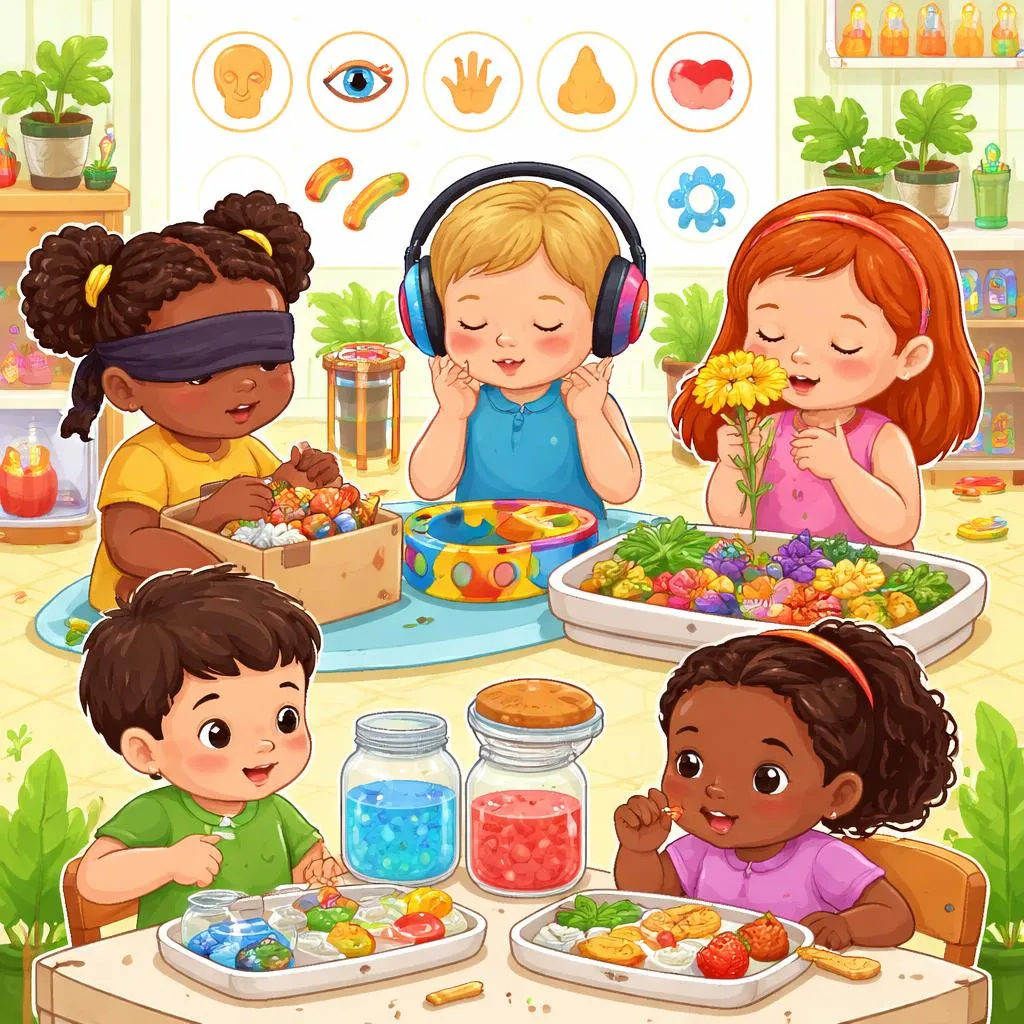
Let's explore a foundational science and language topic: the five senses. When we plan 5 senses activities for kindergarten, we are designing experiences that help children discover how they see, hear, smell, taste, and touch the world. This concept is about connecting scientific observation with rich, descriptive vocabulary.
The goal of 5 senses activities for kindergarten is to build awareness and language simultaneously. Children learn that their eyes are for seeing, their ears for hearing, and so on. More importantly, they learn the words to describe what they see, hear, and feel. This turns simple observation into powerful communication and scientific inquiry.
Meaning and Explanation
The five senses are our body's tools for gathering information. Each sense has a dedicated organ and a specific type of input:
Sight (Eyes): We see colors, shapes, and movements.
Hearing (Ears): We hear loud/soft sounds, high/low pitches.
Smell (Nose): We smell pleasant, unpleasant, or strong scents.
Taste (Tongue): We taste sweet, sour, salty, bitter, and umami flavors.
Touch (Skin): We feel textures (rough/smooth), temperatures (hot/cold), and pressure.
5 senses activities for kindergarten make these abstract ideas concrete. They answer "How do you know?" with "I can see it," or "I can hear it."
Categories or Lists
We can categorize 5 senses activities for kindergarten by the sense they focus on. A balanced unit explores all five:
Sight Activities: I Spy games, color scavenger hunts, shadow tracing.
Hearing Activities: Sound matching jars, listening walks, guessing sounds from recordings.
Smell Activities: Scented canisters (lemon, mint, coffee), smelling herbs in a garden.
Taste Activities: Tasting safe, familiar foods (apple slice, cracker, lemon wedge). Always check for allergies and parental permission first.
Touch Activities: Feely boxes or bags with hidden objects, texture collages (sandpaper, cotton, foil).
Many activities integrate two or more senses, showing how they work together.
Daily Life Examples
We use our senses every moment. 5 senses activities for kindergarten simply focus this natural awareness. On a walk, we can ask: "What do you see? (A red car). What do you hear? (Birds chirping). What do you smell? (Fresh cut grass)."
During snack time: "Let's look at our apple. How does it feel? Now, let's taste it. Is it crunchy? Sweet?" While reading a story: "Look at the character's face. How do you think they feel? What sound might the dinosaur in the picture make?" Connecting the senses to daily routines makes the learning authentic.
Printable Flashcards
Effective printable flashcards for 5 senses activities for kindergarten should be highly visual. One side can show a clear picture of the sense organ (a big eye, an ear). The other side should show diverse examples and the key verb: The eye side says "I see" with pictures of a sun, a book, and a tree.
A wonderful printable is a "5 Senses Sorting Mat." It has five sections labeled "See," "Hear," "Smell," "Taste," "Touch," with a picture cue. Children can sort small picture cards (a bell, a flower, an ice cube) onto the correct section of the mat.
Learning Activities and Games
A classic and effective activity is the "Listening Walk." Walk quietly inside or outside. Pause frequently. Ask, "What do you hear? A car? The wind? Your footsteps?" List the sounds. This sharpens focus and builds listening vocabulary.
Another great activity is the "Feely Box." Decorate a box with a hole for a hand. Place a familiar object inside (a pinecone, a spoon, a soft toy). The child feels it and describes the texture ("It's bumpy and hard"). Others guess based on the description. This focuses purely on the sense of touch and descriptive language.
Play "Mystery Scents." Use small, lidded containers with cotton balls soaked in safe, distinctive scents (vanilla, lemon, peppermint). Let children smell and describe them. Is it sweet? Strong? Do they like it? This builds smell vocabulary, which is often less developed.
Mastering the five senses through engaging 5 senses activities for kindergarten does more than teach science. It equips children with the observational skills and precise vocabulary to investigate and share their experiences. By seeing, hearing, smelling, tasting, and touching their way through playful experiments, they learn to question, describe, and understand the world in a deeper, more connected way. This foundation supports future learning in science, literacy, and social-emotional awareness.