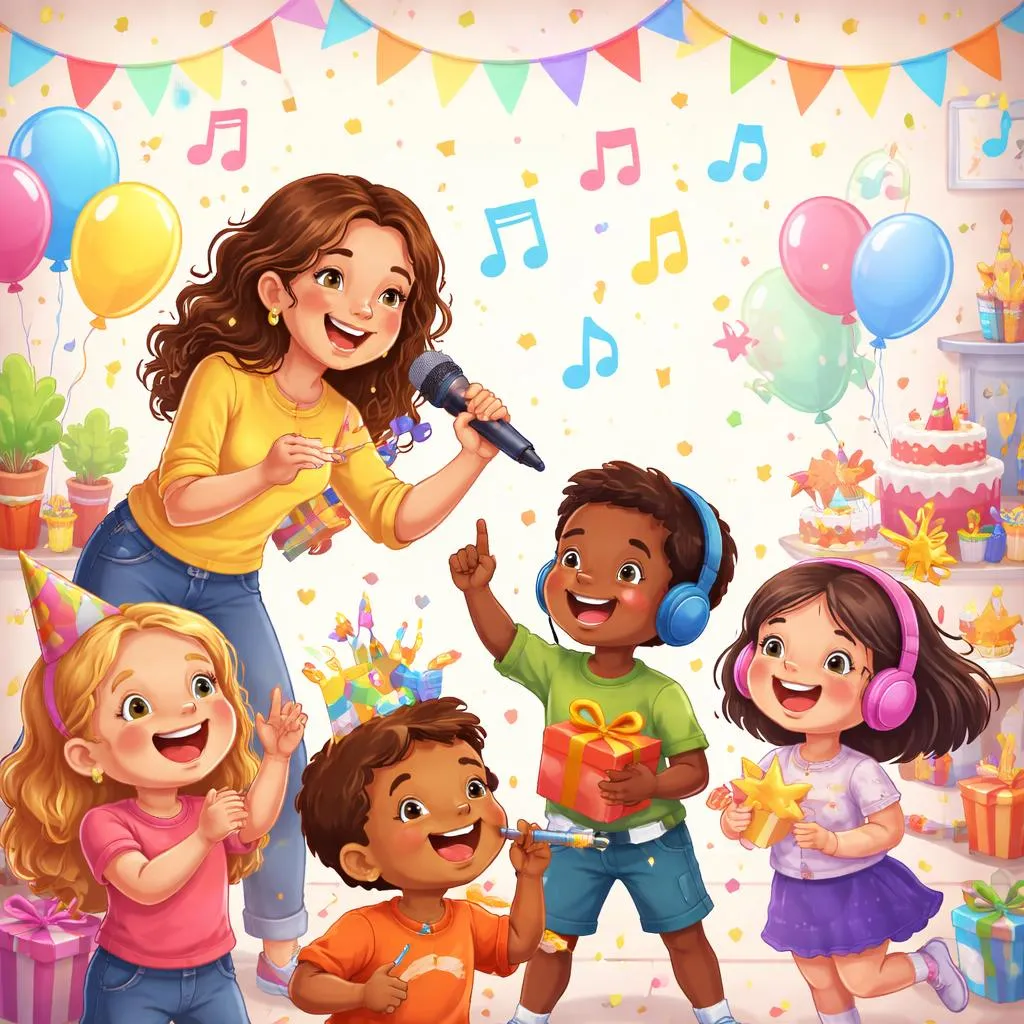

Welcome, everyone, to a very special lesson! Today, we are going to sing and learn with a joyful topic. We are exploring "it my birthday song lyrics". This refers to the words of popular songs we sing to celebrate birthdays. These songs are full of useful English words and happy feelings. Let's discover the language of celebration together.
What is the rhyme? The most famous birthday rhyme is, of course, "Happy Birthday to You." This is the classic song sung around the world. The phrase "it my birthday song lyrics" often points to this tune or its simple variations. It is a short, repetitive song with a clear and celebratory purpose. Everyone knows the melody. This makes it a perfect and motivating starting point for language learners. The song focuses on a single, personal event, making the vocabulary highly relevant and easy to remember.
The lyrics of nursery rhymes The traditional lyrics for the "Happy Birthday" song are very simple:
Happy Birthday to you, Happy Birthday to you, Happy Birthday dear [Name], Happy Birthday to you!
Often, an extra celebratory line is added at the end, such as: "And many more on channel four!" or "How old are you now?" These variations add fun and extra language practice. The repetitive structure allows even the newest English speaker to join in confidently.
Vocabulary learning This simple song introduces essential and personal vocabulary.
The most important word is Birthday. This is the yearly celebration of the day you were born.
The adjective Happy is a key emotion word. We learn to wish someone a "Happy Birthday."
The preposition to is used in a common well-wishing pattern: "to you."
We also see the adjective dear, which is a loving or friendly way to address someone.
If using the "How old are you?" verse, we learn the vital question for asking about age. The response, "I am [number] years old," teaches numbers and the verb "to be" in the first person.
Phonics points The song is excellent for practicing clear vowel sounds and linked speech.
The short /æ/ sound in "Happy" and the long /ɑː/ sound in "Birthday" provide good vowel practice.
The /t/ sound in "to" and "Birthday" often softens or links in natural singing: "Happy Birthday_t_you." This introduces the concept of connected speech in a gentle way.
The question "How old are you?" combines several common sounds: the /aʊ/ diphthong in "How," the /əʊ/ in "old," and the linking of "are you" (/ɑːr juː/). Singing slows this down, making it easier to pronounce.
Grammar patterns Even this short song demonstrates important grammar.
It uses the vocative case for direct address: "Happy Birthday, dear Name." This shows how we call someone directly in a sentence.
The phrase "Happy Birthday to you" reinforces the use of the preposition "to" for indicating the recipient of a wish or action.
If adding the question "How old are you?", we see a standard Wh-question structure ("How + adjective + be-verb + subject?"). The answer uses the first-person pronoun with the verb "to be": "I am seven years old." This is a foundational grammar exchange.
Learning activities We can build many fun activities around birthday song lyrics.
-
Personalized Song Fill-in: Create a worksheet with the song lyrics, but leave a blank for the name. "Happy Birthday dear ______." Have children fill in their own name, a friend's name, or a character's name. This personalizes the learning instantly.
-
"How Old Are You?" Survey: After singing, children can walk around and ask each other "How old are you?" They record the answers on a simple chart. This practices the question, numbers, and social English.
-
Birthday Card Creation: Provide materials to make a birthday card. Inside, they must write the core message: "Happy Birthday to you!" They can decorate the card for a specific person. This connects writing to a real-world purpose.
-
"Birthday Month" Parade: Write the months of the year on the board. Sing "Happy Birthday" slowly, and have children stand up or wave when you sing the month of their birthday. This teaches months in a personal and memorable way.
Printable materials Printable resources can extend the celebration and learning.
Create a "My Birthday Book" mini-book. Pages include: "My name is ___. My birthday is in (month). I am ___ years old. I like ___." with space for drawing.
Design "Celebration Vocabulary" flashcards with words from the theme: birthday, happy, cake, candle, present, party, sing. Include a simple picture and a sentence.
A "Birthday Cake Coloring and Counting" sheet is always engaging. A picture of a cake with candles to color, and a line to write: "I am ___ years old. I have ___ candles." This combines art, numbers, and sentence writing.
Provide a lyrics poster with the "Happy Birthday" song and the "How old are you?" verse in large, clear letters. This can be a constant reference in the classroom.
Educational games Turn birthday themes into structured learning games.
-
"Pass the Parcel" Grammar: Play music and pass a small parcel. When the music stops, the child holding it picks a question card (e.g., "What is your name?", "How old are you?", "When is your birthday?"). They answer using a full sentence. This practices Q&A in a festive game format.
-
Pin the Candle on the Cake: A classic party game with a language twist. When blindfolded and trying to pin the candle, the child must say, "Happy Birthday to [Name]!" or "I am [number] years old!" before taking their turn. This adds a speaking objective to the fun.
-
Birthday Bingo: Create bingo cards with birthday-related pictures (cake, balloon, gift, card, candle, party hat). The caller describes them simply: "It is sweet. You eat it on your birthday." (Cake). Players mark the picture. This builds listening comprehension and vocabulary.
Singing "it my birthday song lyrics" is more than just a tradition. It is a shared language experience that builds community and confidence. The familiar tune lowers anxiety, allowing learners to focus on pronunciation and meaning. Use this natural excitement to teach personal questions, emotions, and celebratory phrases. Every time you sing, you are practicing real English used in real life. So keep celebrating, keep singing, and enjoy using English to share joy and good wishes