
What is the Rhyme?
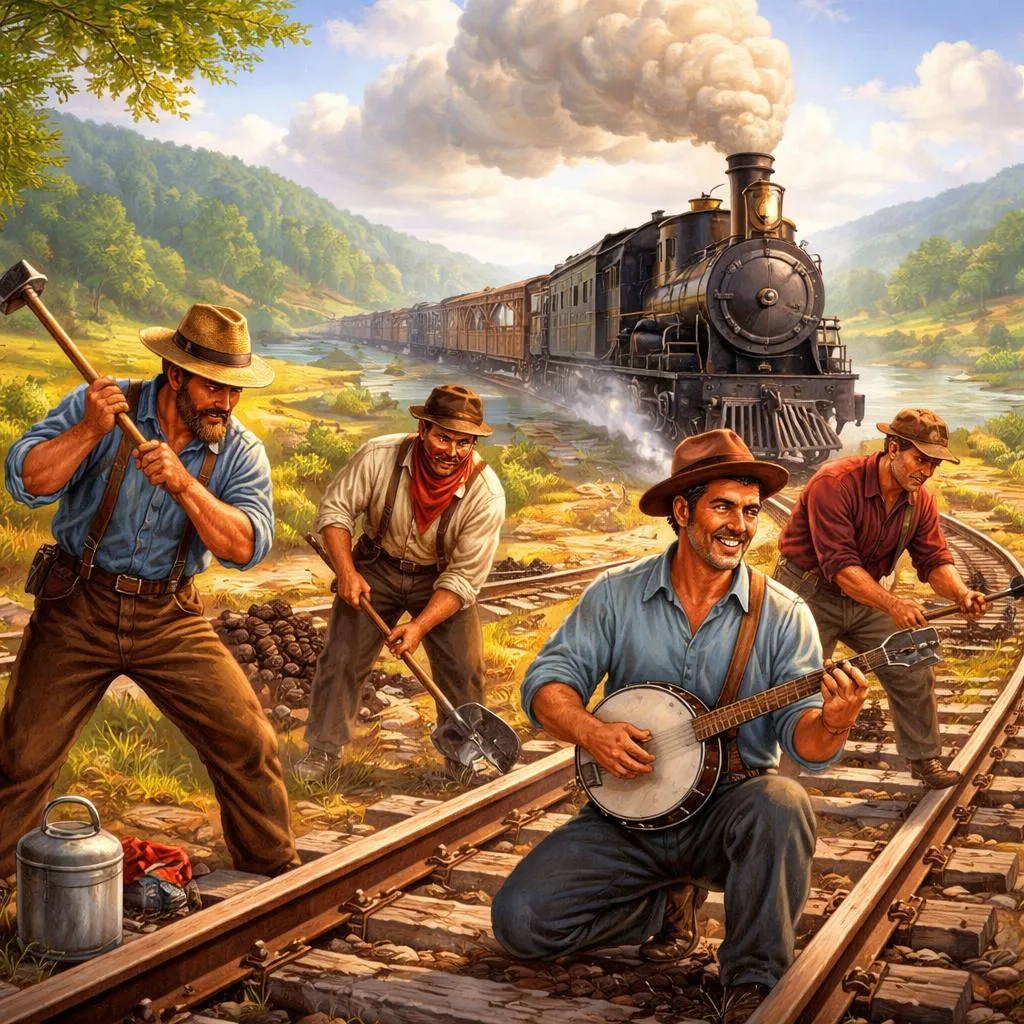
Let's explore a classic American folk song: "I've Been Working on the Railroad." When we look for the working on the railroad lyrics, we are discovering a piece of musical history. This song paints a picture of the hard work and camaraderie of railroad workers in a bygone era. It's a lively tune with a memorable, repetitive chorus that invites everyone to sing along.
The charm of the working on the railroad lyrics lies in their storytelling and rhythmic energy. The song combines a work chant with a playful, melodic section about someone named Dinah. It provides a gentle, age-appropriate glimpse into a historical occupation, making it a wonderful tool for teaching vocabulary related to work, tools, and music itself.
The Lyrics of the Nursery Rhyme
The working on the railroad lyrics have several verses, but the most well-known parts are the chorus and the "Dinah" section. The classic chorus begins:
I've been working on the railroad
All the live-long day.
I've been working on the railroad
Just to pass the time away.
Can't you hear the whistle blowing?
Rise up so early in the morn.
Can't you hear the captain shouting,
"Dinah, blow your horn!"
This is often followed by the call-and-response section:
Dinah, won't you blow,
Dinah, won't you blow,
Dinah, won't you blow your horn?
Dinah, won't you blow,
Dinah, won't you blow,
Dinah, won't you blow your horn?
Someone's in the kitchen with Dinah...
Someone's in the kitchen, I know...
Someone's in the kitchen with Dinah,
Strummin' on the old banjo!
The structure mixes repetitive work phrases with a catchy, narrative interlude.
Vocabulary Learning
The working on the railroad lyrics introduce excellent thematic vocabulary. Key nouns include railroad, day, whistle, captain, horn, kitchen, and banjo. Verbs like working, hear, blowing, shouting, strumming drive the action.
The phrase all the live-long day is a wonderful idiom meaning "the entire day." The word morn is a poetic shortening of "morning." Exploring these words helps children build language about jobs, sounds, and music, connecting the past to present-day concepts of work and play.
Phonics Points
This song is great for practicing vowel sounds and consonant blends. The long 'i' sound appears in I've, working, railroad, and time. The 'ay' sound is strong in railroad, day, away, and morn (which rhymes with horn).
The /bl/ blend is featured in blowing and blow. The /str/ blend is in strumming. The rhyming words day/away and morn/horn provide clear auditory patterns. Singing the working on the railroad lyrics with gusto allows for clear articulation of these sounds.
Grammar Patterns
The working on the railroad lyrics are a rich source of grammatical examples. The song opens with the present perfect continuous tense: "I've been working..." This tense describes an action that started in the past and is still relevant or ongoing. It's a more advanced structure presented in a very accessible way.
The lyrics also use questions ("Can't you hear...?") and commands ("Rise up...", "blow your horn!"). The repetitive use of "won't you" in "Dinah, won't you blow" is an old-fashioned, polite form of a request. This mix exposes learners to different ways of forming sentences and questions.
Learning Activities
A great activity is "Sing with Actions." Create simple motions for key words: hammering for working, hand to ear for hear, pulling a train whistle for blow, and strumming for strumming on the banjo. This kinesthetic connection aids memory and makes the vocabulary active.
Try "History Connection." Show simple pictures or toys of old-fashioned trains, railroad workers, and a banjo. Discuss how people used to build railroads before big machines. Connect the song's vocabulary to these images. Then, sing the song again—the words will have much more meaning.
Printable Materials
A valuable printable is an "Illustrated Lyric Sheet." It has the working on the railroad lyrics with blank spaces for children to draw small pictures above key words: a train above railroad, a sun above day, a whistle above whistle, a banjo above banjo. This links the text directly to visual understanding.
Create a "Vocabulary Train." Print a train engine and several blank train cars. On each car, write or have children draw one key element from the song: a worker, a whistle, a horn, a kitchen, a banjo. They can color and assemble their train, putting the "story" of the song in order.
Educational Games
Play "Call and Response Singing." Divide into two groups. One group sings the "I've been working..." lines, and the other group responds with the "Can't you hear..." lines. For the "Dinah" part, the leader can sing the call ("Dinah, won't you blow") and everyone sings the response ("Dinah, won't you blow your horn?"). This teaches musical structure and attentive listening.
Try "What's the Sound?" Prepare sound clips or simply imitate sounds from the song: a train whistle, a horn, a banjo strum, a captain shouting. Play the sound and ask, "Can you hear the whistle blowing?" Children identify the sound and then sing the corresponding line from the working on the railroad lyrics. This sharpens auditory discrimination.
The working on the railroad lyrics offer a rhythmic gateway to history, vocabulary, and grammar. They teach that songs can tell stories about how people lived and worked. By singing, moving, and connecting these words to images of the past, children absorb language patterns and cultural snippets in an engaging, memorable way. The song becomes a time machine, building bridges between words, music, and history with every lively chorus.