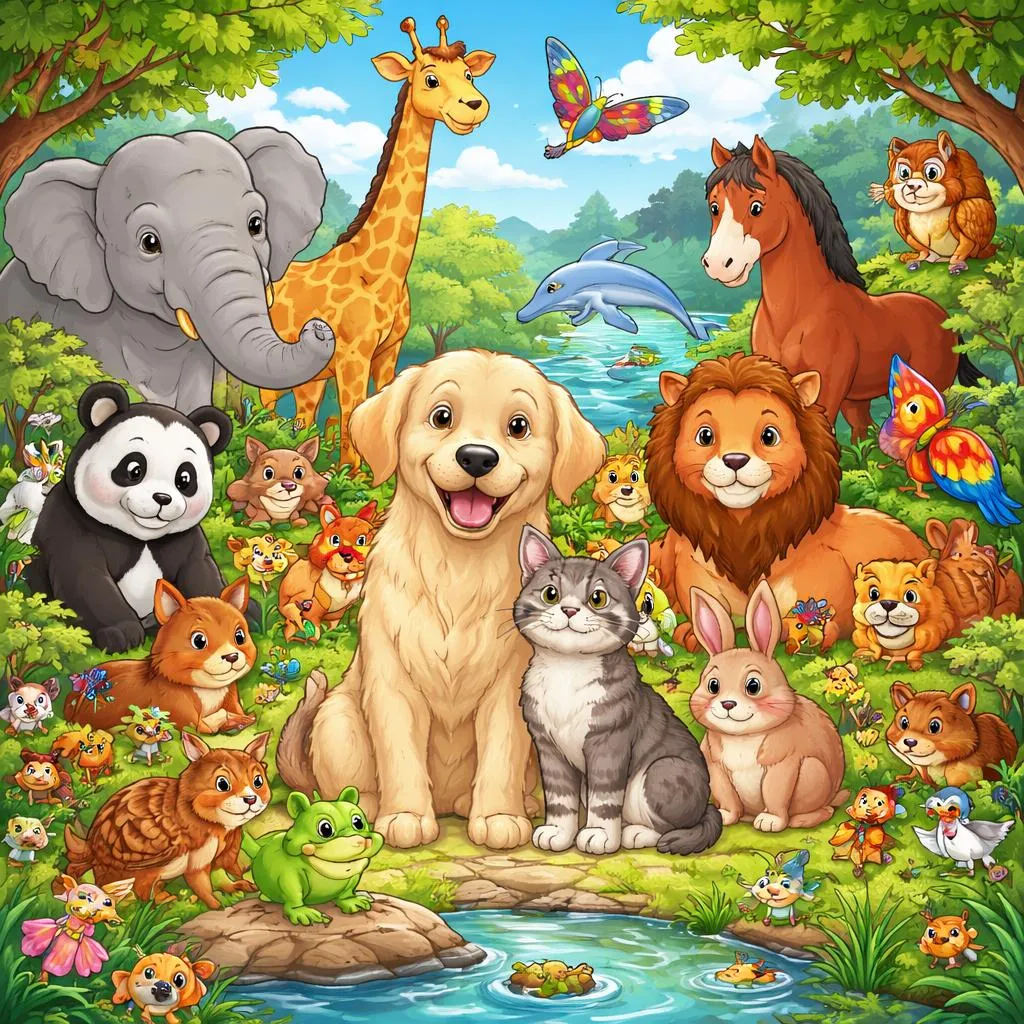

Learning the names of animals is an important step in building English vocabulary. Animal words appear in stories, songs, lessons, and daily conversation. Clear pronunciation and correct spelling help develop strong language foundations.
Animals can be grouped into categories. This makes learning easier and more organized.
Farm Animals
Farm animals live on farms. They are often raised for food or work.
Cow
Pig
Sheep
Goat
Horse
Chicken
Duck
Turkey
Donkey
These words are common in children’s books and early reading materials.
The cow gives milk.
The horse runs fast.
Simple sentences help reinforce meaning.
Wild Animals
Wild animals live in nature. They are not usually kept as pets.
Lion
Tiger
Elephant
Giraffe
Zebra
Monkey
Bear
Wolf
Fox
Deer
These animals often appear in stories and documentaries.
The lion is strong.
The elephant is large.
Sea Animals
Sea animals live in oceans, rivers, or lakes.
Fish
Shark
Whale
Dolphin
Octopus
Crab
Turtle
Seal
Some sea animals are small. Others are very large.
The whale is huge.
The fish swims quickly.
Birds
Birds have feathers and wings.
Eagle
Parrot
Owl
Penguin
Swan
Crow
Sparrow
Bird vocabulary appears often in reading exercises.
The eagle flies high.
The owl hunts at night.
Pets
Pets live in homes with people.
Dog
Cat
Rabbit
Hamster
Fish
Parrot
These animal names are common in daily conversation.
The dog is friendly.
The cat sleeps on the sofa.
Insects
Insects are small animals with six legs.
Ant
Bee
Butterfly
Fly
Mosquito
Spider
Although spiders are not insects biologically, they are often grouped together in beginner vocabulary lists.
The butterfly is colorful.
The bee makes honey.
Baby Animal Names
Some animals have special names for babies.
Puppy – baby dog
Kitten – baby cat
Calf – baby cow
Lamb – baby sheep
Chick – baby chicken
Foal – baby horse
Learning these names expands vocabulary further.
Animal Sounds
Animal vocabulary often includes sounds.
Dog – bark
Cat – meow
Cow – moo
Duck – quack
Sheep – baa
These words are popular in children’s songs and early lessons.
Why Learn Animal Names?
Animal vocabulary appears in reading, listening, and speaking activities. It supports storytelling. It improves descriptive skills. It helps with classification and comparison.
Practice activities can include matching animals to habitats, sorting animals into groups, or writing short sentences using new words.
Learning the names of animals builds strong vocabulary foundations. It supports reading development and encourages curiosity about nature and the world.
Jungle Animals
Some wild animals live in jungles or rainforests. These environments are warm and full of plants.
Jaguar
Leopard
Crocodile
Gorilla
Chimpanzee
Toucan
Snake
Frog
The jaguar moves quietly.
The gorilla is very strong.
Jungle animals are often colorful or powerful. Many of them appear in adventure stories.
Desert Animals
Deserts are hot and dry. Animals that live there adapt to the heat.
Camel
Lizard
Scorpion
Meerkat
Fennec fox
The camel stores fat in its hump.
The lizard moves quickly on the sand.
These animals survive with little water.
Arctic Animals
The Arctic is very cold. Animals there have thick fur or fat to stay warm.
Polar bear
Arctic fox
Seal
Walrus
Penguin
The polar bear has white fur.
The seal swims in icy water.
Learning animal names can also include habitats. Matching animals to their environment strengthens understanding.
Reptiles
Reptiles are cold-blooded animals. They often have scales.
Snake
Lizard
Crocodile
Alligator
Turtle
The snake slithers.
The turtle moves slowly.
Reptile vocabulary appears often in science lessons.
Amphibians
Amphibians live both in water and on land.
Frog
Toad
Salamander
The frog jumps into the pond.
These words are useful in basic biology topics.
Animal Groups
Animals are sometimes described by group names.
A herd of cows
A flock of birds
A pack of wolves
A school of fish
A pride of lions
Learning these collective nouns adds depth to vocabulary.
Animal Body Parts
Animal vocabulary can expand into body parts.
Fur
Feathers
Tail
Wing
Claw
Horn
Hoof
The bird has wings.
The goat has horns.
Describing animals using body parts improves sentence building.
Animal Adjectives
Adjectives help describe animals.
Big
Small
Fast
Slow
Strong
Wild
Gentle
Fierce
The tiger is fierce.
The rabbit is small.
Combining animal names with adjectives strengthens grammar practice.
Animal Actions
Verbs related to animals are also important.
Run
Jump
Fly
Swim
Climb
Roar
Bark
Hunt
The monkey climbs trees.
The lion roars loudly.
Using verbs builds simple but complete sentences.
Animal Classification
Animals can also be divided into categories based on diet.
Herbivores eat plants.
Carnivores eat meat.
Omnivores eat both plants and meat.
The cow is a herbivore.
The lion is a carnivore.
The bear is an omnivore.
This vocabulary supports science learning in English.
Why Expanding Animal Vocabulary Matters
Animal names appear in stories, poems, songs, and classroom materials. They are common in beginner reading books. Expanding beyond basic animals such as dog and cat builds stronger vocabulary.
Describing animals also supports speaking practice.
The elephant is large and strong.
The dolphin is intelligent and friendly.
Simple descriptive sentences improve fluency.
Matching games, flashcards, drawing activities, and storytelling exercises all support animal vocabulary learning. Creating short stories using animal names encourages creativity.
Learning the names of animals, their habitats, sounds, actions, and characteristics builds a rich vocabulary base. It strengthens reading comprehension, supports science topics, and improves sentence formation skills in English.