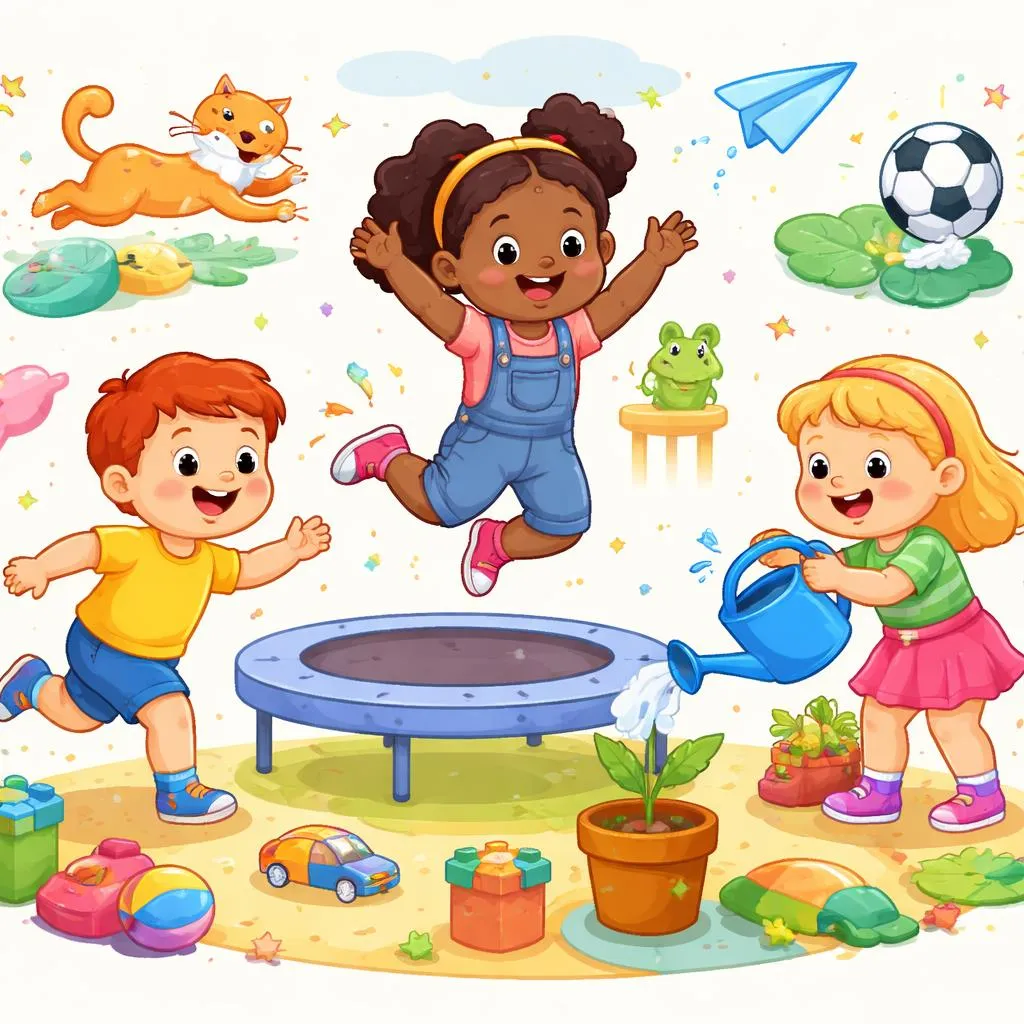

Hello, wonderful educators and language guides! Welcome to a foundational lesson that brings sentences to life. Today, we're going to explore the exciting world of the verb. Understanding what a verb is forms the cornerstone of building clear and dynamic English sentences. A verb is the engine of a sentence. It tells us what is happening. Let's embark on a journey to discover how to teach this essential concept in a way that is engaging, clear, and full of movement.
Meaning So, what does a verb mean? In simple terms, a verb is an action word. It describes what someone or something does. The action can be physical, like run, jump, or sing. The action can also be mental, like think, dream, or love. Some verbs describe a state of being, like is, am, are, was, were. These are just as important. They tell us how something exists. For example, in "The cat sleeps," the verb is sleeps. It tells us the action the cat is performing. Every complete sentence needs a verb to give it purpose and movement.
Conjugation Conjugation is how a verb changes form. These changes show us who is doing the action and when it happens. Let's take the verb "to play." For the present tense with "I," "you," "we," and "they," we say "play." For "he," "she," or "it," we add an 's' to make "plays." This is a basic rule. We say "I play," "you play," "she plays," "we play." For the past tense, we often add "-ed": "I played." For the future, we use "will play." Teaching these patterns helps learners match the verb to its subject and time, making their speech accurate.
Present tense We use the present tense to talk about things happening now or things that are generally true. For example, "I eat lunch." "The sun shines." "They like stories." We also use it for habits. "She practices piano every day." For the verb "to be" in present tense, we use am, is, and are. "I am happy." "He is tall." "We are friends." This tense is the most immediate and is a great starting point for practice. Encourage learners to describe actions they can see in the classroom right now using present tense verbs.
Past tense The past tense tells us about actions that are finished. They happened before now. We often form it by adding "-ed" to the verb: "I walked to school." "She called her friend." We call these regular verbs. However, many common verbs are irregular. They change in special ways. For example, "eat" becomes "ate," "go" becomes "went," and "see" becomes "saw." We can teach these in fun groups or through songs. Using time words like "yesterday," "last week," or "this morning" signals that we need a past tense verb, helping learners choose the correct form.
Future tense The future tense is for actions that have not happened yet. They will happen later. The most common way to form it is with "will" + the base verb. "I will read that book tomorrow." "They will visit the zoo." We can also use "am going to" + verb. "She is going to sing a song." This tense helps learners talk about plans, hopes, and predictions. It opens up conversations about what comes next. Contrasting it with present and past on a simple timeline can make the concept of time in grammar very clear.
Questions To make a question with most verbs, we often use the helping verbs "do," "does," or "did." For present tense questions: "Do you like apples?" (for I, you, we, they). "Does she have a dog?" (for he, she, it). For past tense questions, we use "Did": "Did you play outside?" Notice that the main verb (like, have, play) goes back to its base form after "do," "does," or "did." For the verb "to be," we simply switch the order: "Is she here?" "Are they ready?" "Was it fun?" Practicing turning statements into questions is a key conversational skill.
Other uses Verbs have other important jobs. They can work as "helping verbs" or "auxiliary verbs." These helpers like is, have, will, and can team up with a main verb. "She is running." "I have eaten." "They can swim." This creates different tenses and meanings. Verbs also create the passive voice, though we introduce this much later. For now, focusing on active sentences where the subject does the verb is clearest. Understanding that verbs can be helpers is the first step to grasping more complex sentences.
Learning tips A fantastic tip is the "Act It Out" method. When introducing a new verb, always demonstrate the action. For "stretch," everyone stretches. For "whisper," everyone whispers the word. This creates a strong mind-body connection. Another tip is to use colorful verb cards. Write action words in bold on one side and draw a simple picture on the other. Sort them into piles: "Things We Do with Our Feet," "Things We Do with Our Hands," etc. This categorizes vocabulary and makes it memorable.
Educational games "Verb Charades" is a timeless and effective game. One learner picks a verb card and acts it out without speaking. The others guess by asking, "Are you jumping?" or saying "You are dancing!" This practices verb vocabulary and question forms in a high-energy way.
"Simon Says with Verbs" is another classic. Use it to drill imperative commands and listening skills. "Simon says, hop on one foot!" "Simon says, clap your hands!" You can gradually introduce more specific verbs like "spin," "tiptoe," or "march." This game gets everyone moving and connecting words to actions instantly.
"Build-a-Sentence" relay is great for teams. Prepare separate piles of subject cards (The cat, My mom, We), verb cards (slept, cooks, play), and object/place cards (on the sofa, dinner, outside). Teams race to grab one card from each pile and assemble a logical, grammatically correct sentence. This teaches how the verb is the crucial link between the subject and the rest of the sentence.
Mastering the verb is like discovering the magic key to sentence-building. It transforms lists of words into stories, instructions, and questions. When learners confidently use action words in different tenses, they gain the power to describe their world, share their experiences, and imagine the future. Celebrate every "I jumped!" and "She will draw!" as a victory in their language journey. Keep the activities full of motion, laughter, and discovery, and watch their communication skills grow one vibrant action at a time.