
What Is This Animal?
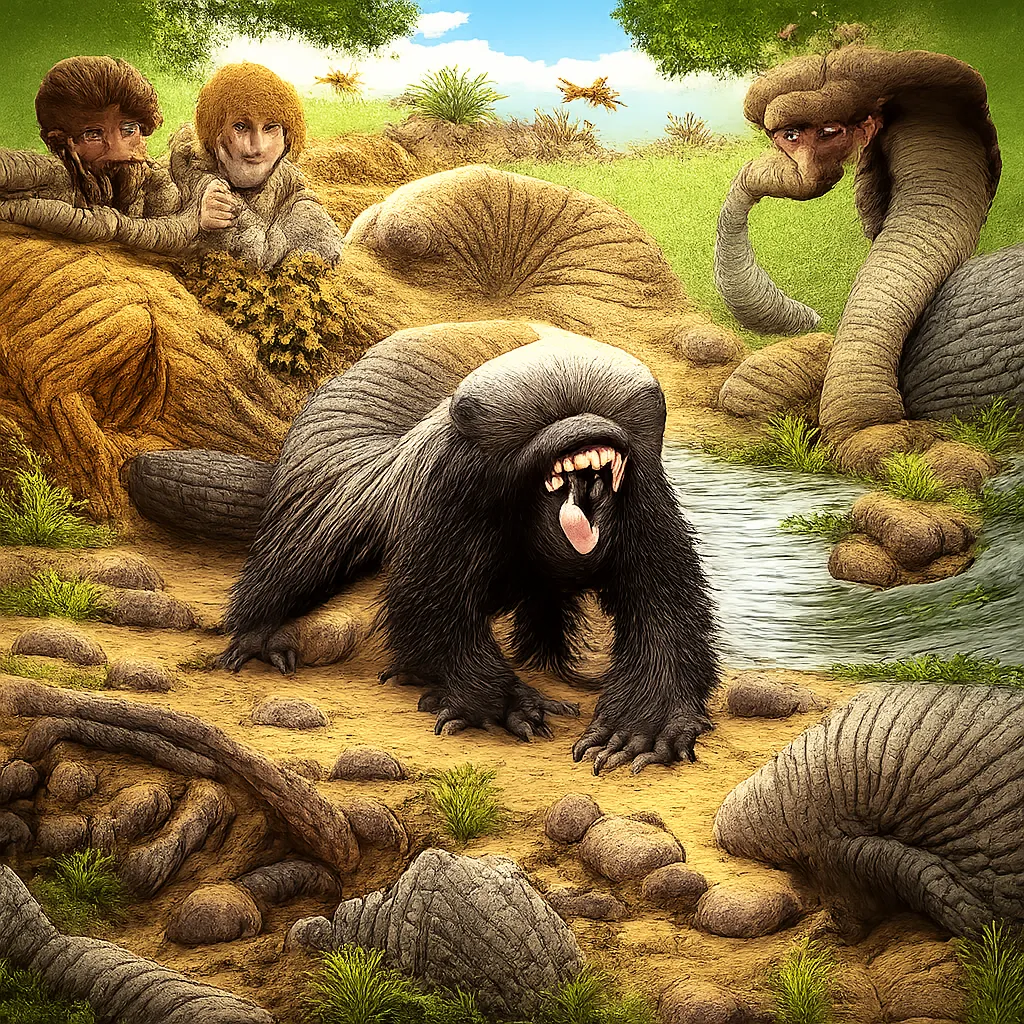
A honey badger is a stocky mammal with gray fur on its back and black fur on its belly and legs. It has a broad body, short legs, and strong claws. Its skin is very thick and loose. This loose skin lets it twist and turn even when grabbed. Honey badgers are famous for being fearless.
Honey badgers are not actually badgers. They belong to the weasel family. They are related to martens and otters. They are found in Africa, the Middle East, and parts of Asia. They have a reputation for toughness. They will attack animals much larger than themselves.
These animals live in many habitats. They live in grasslands, forests, and deserts. They dig burrows with their strong claws. They are mostly active at night. They travel long distances looking for food.
For children, honey badgers are fascinating. Their tough reputation and clever ways make them interesting. Learning about honey badgers teaches children about courage, persistence, and respecting wild animals from a distance.
English Learning About This Animal
Let us learn the English words honey badger. We say it like this: /ˈhʌni ˈbædʒər/. Honey sounds like “hun-ee.” Badger sounds like “baj-er.” Put them together: honey badger. Say it three times. Honey badger. Honey badger. Honey badger.
Now let us learn words about a honey badger’s body. The skin is thick and loose. This helps it escape predators. The claws are long and strong for digging. The teeth are sharp for biting. The fur is coarse. The cubs are baby honey badgers.
There is a famous saying about honey badgers. In Africa, people say, “The honey badger does not know fear.” This reflects its fearless nature. Another saying is, “The honey badger takes what it wants.” This describes its determination.
These English words help children understand honey badger anatomy. When they say claws, they learn how it digs. When they say loose skin, they understand its defense. Parents can practice these words while looking at pictures. Point to the parts. Say the words together.
Animal Facts and Science Knowledge
Honey badgers belong to the weasel family Mustelidae. Their scientific name means “honey eater.” They are also called ratels. They are one of the most fearless animals in the world. They have no natural enemies besides humans.
Honey badgers live in Africa, the Middle East, and India. They adapt to many habitats. They live in deserts, savannas, and forests. They make burrows in the ground. They may use abandoned burrows of other animals. They are solitary and roam over large areas.
Honey badgers eat almost anything. They eat insects, small mammals, birds, reptiles, and fruit. They love honey. They raid beehives despite bee stings. Their thick skin protects them from stings. They also eat venomous snakes. They are resistant to snake venom.
Honey badgers have special abilities. Their skin is so thick that spears and arrows have trouble piercing it. Their loose skin lets them twist and bite back if grabbed. They have powerful jaws. They can dig burrows in hard ground. They are strong for their size.
Honey badgers are intelligent. They use tools. They roll logs to reach prey. They move rocks to find food. They learn to open gates and latches. Their cleverness helps them survive in many environments.
How to Interact With This Animal Safely
Honey badgers are wild and dangerous. They are not pets. They are fearless and will attack if threatened. The best way to interact is to watch from a very safe distance. Do not approach them. Do not try to feed them.
Teach children that honey badgers are not like zoo animals. They are powerful and unpredictable. In the wild, they should be admired from afar. Never try to touch or corner one. They will defend themselves fiercely.
If you see a honey badger, stay still. Back away slowly. Do not run. Running may trigger a chase. Give the animal plenty of space. It will usually move away if not threatened.
In zoos, honey badgers are in secure enclosures. Follow all rules. Stay behind barriers. Do not tap on glass. Watch them dig and explore. Zoo visits help people learn about these animals safely.
Honey badgers are wild creatures. They need respect and distance. Learning about them helps us appreciate their toughness without getting close. Teaching children to respect wildlife keeps both people and animals safe.
What Can We Learn From This Animal
Honey badgers teach us about courage. They do not back down. They face challenges head-on. Children learn that courage means facing what scares us. Standing up for ourselves, trying new things, and being brave are all forms of courage.
Honey badgers teach us about persistence. They keep trying until they get what they want. Children learn that not giving up helps us succeed. Learning a hard skill, finishing a task, and trying again after failure all take persistence.
Honey badgers teach us about using what we have. They use their thick skin, strong claws, and intelligence. Children learn that we all have strengths. Using our talents, asking for help, and being resourceful help us overcome challenges.
Honey badgers teach us about boundaries. They are best admired from a distance. Children learn that some things are not meant to be touched. Respecting boundaries keeps us safe and respects others.
Fun Learning Activities
Let us make learning about honey badger fun. One activity is the honey badger dig game. Ask your child to pretend to dig with strong claws. Scoop and scratch like a honey badger. Find hidden treats. Say “honey badger digs” and “honey badger finds food.”
Another activity is drawing a honey badger. Look at pictures of honey badgers. Notice the gray back, black belly, and strong claws. Draw a honey badger digging a burrow. Add the thick fur and sharp claws. Label the parts. Say the words aloud.
Create a story about a honey badger’s adventure. Ask your child what the honey badger does. Does it find a beehive? Does it dig for insects? Does it scare away a larger animal? Write a few sentences together. Let your child draw pictures. Read the story aloud.
Make a honey badger craft. Use gray and black paper for the fur. Add strong claws from paper or craft sticks. Add small ears and a short tail. Move the craft honey badger. Practice saying “honey badger digs” and “honey badger is tough.”
Learn about African animals. Compare honey badgers to other tough animals. Talk about how each animal survives in its habitat. Use words like “adaptation,” “predator,” and “courage.”
Learn about animal defenses. Talk about how honey badgers use thick skin and loose skin to escape predators. Compare to other animals with special defenses like armadillos or hedgehogs. Use words like “defense,” “adaptation,” and “survival.”
These simple activities bring learning to life. Children build English vocabulary while playing. They learn science through understanding animal adaptations. They develop respect through learning about powerful wild animals. Learning about honey badger becomes a lesson in courage, persistence, and respecting the wild. Each moment spent together strengthens language, curiosity, and a growing appreciation for the small, tough mammal that takes on bees, snakes, and lions without fear, teaching us that size does not measure strength.