
What Is This Animal?
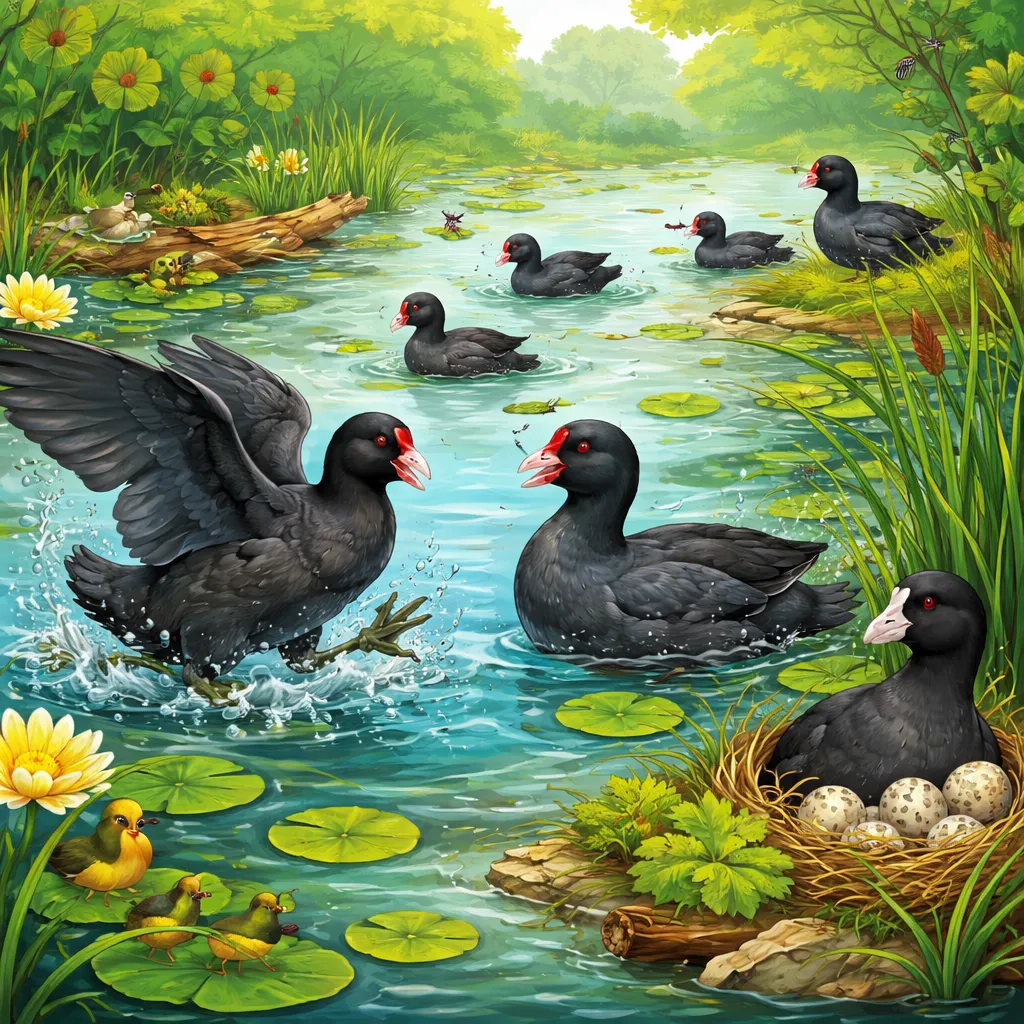
A coot is a black water bird with a white beak and a white patch on its forehead. It has a round body and short wings. It looks like a duck but is not a duck. Coots have special feet. Their toes have lobes, not webbing. They use these feet to swim and walk on floating plants.
Coots live on ponds, lakes, and marshes around the world. They are common and easy to see. They swim in open water. They dive for food. They also walk on land. They are social birds. They gather in large flocks in winter.
These birds are known for their aggressive behavior. They chase each other. They fight over territory. They are bold and noisy. They make a variety of calls. They are entertaining to watch.
For children, coots are fun. Their funny feet and feisty personalities make them interesting. Learning about coots teaches children about water birds, pond ecosystems, and the social lives of animals.
English Learning About This Animal
Let us learn the English word coot. We say it like this: /kuːt/. The coo sounds like “coo.” The t sounds like “t.” Say it together: coot. Say it three times. Coot. Coot. Coot.
Now let us learn words about a coot’s body. The beak is white with a white forehead shield. The feet have lobed toes for swimming. The body is black and round. The eyes are red. The chicks are baby coots.
There is a famous saying about coots. People say, “As bald as a coot.” This refers to the white patch on their head. Another saying is, “The coot fights with everyone, but still swims with the flock.” This describes their feisty but social nature.
These English words help children understand coot anatomy. When they say lobed toes, they learn about the unique feet. When they say chicks, they know the babies. Parents can practice these words while watching coots on a pond. Point to the parts. Say the words together.
Animal Facts and Science Knowledge
Coots belong to the rail family Rallidae. They are related to rails and moorhens. There are several coot species. The American coot lives in North America. The Eurasian coot lives in Europe and Asia. Coots are found on every continent except Antarctica.
Coots live on freshwater ponds, lakes, and marshes. They need open water for swimming. They also need areas with floating plants. They build nests on water. Their nests are made of reeds. They float on the water.
Coots are omnivores. They eat aquatic plants, insects, small fish, and snails. They dive for food. They also graze on land. They eat grass and seeds. They are not picky eaters.
Coots have special abilities. Their lobed toes help them swim and walk on mud. They can dive up to twenty feet deep. They can stay underwater for twenty seconds. They are strong swimmers. They can run on water to take off.
Coots are social birds. They gather in large flocks. In winter, flocks can number in the thousands. They are territorial during breeding season. They fight with each other. They chase intruders. Parents are protective of their chicks.
How to Interact With This Animal Safely
Coots are wild birds. They are not pets. The best way to interact is to watch from a distance. Visit a pond or lake. Watch them swim and dive. Watch them chase each other.
Teach children to respect coots. Do not try to catch them. They will fly away if people come too close. Use binoculars for a closer look. Sit quietly and watch.
Do not feed coots. Human food is not healthy for them. Feeding makes them lose their fear of people. They may become aggressive. Let them find their own food.
Coots are common in parks and urban ponds. They are used to people. But they are still wild. Give them space. Do not chase them.
Coots need clean water. Pollution harms them. Keeping ponds clean helps coots. Learning about them helps us appreciate the wildlife in our parks.
What Can We Learn From This Animal
Coots teach us about being bold. They are not shy. They chase and fight when needed. Children learn that standing up for ourselves is important. Being bold, speaking up, and defending what is ours are good things.
Coots teach us about family. Parents protect their chicks. They feed them. They chase away danger. Children learn that families protect each other. Caring for younger ones, keeping them safe, and teaching them are what families do.
Coots teach us about being social. They gather in flocks. They swim together. Children learn that being with others is important. Playing together, sharing, and being part of a group make life better.
Coots teach us about adaptation. Their feet are perfect for their life on water. Children learn that we all have tools that help us. Using our strengths, learning new skills, and adapting to our world help us thrive.
Fun Learning Activities
Let us make learning about coot fun. One activity is the coot dive game. Ask your child to pretend to dive underwater. Use hands like lobed feet. Kick. Find food. Come up. Say “coot dives” and “coot finds food.”
Another activity is the coot chase game. Ask your child to run and chase like a coot. Splash through water. Chase away another bird. Then swim peacefully with the flock. Say “coot chases” and “coot swims with friends.”
Draw a coot. Look at pictures of coots. Notice the black body, white beak, and lobed feet. Draw a coot on a pond. Add floating plants. Label the parts. Say the words aloud.
Create a story about a coot family. Ask your child what the coots do. Do they build a nest? Do they chase away intruders? Do they feed their chicks? Write a few sentences together. Let your child draw pictures. Read the story aloud.
Make a coot craft. Use black paper for the body. Add a white beak and white forehead shield. Add red eyes. Add lobed feet from paper. Move the craft coot. Practice saying “coot dives” and “coot chases.”
Learn about pond life. Talk about other animals that live in ponds. Compare coots to ducks and geese. Use words like “lobed feet,” “aquatic,” and “flock.”
Learn about bird feet. Talk about different kinds of bird feet. Compare webbed feet to lobed feet. Use words like “adaptation,” “swimming,” and “walking on plants.”
These simple activities bring learning to life. Children build English vocabulary while playing. They learn science through understanding pond ecosystems. They develop appreciation through learning about common water birds. Learning about coot becomes a journey to neighborhood ponds. Each moment spent together strengthens language, curiosity, and a growing appreciation for the feisty black birds that teach us that being bold, protecting family, and swimming with the flock are ways to thrive in the waters of life.