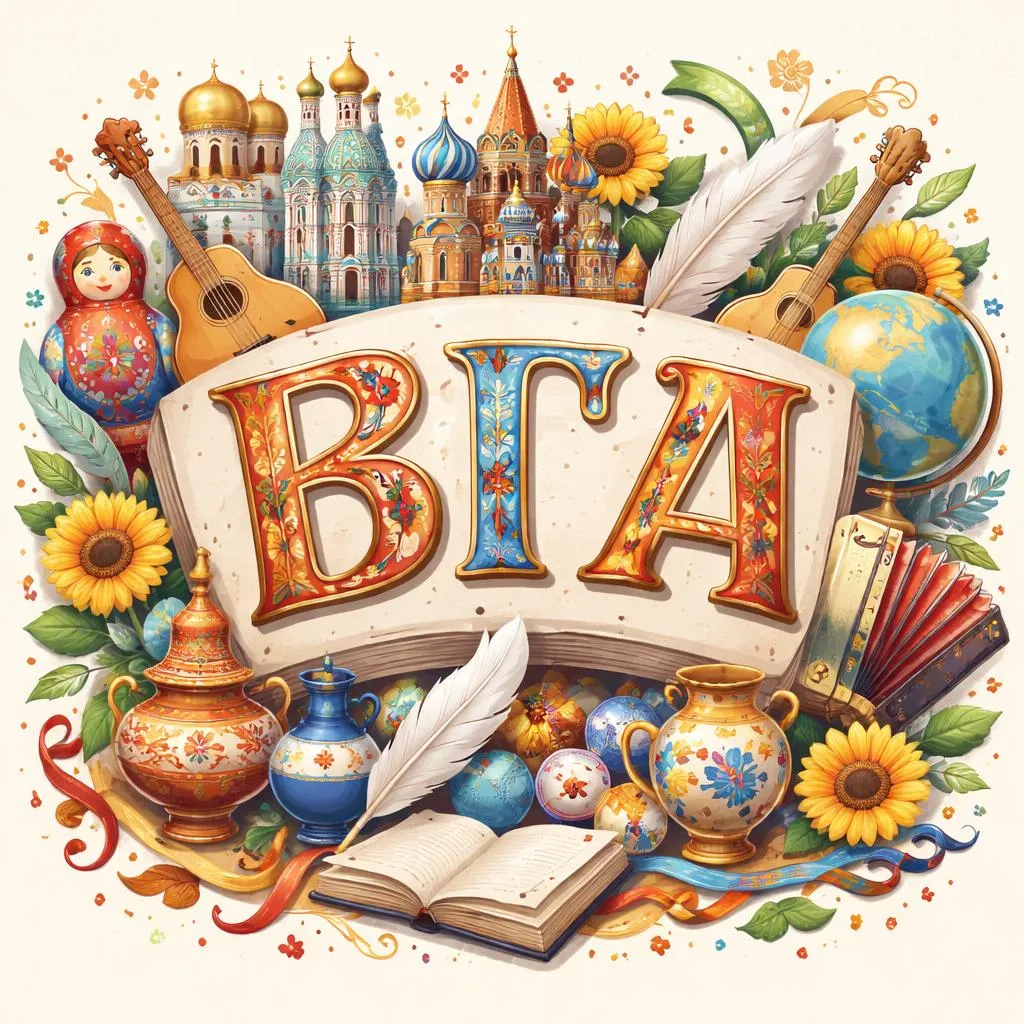

Cyrillic is a writing system used by many languages in Eastern Europe and parts of Asia. It is called the Cyrillic alphabet because it is traditionally associated with Saint Cyril, a Christian missionary who helped spread literacy among Slavic peoples.
Cyrillic is not a language. It is an alphabet used to write different languages.
Where Is Cyrillic Used?
Cyrillic is used in several countries, including:
Russia
Ukraine
Bulgaria
Serbia
Belarus
Kazakhstan
Each country may use a slightly different version of the Cyrillic alphabet.
The Russian Cyrillic Alphabet
The Russian version of Cyrillic has 33 letters.
Some letters look similar to English letters:
А looks like A
К looks like K
М looks like M
However, some letters look familiar but have different sounds:
В sounds like V
Н sounds like N
Р sounds like R
Some letters are completely different:
Ж
Ш
Ю
Я
Learning these letters requires practice and memorization.
Vowels and Consonants in Cyrillic
Like English, Cyrillic alphabets include vowels and consonants.
In Russian, there are 10 vowel letters and 21 consonant letters, plus two special signs.
The soft sign (ь) and hard sign (ъ) do not represent sounds by themselves. They modify pronunciation of nearby consonants.
Pronunciation
Cyrillic letters usually have consistent sounds. Unlike English, where one letter can have many pronunciations, Cyrillic spelling is often more phonetic.
For example:
Мама is pronounced “mama.”
Дом is pronounced “dom.”
This regularity makes reading easier once the alphabet is learned.
History of Cyrillic
The Cyrillic script developed in the 9th century. It was created to write Old Church Slavonic, the language used in religious texts.
It spread across Eastern Europe as Christianity expanded.
Over time, different regions adapted the script for their own languages.
Cyrillic vs Latin Alphabet
English uses the Latin alphabet. Cyrillic is a different script, although some letters look similar.
English: B
Cyrillic: В (sounds like V)
English: P
Cyrillic: Р (sounds like R)
Because of these visual similarities, beginners sometimes confuse letters.
Why Learn Cyrillic?
Learning Cyrillic allows access to literature, culture, and history from countries that use this script.
It helps with travel, communication, and understanding global languages.
Once the alphabet is mastered, reading becomes much easier because pronunciation rules are often consistent.
Cyrillic is an important writing system with a long history and global influence.
Uppercase and Lowercase Letters
Like the Latin alphabet, Cyrillic has uppercase and lowercase forms. Some letters look similar in both forms, while others change shape significantly.
For example:
А – а
Б – б
Г – г
Д – д
Some lowercase letters look very different from their printed uppercase forms, especially in handwriting. This can make reading handwritten text more challenging for beginners.
Handwritten Cyrillic
In countries such as Russia and Ukraine, students learn both printed and cursive Cyrillic.
Cursive Cyrillic letters often connect to each other. Some cursive forms look very different from printed versions. For example, the cursive “т” may look similar to the Latin “m,” and the cursive “д” has a unique looped form.
Learning cursive helps when reading personal notes, letters, or older documents.
Letters Unique to Cyrillic
Some Cyrillic letters represent sounds that do not exist in English.
Ж represents a sound similar to the “s” in “measure.”
Х represents a sound similar to a strong “h” in the throat.
Ц represents a “ts” sound.
Щ represents a long “sh” sound.
These sounds may require practice for English speakers because they are not common in English pronunciation.
Cyrillic in Other Languages
Although Russian is the most widely known Cyrillic-based language, other languages adapt the script to match their specific sounds.
In Bulgaria, the alphabet is similar to Russian but with small differences in usage.
In Serbia, both Cyrillic and Latin alphabets are officially used.
In Mongolia, Cyrillic is used for modern writing, even though the country historically had its own script.
Each language may add or remove letters depending on pronunciation needs.
Phonetic Nature of Cyrillic
One advantage of Cyrillic, especially in Russian, is its relatively consistent spelling system. Words are usually pronounced close to how they are written.
Stress, however, can change vowel sounds. Unstressed vowels may sound softer or reduced.
For example:
Молоко (milk) has stress on the last syllable. The earlier vowels are reduced in pronunciation.
Understanding stress patterns is important for correct pronunciation.
Learning Strategies
When learning Cyrillic, it is helpful to:
Practice letter recognition daily
Write each letter by hand
Read simple words aloud
Listen to native pronunciation
Starting with common words such as мама (mother), папа (father), and дом (house) builds confidence.
Flashcards and alphabet charts can also support memorization.
Cyrillic in Digital Communication
Cyrillic is fully supported in modern technology. Keyboards can switch between Latin and Cyrillic layouts. Text messages, websites, and social media platforms all support Cyrillic characters.
However, beginners sometimes use “transliteration,” writing Russian words with Latin letters. For example:
Privet instead of Привет
While transliteration is useful at first, learning the real script is more accurate and effective.
Cultural Importance
Cyrillic is closely tied to literature and history. Famous Russian authors such as Leo Tolstoy and Fyodor Dostoevsky wrote their works using the Cyrillic alphabet.
Reading original texts in Cyrillic allows deeper understanding of language and culture.
The script represents centuries of religious, political, and artistic development across Eastern Europe and parts of Asia.
Why Cyrillic Still Matters
Cyrillic remains an important global writing system. It connects millions of speakers across multiple countries and cultures.
Learning Cyrillic expands linguistic knowledge and opens access to new literature, media, and communication opportunities.
With steady practice, the alphabet becomes familiar, and reading fluency grows quickly.