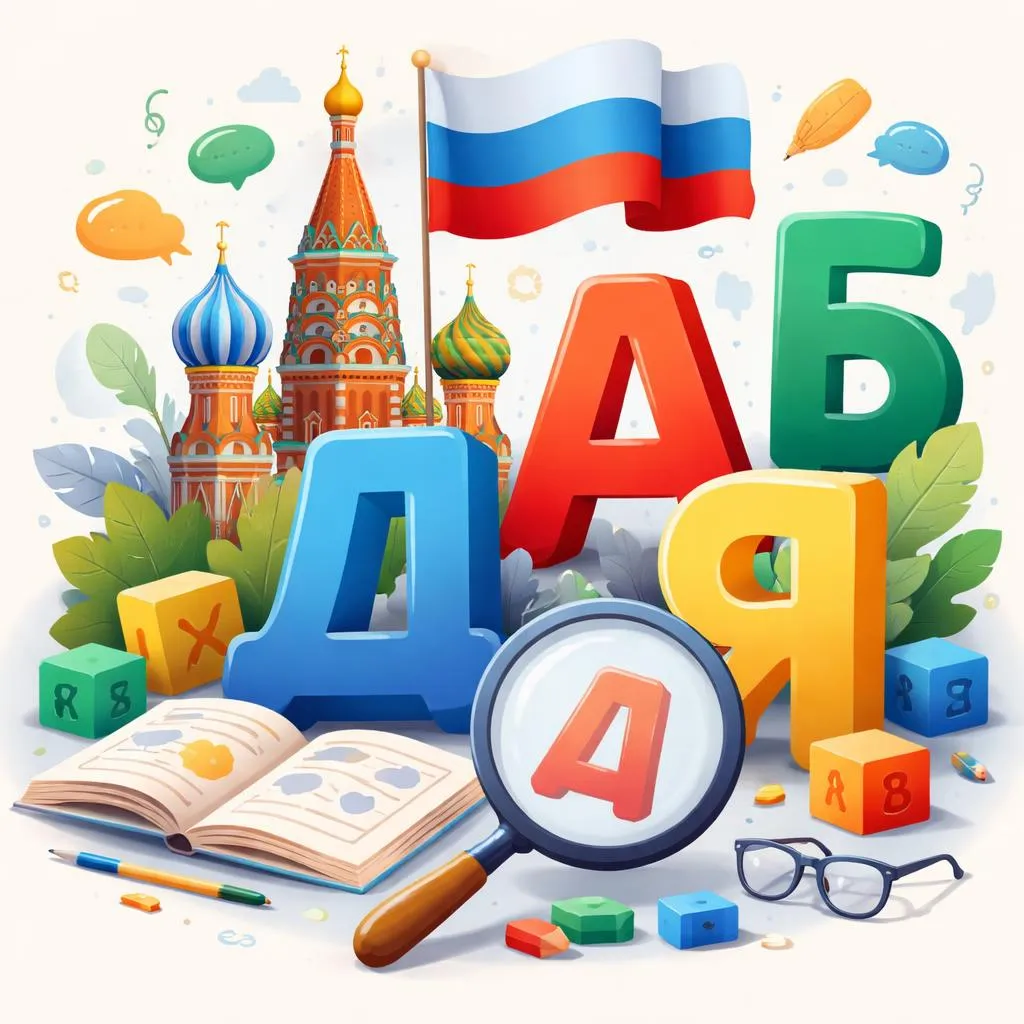

Russian script is the writing system used for the Russian language.
It is based on the Cyrillic alphabet.
The Russian language is spoken in Russia and in several other countries.
Russian script looks different from the English alphabet, but some letters may look familiar.
What Alphabet Does Russian Use?
Russian uses the Cyrillic alphabet.
The modern Russian alphabet has 33 letters.
Some letters look like English letters but sound different.
For example:
В looks like B but sounds like V.
Н looks like H but sounds like N.
Р looks like P but sounds like R.
Other letters are completely different in shape and sound.
How Did Russian Script Begin?
The Cyrillic writing system was developed in the 9th century.
It is connected to two Christian missionaries, Saint Cyril and Saint Methodius.
They created a writing system to help translate religious texts for Slavic people.
Over time, the script changed and developed into the modern Russian alphabet.
Russian Script and English Alphabet
English uses the Latin alphabet.
Russian uses Cyrillic.
Both alphabets represent sounds with letters.
However, the letters and sound rules are different.
English has 26 letters.
Russian has 33 letters.
Russian also has special letters like:
Ж
Ч
Ш
Щ
These letters represent sounds that do not exist in English.
Printed and Handwritten Russian
Russian script has two forms:
Printed letters
Handwritten letters
Handwritten Russian can look very different from printed text.
Some handwritten letters are connected, similar to cursive in English.
Learning both printed and cursive forms helps improve reading skills.
Russian Script and Sounds
Russian spelling is closely connected to pronunciation.
Each letter usually represents a specific sound.
However, stress in Russian words can change vowel sounds.
For example, unstressed vowels may sound softer or shorter.
This makes listening practice important when learning Russian.
Where Is Cyrillic Used?
The Cyrillic script is not used only in Russia.
It is also used in countries such as:
Bulgaria
Serbia
Ukraine
Each language may have small differences in its alphabet.
Why Learn Russian Script?
Understanding Russian script opens the door to reading Russian books, signs, and media.
It also helps with pronunciation and vocabulary building.
Learning a new script strengthens memory and language awareness.
Although the letters may look unfamiliar at first, regular practice makes recognition easier over time.
Russian script is a structured and logical writing system that reflects the sounds of the Russian language and connects learners to a rich cultural and linguistic tradition.
More About Russian Script Structure
Russian script includes both vowels and consonants.
There are 10 vowel letters in the Russian alphabet.
There are 21 consonant letters.
There are also 2 special letters that do not represent sounds by themselves.
These two letters are:
Ь (soft sign)
Ъ (hard sign)
The soft sign makes the consonant before it softer.
The hard sign separates sounds and prevents softening.
These signs are unique features of Russian script and do not exist in English writing.
Uppercase and Lowercase Letters
Russian script has uppercase and lowercase forms, just like English.
А – а
Б – б
В – в
In printed text, the difference is clear.
In handwritten cursive, the shapes can look very different from printed letters.
For example, the handwritten form of “т” may look similar to the English “m.”
The handwritten form of “д” can look very different from its printed version.
Because of this, reading handwritten Russian often requires extra practice.
Stress Marks and Pronunciation
Russian writing usually does not show stress marks.
However, stress is very important for pronunciation.
A word can change meaning if the stress changes.
For example, some words may look the same in writing but sound different depending on stress placement.
Learners often mark stress in textbooks while studying.
In normal books and newspapers, stress is not written.
Russian Script in Modern Life
Russian script appears on street signs, books, newspapers, websites, and product labels in Russia.
It is also seen in literature, music, and film subtitles.
Famous Russian writers such as Leo Tolstoy and Fyodor Dostoevsky wrote their works using Cyrillic script.
Reading their original texts requires understanding Russian letters.
Differences Between Russian and Other Cyrillic Alphabets
Although Russian uses the Cyrillic alphabet, not all Cyrillic alphabets are identical.
For example, Bulgaria and Serbia also use Cyrillic, but their alphabets include small differences in letter usage and pronunciation rules.
Some languages remove certain letters.
Others add new letters to represent unique sounds.
This shows that Cyrillic is a writing family with related systems.
Learning Russian Script Step by Step
Learning Russian script usually begins with recognizing letter shapes.
After that, learners connect each letter to its sound.
Reading simple syllables helps build confidence:
ма
мо
ми
Then short words become easier:
мама
дом
кот
Gradually, longer words and full sentences can be read smoothly.
Common Challenges
Some letters look like English letters but sound different.
This can cause confusion at the beginning.
For instance:
С looks like C but sounds like S.
У looks like Y but sounds like U.
Х looks like X but sounds like a strong H sound.
Careful listening and repeated reading practice reduce mistakes.
Russian Script and Digital Communication
Russian script is fully supported on computers and smartphones.
Keyboards can switch between Latin and Cyrillic layouts.
Many learners practice typing to improve letter recognition.
Seeing letters on screens, in messages, and on social media strengthens familiarity.
Why Russian Script Is Important
Russian is one of the most widely spoken Slavic languages.
Understanding its script allows access to history, science, literature, and culture.
The Cyrillic alphabet represents sounds clearly and systematically.
With steady practice, the shapes become familiar, the sounds become natural, and reading becomes fluent.