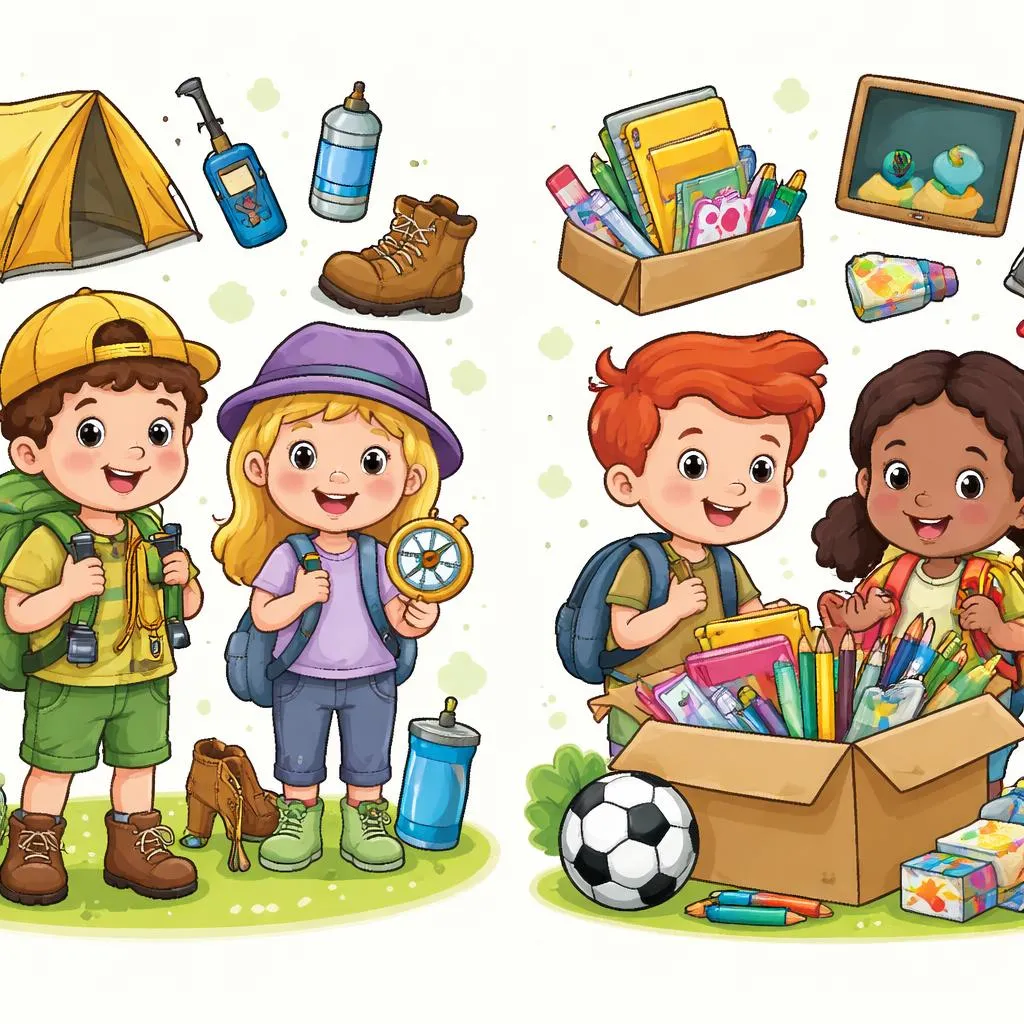

A child gets ready for a camping trip. "I am equipped with a tent and a flashlight," they say. Another child gets art supplies. "The teacher supplied us with paper and paint," they say. Two words. Both mean "provided with what is needed." But one is about tools and skills. One is about materials and supplies.
Children are equipped and supplied every day. Understanding the difference helps them describe what they have to work with.
This article helps families explore these provision phrases. Your child will learn when they are equipped and when they are supplied.
What Do These Expressions Mean?
"Equipped to" means "provided with the tools, skills, or abilities needed to do something." The word suggests being ready for action. It says "you have what you need to get the job done."
For a child, think of a firefighter. A firefighter has a helmet, boots, and an axe. The firefighter is equipped to fight fires. The equipment helps them do their job.
"Supplied to" means "provided with materials, items, or resources that are consumed or used up." The word suggests giving out things. It says "here are the things you need to use."
For a child, think of a classroom. The teacher supplies paper, pencils, and glue. Students use these supplies up. They need more later.
These two expressions seem similar because both mean "give what is needed."
But one is about tools and abilities that last. One is about materials that get used up.
What's the Difference?
The main difference lies in what is being provided. "Equipped to" provides tools, skills, or lasting items. "Supplied to" provides consumable materials.
One is about lasting capability. One is about ongoing needs.
"Equipped to" sounds like you are set up for a task. The equipment stays with you. You use it again and again. A backpack, a computer, a skill.
"Supplied to" sounds like you are given things that will be used up. Paper gets drawn on. Food gets eaten. Paint gets used. You will need more supplies later.
Another difference involves the nature of the need. Equipping is for capability. Supplying is for resources.
Also, you equip a person. You supply materials to a person.
So remember: equipped to = provided with tools or skills that last. supplied to = provided with consumable materials.
When Do We Use Each One?
Use "equipped to" for tools and lasting items. Use it for skills. Use it for gear. Use it for abilities. Use it for anything that stays with you.
For example, a child has a backpack, pencils, and a ruler for school. "He is equipped for class." The tools last.
Use "equipped to" for skills. "She is equipped to solve math problems." The skill stays with her.
Use "supplied to" for consumable materials. Use it for paper. Use it for food. Use it for paint. Use it for things that run out.
For example, the teacher gives each student paper for a drawing. "The students were supplied with paper." The paper will be used up.
Use "supplied to" for ongoing needs. "The kitchen is supplied with fresh vegetables each week."
Also use "supplied to" for filling a need. "The shelter was supplied with blankets for winter."
Remember: lasting tools and skills = "equipped to." consumable materials = "supplied to."
Example Sentences for Kids
Here are simple sentences for "equipped to":
The hiker was equipped with a map, a compass, and a water bottle.
(Tools that last for the whole hike.)
She is equipped with the skills to play the piano.
(Lasting abilities.)
The firefighter's truck is equipped with a long ladder.
(Equipment that stays with the truck.)
Here are simple sentences for "supplied to":
The art class was supplied with paint, brushes, and paper.
(Consumable art materials.)
The party was supplied with enough food for all the guests.
(Food that gets eaten.)
The hospital was supplied with masks and gloves for the staff.
(Materials that get used up and replaced.)
Notice how "equipped to" provides lasting tools. "Supplied to" provides consumable materials.
Common Mistakes to Avoid
Many people say "supplied to" for lasting tools. This sounds like the tools are consumed. A child gets a backpack. You say "he was supplied with a backpack."
Incorrect: Lasting backpack. "Supplied."
Correct: "He was equipped with a backpack."
Lasting items use "equipped."
Another mistake: using "equipped to" for consumable materials. This sounds like the materials are tools. A child gets paper for drawing. You say "he was equipped with paper."
Incorrect: Paper. "Equipped."
Correct: "He was supplied with paper."
Consumable materials use "supplied."
A third mistake: forgetting that "supplied" is often used for ongoing delivery. "The store is supplied with goods every Tuesday." "Equipped" is for one-time setup. Teach your child the difference between stocking and tooling.
Easy Memory Tips
Here is a fun trick for kids. Think of a toolbox and a grocery bag.
"Equipped to" = a toolbox. The toolbox has a hammer, a screwdriver, and a wrench. You use them over and over. The toolbox equips you for many jobs.
"Supplied to" = a grocery bag. The bag has apples, bread, and milk. You eat them. They are gone. The store supplies you with food each week.
Another memory tip: look at the first letters. "Equipped" starts with E like "Enduring" (lasts). "Supplied" starts with S like "Spent" (gets used up).
Draw a simple picture. Draw a toolbox with a hammer and screwdriver next to "equipped to." Draw a grocery bag with apples and bread next to "supplied to." The images help children feel the difference.
Also try this question: "Do these items last or get used up?" If last, say "equipped to." If used up, say "supplied to."
Quick Practice Time
Try these easy exercises with your child. Fill in the blank with "equipped" or "supplied."
The classroom was ________________ with pencils and erasers for the test.
The chef is ________________ with a set of high-quality knives that will last for years.
The school was ________________ with new computers for the lab.
The food bank was ________________ with canned goods for the winter.
Answers:
Supplied (pencils and erasers get used up)
Equipped (knives last for years)
Equipped (computers are lasting tools)
Supplied (canned goods are consumable supplies)
Now practice using both phrases at home. When your child gets lasting tools or skills, say "you are equipped." When your child gets consumable materials, say "you are supplied." Your child will learn the difference between a toolbox and a grocery bag.
Wrap-up
Use "equipped to" when someone is provided with lasting tools, skills, or equipment that can be used repeatedly. Use "supplied to" when someone is provided with consumable materials that will be used up and may need to be replaced. Both provide what is needed, but one fills a toolbox while one fills a grocery bag.