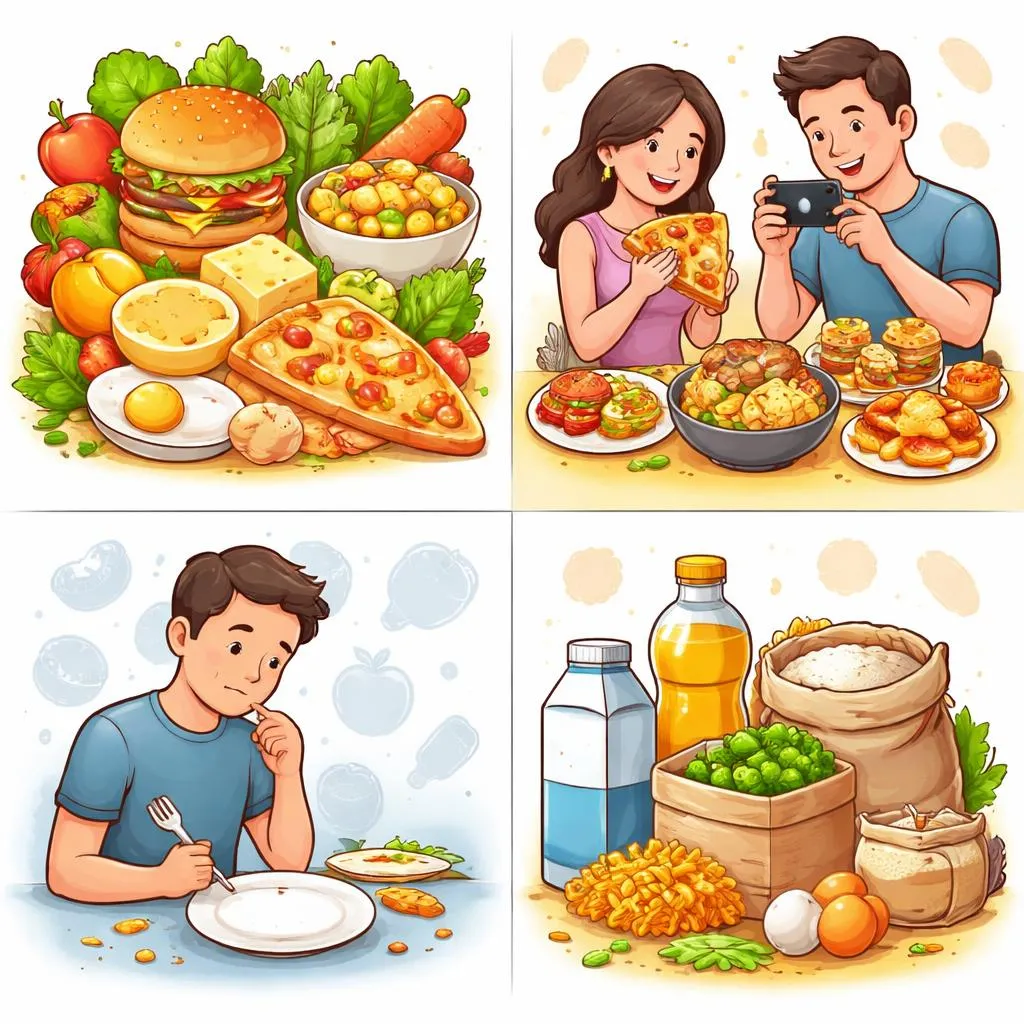

Hello, word chef! Have you ever thought about your lunch? You eat food. Your friend who loves trying new restaurants is a foodie. A lost kitten might be foodless. The grocery store sells many foodstuffs. They all have "food" in them. But they are not the same! The words food, foodie, foodless, and foodstuff are a "Word Kitchen Team". They all connect to eating. Each team member has a different ingredient. Your job is to learn their ingredients. Let's see a quick example at home.
At home, you might say: "We need to buy more food." That is the general thing you eat. But you could also say: "My aunt is a real foodie." That describes a person. Which one is right? They both are! You need the right ingredient for your sentence. Let's start our cooking lesson!
Adventure! Decoding the Kitchen Team
Welcome to the word kitchen! Our four food words are here. They share a root idea. But they are different. Meet Food. It is a noun for what we eat. Meet Foodie. It is a noun for a person. Meet Foodless. It is an adjective for a lack. Meet Foodstuff. It is a noun for a type of food. Let's examine their recipes.
Dimension One: The Role Reveal – Thing, Person, State, or Type?
Every word has a role. Is it a general thing? Is it a person? Is it a description? Or is it a category?
Food: The General Noun.
This word is a noun. It names the things that people and animals eat to live. It is the most common word.
School example: "Healthy food gives us energy." The word "food" is the general thing we eat.
Nature example: "Bears look for food before winter." The word "food" is what they eat.
Foodie: The Person Noun.
This word is a noun. It names a person who is very interested in food and cooking. This person loves to try new foods.
Home example: "My brother is a foodie who loves to cook." It names the type of person he is.
Playground example: "The foodie in our class knows all the best snack bars." It names the person.
Foodless: The Describing Adjective.
This word is an adjective. It describes a situation, place, or creature that has no food. It means "without food".
Nature example: "The foodless bird searched the empty field." It describes the bird's situation. It has no food.
School example: "The foodless pantry worried the campers." It describes the pantry. It is empty.
Foodstuff: The Specific Type Noun.
This word is a noun. It names a substance that can be used as food. It is often used in stores, science, or lists. It sounds a bit more formal.
Home example: "Flour is a basic foodstuff for baking." It names the type of substance.
School example: "We learned about different foodstuffs in science." It names the categories of food.
Dimension Two: The Meaning Focus – General, Enthusiast, Absence, or Material?
These words point to different ideas. One is the general concept of eating. One is the person enthusiastic about it. One is the state of having none. One is the substance itself.
Food: The General Concept.
This word focuses on the idea of anything that is eaten for nutrition. It is the broadest term.
Foodie: The Enthusiast.
This word focuses on the person who has a strong interest and pleasure in food.
Foodless: The State of Lack.
This word focuses on the absence or scarcity of food. It is a negative description.
Foodstuff: The Specific Substance.
This word focuses on food as a material or commodity. It is often used in a more technical way.
Dimension Three: The Team-Up – What Words Do They Work With?
Knowing their common "kitchen tools" helps us use them correctly.
Food (Noun): It can be countable or uncountable. It likes adjectives. "Tasty food", "junk food", "enough food".
Foodie (Noun): It likes articles and adjectives. "A real foodie", "the ultimate foodie", "an adventurous foodie".
Foodless (Adjective): It usually comes before a noun. "Foodless journey", "foodless day", "foodless shelter".
Foodstuff (Noun): It is often countable. It can be used in the plural. "Basic foodstuffs", "various foodstuffs", "a common foodstuff".
Our Discovery Map: The Kitchen Team Guide
Our recipe is clear. Do you need to talk about what people or animals eat? Use the noun food. Do you want to talk about a person who loves food and cooking? Use the noun foodie. Do you want to describe a situation where there is no food? Use the adjective foodless. Do you want to name a specific type of food, especially in a list or a store? Use the noun foodstuff. Remember, food is the general term. Foodie is a person. Foodless is a description of absence. Foodstuff is a specific type of food material.
Challenge! Become a Word Kitchen Master
-
Best Word Choice: Read the scene. Pick the best word.
(Nature/Animal Scene) After a long drought, the land was dry and barren. The animals could find nothing to eat for many days.
a) The animals were foodies.
b) The animals were in a foodless situation.
Which one describes the state of having no food? (Answer: b) -
Two-Word Sentence Showdown:
(School/Cooking Class Scene) Imagine a lesson about nutrition.
First, use the general noun to talk about what we need.
Example: "We all need good food to stay healthy."
Now, use the more specific noun to talk about an ingredient.
Example: "Rice is an important foodstuff for many people." -
Eagle Eye! Find the Glitch:
Look at this sentence. One word is not quite right for the meaning. Can you fix it?
(Home/Magazine Scene) "My mom reads a magazine for foods every month."
What's wrong? "Foods" is the plural of food, which is okay, but the common term for a person who loves food is "foodie". However, the sentence says "magazine for foods". A magazine about food for enthusiasts is often called a "foodie magazine". Let's adjust.
Fixed sentence: "My mom reads a foodie magazine every month."
Your Takeaway and Mission! Make Your Sentences Tasty
Great cooking, word chef! You learned the special roles of each word. You can now choose the right word for any situation. Your English will be precise and clear.
What you can learn from this article:
You now see that food, foodie, foodless, and foodstuff are a team. But they have different functions. You learned to use "food" for the general thing we eat. You use "foodie" to name a person who loves food. You use "foodless" to describe a situation with no food. You use "foodstuff" to talk about a specific type of food substance. You know that "food" and "foodstuff" are nouns, "foodie" is a noun for a person, and "foodless" is an adjective.
Live Practice Application:
Try this today! Talk about a meal: "This food is delicious." Talk about a friend: "She is a real foodie." Describe a problem: "The lost hiker was foodless." Read a label: "This package contains natural foodstuffs." When you write or speak, think: Is it the general concept? Use food. Is it a person? Use foodie. Is it a lack? Use foodless. Is it a specific substance? Use foodstuff. Choosing the right word makes your language accurate. You are now a master of the kitchen team. Well done!