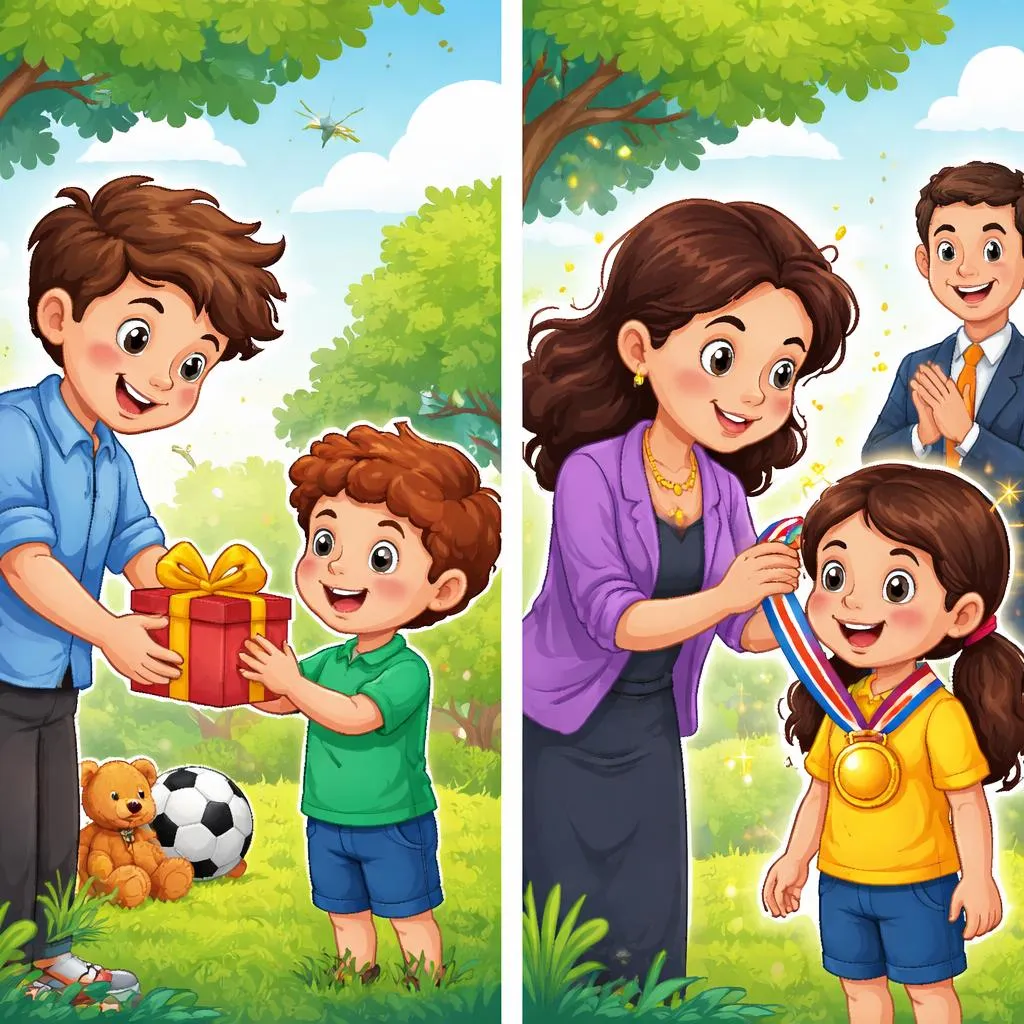

A child receives a birthday present. "This was given to me by my grandma," they say. Another child watches a ceremony. "The king bestowed a medal on the hero," they say. Two words. Both mean "gave something to someone." But one is for everyday giving. One is for special, honored giving.
Children receive things every day. Understanding the difference helps them know how special a gift is.
This article helps families explore these giving phrases. Your child will learn when something is given and when it is bestowed.
What Do These Expressions Mean?
"Given to" means "transferred or handed something to someone." The word is very common and general. It says "this person received this thing from that person."
For a child, think of a pencil. A friend hands you a pencil. The pencil was given to you. The giving is simple and everyday.
"Bestowed to" means "gave something as an honor, a gift, or a privilege, often in a formal way." The word suggests specialness. It says "this is an important or valuable gift."
For a child, think of a trophy. The coach gives a trophy to the best player. The trophy is bestowed. The giving is special and meaningful.
These two expressions seem similar because both mean "give."
But one is for everyday giving. One is for special, honored giving.
What's the Difference?
The main difference lies in the importance and formality of the giving. "Given to" is everyday. "Bestowed to" is special and honored.
One is for regular gifts. One is for ceremonies.
"Given to" sounds like a normal transaction. You give a pencil. You give a snack. You give a high five. The giving is simple.
"Bestowed to" sounds like a ceremony or an honor. A king bestows a title. A school bestows a scholarship. A parent bestows a family heirloom. The giving is meaningful and often public.
Another difference involves the value of the gift. Bestowed gifts are usually valuable, honorary, or symbolic. Given gifts can be anything.
Also, "bestowed" is much less common and more formal.
So remember: given to = everyday giving. bestowed to = special, honored giving.
When Do We Use Each One?
Use "given to" for everyday giving. Use it for regular gifts. Use it for sharing. Use it for handing things over.
For example, a child gives a crayon to a friend. "The crayon was given to her friend." The giving was simple and everyday.
Use "given to" for almost any transfer. "He gave a book to his sister."
Use "bestowed to" for special, honored giving. Use it for awards. Use it for titles. Use it for blessings. Use it for family treasures.
For example, a teacher gives a special award to the most improved student. "The award was bestowed on the student at the assembly." The giving was formal and honored.
Use "bestowed to" for royal or official acts. "The king bestowed a knighthood on the brave soldier."
Also use "bestowed to" for blessings or honors. "The grandparent bestowed a family name on the new baby."
Remember: everyday gifts = "given to." special, honored gifts = "bestowed to."
Example Sentences for Kids
Here are simple sentences for "given to":
A new backpack was given to the student by her parents.
(Everyday gift.)
The trophy was given to the winning team.
(A trophy can be given, but "bestowed" is more special.)
He gave a flower to his mom.
(Simple, everyday giving.)
Here are simple sentences for "bestowed to":
The title "Student of the Year" was bestowed upon her at the ceremony.
(A formal, honored award.)
The king bestowed a medal of honor on the brave firefighter.
(A royal, ceremonial giving.)
The scholarship was bestowed on the student who worked the hardest.
(A special honor.)
Notice how "given to" is for everyday gifts. "Bestowed to" is for special, honored, or formal gifts.
Common Mistakes to Avoid
Many people say "bestowed to" for everyday gifts. This sounds too dramatic. A child gives a pencil to a friend. You say "the pencil was bestowed on the friend."
Incorrect: Pencil. "Bestowed."
Correct: "The pencil was given to the friend."
Everyday giving uses "given."
Another mistake: using "given to" for a very special honor. This sounds too plain. A king gives a medal. You say "the medal was given to the soldier."
Incorrect: Not wrong, but too plain.
Better: "The medal was bestowed on the soldier."
Special honors deserve the special word.
A third mistake: forgetting the correct preposition. You give something TO someone. You bestow something ON or UPON someone. "Bestowed to" is less common; "bestowed upon" is more correct.
Teach your child: give TO, bestow ON/UPON.
Easy Memory Tips
Here is a fun trick for kids. Think of a lunchbox and a crown.
"Given to" = a lunchbox. Inside are an apple, a sandwich, and juice. Everyday items. You give a lunchbox to a friend. Simple.
"Bestowed to" = a crown. The king places a crown on someone's head. The crown is special. The ceremony is important. Bestowing is like giving a crown.
Another memory tip: look at the first letters. "Given" starts with G like "Gift" (any gift). "Bestowed" starts with B like "Big honor."
Draw a simple picture. Draw a lunchbox being handed to a person next to "given to." Draw a king placing a crown on someone's head next to "bestowed to." The images help children feel the difference.
Also try this question: "Is this an everyday gift or a special honor?" If everyday, say "given to." If special honor, say "bestowed upon."
Quick Practice Time
Try these easy exercises with your child. Fill in the blank with "given" or "bestowed."
A new pencil was ________________ to the student by the teacher.
The Nobel Prize was ________________ on the scientist for her discovery.
A birthday card was ________________ to him by his best friend.
The title "Class President" was ________________ upon the winner of the election.
Answers:
Given (everyday pencil)
Bestowed (Nobel Prize is a great honor)
Given (everyday birthday card)
Bestowed (formal title, special honor)
Now practice using both phrases at home. When your child gives or receives everyday items, say "given to." When you talk about special honors or awards, say "bestowed upon." Your child will learn the difference between a lunchbox and a crown.
Wrap-up
Use "given to" for everyday, simple, or regular gifts and transfers. Use "bestowed upon" (not "to") for special, honored, or formal gifts like awards, titles, medals, or blessings. Both mean "gave," but one hands over a lunchbox while one places a crown.