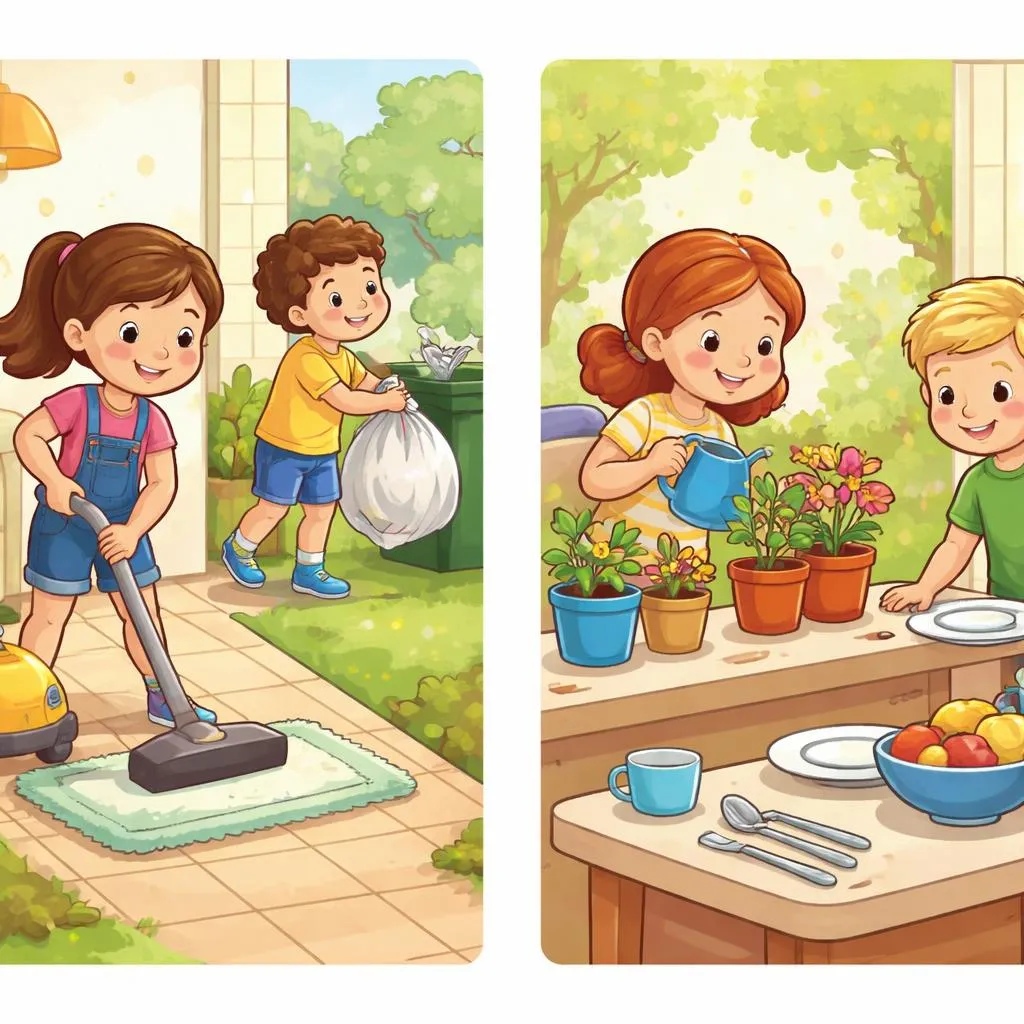

A child looks at their chores. Some feel heavy. Some feel easy. Parents use different words to describe easy jobs. Two phrases are "light work" and "simple task." Both mean "this job is not hard."
But these phrases talk about ease in different ways. One compares the job to a weight. One compares the job to complexity. Children hear both. Understanding the difference helps them know what to expect.
This article helps families explore these ease phrases. Your child will learn when a job is light and when it is simple.
What Do These Expressions Mean?
"Light work" means "this job requires very little physical effort or energy." The phrase uses the idea of weight. Heavy work is hard. Light work is easy on the body.
For a child, think of this like carrying a feather. Your hand does not get tired. A parent says "this is light work." They mean "your body will not get worn out."
"Simple task" means "this job has very few steps and is not confusing or complicated." The phrase uses the idea of complexity. A simple task is easy to understand.
For a child, think of this like putting one toy in one box. No sorting. No deciding. Just drop it in. A parent says "this is a simple task." They mean "your brain will not get confused."
These two expressions seem similar because both describe easy jobs. Both make a child feel capable. Both encourage trying.
But one focuses on physical effort. One focuses on mental clarity.
What's the Difference?
The main difference lies in what makes the job easy. "Light work" is easy on the body. "Simple task" is easy on the mind.
One is about muscle. One is about thought.
"Light work" sounds like physical ease. The job does not make you tired. You do not need strong muscles. Your body stays fresh.
"Simple task" sounds like mental ease. The job does not confuse you. You do not need to solve puzzles. Your mind stays clear.
Another difference involves the type of job. "Light work" works for chores like picking up, carrying, or moving things. "Simple task" works for jobs like organizing, matching, or following basic steps.
Also, a job can be light but not simple, or simple but not light. Carrying a heavy box a short distance is simple but not light. A confusing puzzle with light pieces is light work but not simple.
So remember: light work = easy on the body, low physical effort. simple task = easy on the mind, low complexity.
When Do We Use Each One?
Use "light work" for physical chores that do not tire the body. Use it for picking up small items. Use it for wiping a table. Use it for putting away light objects.
For example, a child needs to put napkins on the table. You say "this is light work. You can do it in one minute." The job is easy on the body.
Use "light work" for carrying or moving things that are not heavy.
Use "simple task" for jobs that have clear, few steps. Use it for following a short list. Use it for matching or sorting. Use it for basic instructions.
For example, a child needs to put all the red blocks in one box and all the blue blocks in another. You say "this is a simple task. Just put red here and blue there." The job is easy on the mind.
Use "simple task" for routine jobs the child knows well. "Making your bed is a simple task once you learn the steps."
Also use "simple task" for homework that has clear directions.
Remember: physical, low-effort chores = "light work." mental, low-complexity jobs = "simple task."
Example Sentences for Kids
Here are simple sentences for "light work":
Carrying these plastic cups to the table is light work. They weigh almost nothing.
(This describes a physical task with very little weight.)
Wiping off this small spill is light work. One paper towel will do it.
(This describes a low-effort physical chore.)
Putting the pillows on the couch is light work. You can do it in five seconds.
(This describes an easy physical task.)
Here are simple sentences for "simple task":
Sorting these forks and spoons is a simple task. Put forks on the left and spoons on the right.
(This describes an easy mental organizing job.)
Watering one plant is a simple task. Just pour this small cup of water into the dirt.
(This describes a task with clear, few steps.)
Finding your shoes is a simple task. They are right by the door where you left them.
(This describes a straightforward job with no confusion.)
Notice how "light work" describes physical ease. "Simple task" describes mental ease.
Common Mistakes to Avoid
Many people say "simple task" for physical chores. This is not wrong, but it misses the physical ease. Carrying a light box is simple to understand, but the key ease is physical.
Incorrect: Not wrong, but less precise.
Better: "This is light work. The box is not heavy."
When physical ease is the main point, use "light work."
Another mistake: using "light work" for mental tasks. This can sound odd. Sorting shapes by color is easy on the mind. You say "light work."
Incorrect: Sorting shapes. "Light work."
Correct: "This is a simple task. Just match the colors."
Mental ease needs the mental phrase.
A third mistake: forgetting that a task can be both light work and simple. Many small chores fit both. A child puts a book on a shelf. It is light work (not heavy) and simple (one step). You can choose either phrase.
When both are true, pick the phrase that matches the child's main worry. If they worry about being tired, say "light work." If they worry about being confused, say "simple task."
Easy Memory Tips
Here is a fun trick for kids. Think of a feather and a single dot.
"Light work" = a feather. A feather is light. It weighs almost nothing. Carrying a feather is light work for your body.
"Simple task" = a single dot on a page. One dot. No lines. No shapes. No puzzle. Understanding one dot is simple for your mind.
Another memory tip: look at the first letters. "Light" starts with L like "Little weight." "Simple" starts with S like "Straightforward steps."
Draw a simple picture. Draw a feather on a scale next to "light work." Draw a single black dot on a white page next to "simple task." The images help children feel the difference.
Also try this question: "Is this job easy on the body or easy on the mind?" If easy on the body, say "light work." If easy on the mind, say "simple task."
Quick Practice Time
Try these easy exercises with your child. Fill in the blank with "light work" or "simple task."
Your child needs to carry a stack of paper to the desk. You say "That is ________________. The paper is very thin."
Your child needs to put all the crayons back in the box. No sorting. Just drop them in. You say "That is a ________________. Just put them all inside."
Your child needs to move a single small pillow from the chair to the bed. You say "That is ________________. You can carry it with one finger."
Your child needs to match three pairs of socks by color. You say "This is a ________________. Find the two red ones, the two blue ones, and the two green ones."
Answers:
Light work (carrying light paper, physical ease)
Simple task (putting crayons in a box, mental ease)
Light work (moving a light pillow, physical ease)
Simple task (matching socks by color, mental organizing)
Now practice using both phrases at home. When your child has a physical chore that is easy on the body, say "that is light work." When your child has a mental job with clear steps, say "that is a simple task." Your child will learn to tell the difference between easy on the body and easy on the mind.
Wrap-up
Use "light work" for jobs that require very little physical effort and do not tire the body. Use "simple task" for jobs that have few steps and do not confuse the mind. Both describe easy jobs, but one lightens the load while one clears the path.