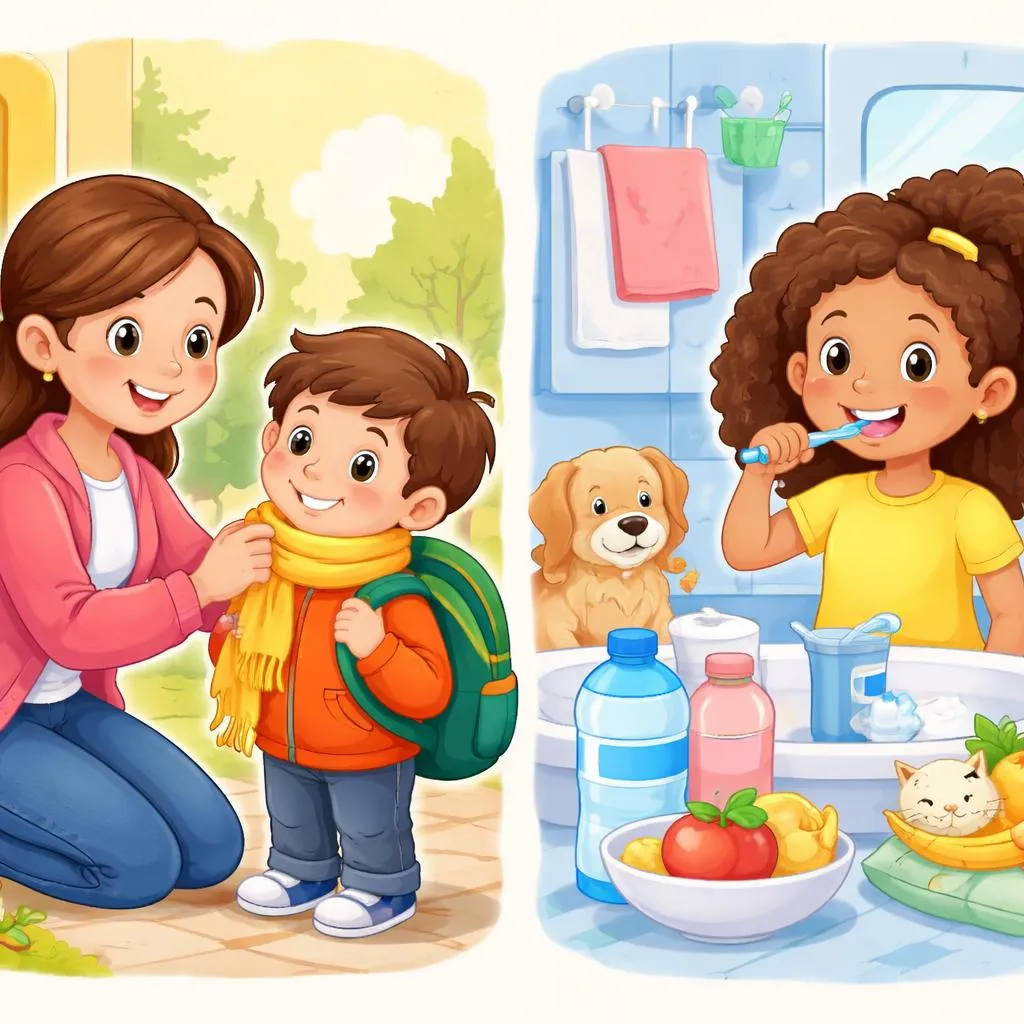

A friend moves to a new city. A parent leaves for a business trip. A child heads off to camp. The last words matter. They carry love and hope.
Two phrases end many conversations. "Take care" and "look after yourself." Both mean "stay safe and healthy." Both show you care. But they feel different.
One sounds like a quick wish. One sounds like a gentle instruction. Parents, teachers, and friends use both. Understanding the difference helps children feel truly cared for.
This article helps families explore these caring phrases. Your child will learn when to say "take care" and when to say "look after yourself."
What Do These Expressions Mean?
"Take care" means "I hope you stay safe, healthy, and free from harm." The phrase is a warm wish. It sends good feelings toward the other person.
For a child, think of this like saying "be safe" to a friend. You do not tell them exactly what to do. You just hope good things happen to them.
"Look after yourself" means "I want you to actively protect your own health and safety." The phrase is a gentle instruction. It asks the person to take action.
For a child, think of this like a parent saying "remember to wear your hat in the sun." The parent gives a specific reminder to take action for safety.
These two expressions seem similar because both come from care. Both show you want the person to be well. Both offer warmth at a goodbye.
But one is a passive wish. One is an active request.
What's the Difference?
The main difference lies in who does the protecting. "Take care" wishes for good outcomes. "Look after yourself" asks the person to take action.
One is about hoping. One is about doing.
"Take care" sounds softer and more general. You do not tell the person what to do. You simply express that you want them to be okay. It works for almost any goodbye.
"Look after yourself" sounds more specific and instructional. You are asking the person to actively pay attention to their own wellbeing. It feels more like a reminder.
Another difference involves the relationship. "Take care" works for friends, classmates, and casual relationships. "Look after yourself" feels more intimate. You say it to people you truly love and worry about.
Also, "take care" can end any conversation. "Look after yourself" works best when the person faces a longer separation or a challenging situation.
So remember: take care = a warm wish for safety. look after yourself = an active request for self-protection.
When Do We Use Each One?
Use "take care" for everyday goodbyes. Use it at the end of a phone call. Use it when a friend leaves your house. Use it when you say goodbye to a classmate.
For example, two friends finish a video call. One says "take care. Talk to you later." The phrase ends the conversation warmly.
Use "take care" when the separation is short or normal. A child leaves for school. A parent says "take care, sweetheart." The wish is simple and sweet.
Use "look after yourself" when someone faces a longer separation or a challenge. Use it when a child goes to camp. Use it when a friend is sick. Use it when someone moves away.
For example, a child spends a week at grandma's house. The parent says "look after yourself. Remember to wear your coat when it is cold." The parent gives an active reminder.
Use "look after yourself" when someone faces a difficult situation. A friend is going through a hard time. You say "look after yourself. Call me if you need anything."
Also use "look after yourself" for health concerns. A child has a cold. You say "look after yourself. Drink lots of water and rest."
Remember: everyday goodbyes = "take care." Longer separations or challenges = "look after yourself."
Example Sentences for Kids
Here are simple sentences for "take care":
Take care. I will see you at school tomorrow.
(This ends an everyday conversation with a friend.)
Have a nice weekend. Take care.
(This is a warm wish before two days apart.)
Thanks for playing with me. Take care.
(This ends a playdate kindly.)
Here are simple sentences for "look after yourself":
You are going to camp for a whole week. Look after yourself. Wear sunscreen every day.
(This gives an active safety reminder for a longer separation.)
I know you are feeling sad. Look after yourself. Get some sleep and eat your meals.
(This asks the child to take active steps for emotional and physical health.)
You are walking home alone today for the first time. Look after yourself. Cross at the light and do not talk to strangers.
(This gives specific safety instructions for a new situation.)
Notice how "take care" is a general warm wish. "Look after yourself" often comes with specific reminders or instructions.
Common Mistakes to Avoid
Many people say "look after yourself" for everyday goodbyes. This sounds too heavy. A friend says goodbye after lunch. You say "look after yourself."
Incorrect: "Look after yourself" for a casual lunch goodbye.
Correct: "Take care. See you later."
Save the active phrase for situations that truly need extra care.
Another mistake: using "take care" when someone needs specific instructions. A child is about to cross a busy street alone for the first time. You say "take care."
Incorrect: "Take care" for a dangerous situation.
Correct: "Look after yourself. Stop, look both ways, and wait for the green light."
When action is needed, use the action phrase.
A third mistake: forgetting that both phrases lose meaning if you say them without feeling. Rushed words sound empty.
Say "take care" with a warm smile. Say "look after yourself" with gentle eye contact. The feeling behind the words matters as much as the words themselves. Your child hears your love in your voice.
Easy Memory Tips
Here is a fun trick for kids. Think of a lucky charm and a toolbox.
"Take care" = a lucky charm. You give your friend a lucky charm. It carries your wish for their safety. But the charm does not give instructions. It just hopes.
"Look after yourself" = a toolbox. You give your friend a toolbox. Inside are tools for safety. A bandage. A water bottle. A reminder to rest. The toolbox helps them take action.
Another memory tip: look at the words. "Take care" has the word "care" which sounds soft like a hug. "Look after yourself" has the word "yourself" which points back to the person. They must do the work.
Draw a simple picture. Draw a hand giving a heart next to "take care." Draw a child putting on a helmet next to "look after yourself." The images help children feel the difference.
Also try this question: "Is this a normal goodbye or a situation that needs active safety reminders?" If normal, say "take care." If active reminders needed, say "look after yourself."
Quick Practice Time
Try these easy exercises with your child. Fill in the blank with "take care" or "look after yourself."
Your friend finishes a phone call with you. You say "________________. Talk to you tomorrow at school."
Your older brother is leaving for college for the first time. You hug him and say "________________. Eat healthy foods and get enough sleep."
Your grandma leaves your house after a Sunday visit. You wave and say "________________. Drive safely."
Your cousin is starting a new school where she does not know anyone. You say "________________. Be kind to yourself and give it time."
Answers:
Take care (everyday phone call goodbye)
Look after yourself (long separation of college, active health reminders)
Take care (normal visit goodbye, warm wish for safe driving)
Look after yourself (challenging new situation needing self-compassion)
Now practice using both phrases at home. For normal goodbyes, say "take care" with a warm wave. For times when your child faces a challenge or longer separation, kneel down, look them in the eye, and say "look after yourself" with specific reminders. Your child will learn that your words carry both hope and guidance.
Wrap-up
Use "take care" as a warm, general wish for safety during everyday goodbyes. Use "look after yourself" as a gentle, active request for self-protection during longer separations or challenging situations. Both come from love, but one sends a hope while one gives a tool.