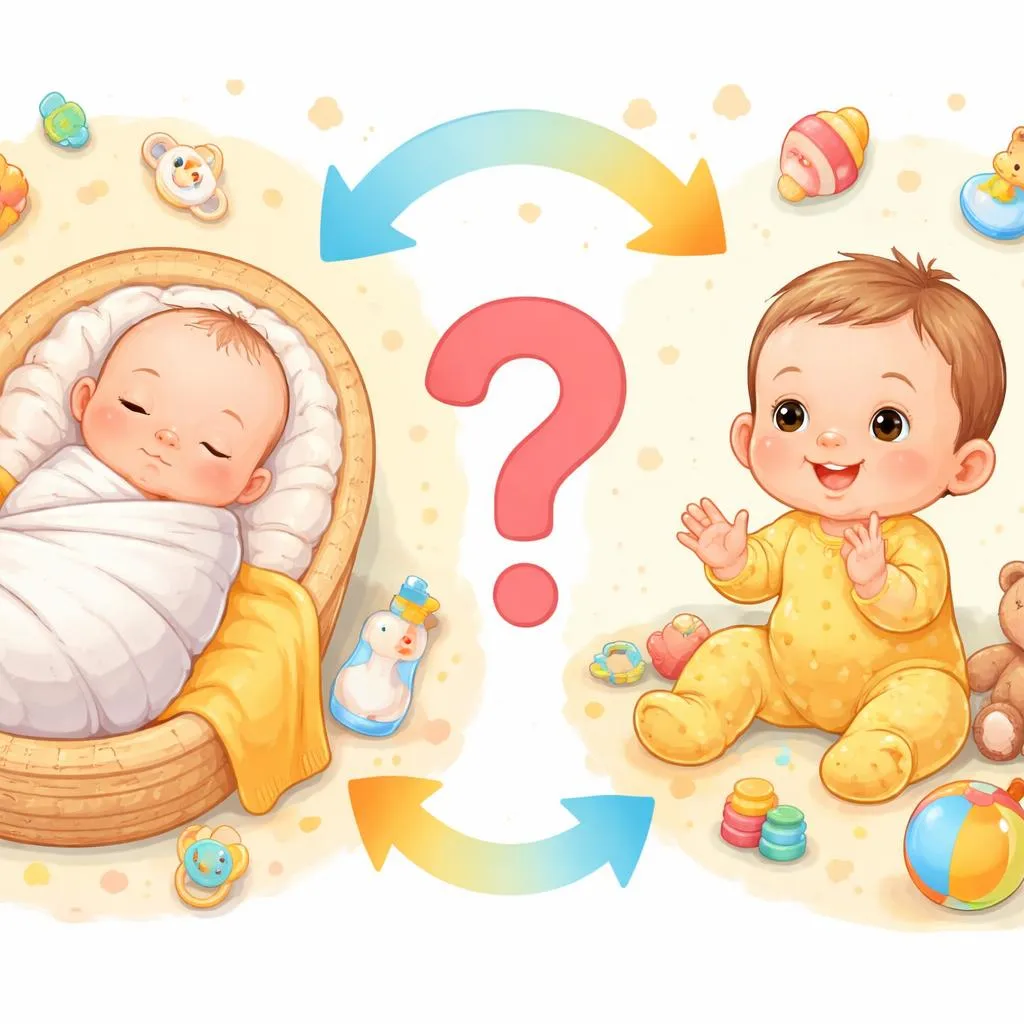

Every family celebrates a new arrival. So small. So new. So full of wonder.
Parents use many words for these tiny humans. "Baby" and "Infant" appear everywhere. But do they mean the same thing?
Many people think these words are identical. They are not. Each word has its own special time and place.
This article helps families understand both words. You will learn what makes a baby a baby. You will also learn when infant fits better. Let us explore the youngest stage of life together.
What Do These Expressions Mean?
"Baby" means a very young child from birth to about one year old. Baby sounds warm and loving. Baby also describes any young animal. Parents call their children baby for many years as a term of endearment.
For a child, explain it this way. "Baby means a human who is brand new. Babies cannot walk or talk. They drink milk and sleep a lot."
"Infant" means the same age range but in a more scientific way. Infant comes from a Latin word meaning "unable to speak." Infant sounds medical and precise. Doctors use infant. Books about development use infant.
Tell your child this. "Infant is another word for baby. But infant sounds like a doctor word. Baby sounds like a mommy or daddy word."
Both words describe the youngest humans. Neither word means sick or weak. Both show the beginning of life.
Why do they seem similar? Because they describe the exact same time of life. A baby is an infant. An infant is a baby. The difference is only about tone and who is speaking.
What's the Difference?
The main difference lies in formality and warmth.
"Baby" sounds loving and emotional. Families say baby. Songs say baby. Poems say baby. Baby feels soft and connected.
"Infant" sounds clinical and factual. Doctors say infant. Textbooks say infant. Legal papers say infant. Infant feels professional and distant.
One is more for home and heart. The other is more for hospitals and science.
Another difference involves age limits. Baby can stretch. People call toddlers baby sometimes. Parents call teenagers baby as a nickname. Baby works for many years as a loving term.
Infant stays strict. Infant usually means birth to twelve months. After the first birthday, a child is no longer an infant medically.
Tone also differs. "Baby" sounds cuddly and sweet. "Infant" sounds serious and exact.
Use this simple comparison with your child. "Baby is like a warm hug. Infant is like a thermometer. Both measure the same thing but feel different."
When Do We Use Each One?
We use "baby" for everyday family talk. Think of changing a diaper. Think of rocking to sleep. Think of pointing at a stroller.
At home, everyone says baby. "The baby is crying." "Give the baby a kiss." Baby feels natural on a parent's lips.
With friends, baby works best. "Your baby is so cute." "When did the baby start smiling?"
In songs and stories, baby appears everywhere. Rock-a-bye baby. Baby Beluga. The word feels soft and musical.
We use "infant" for formal and medical situations. Think of a doctor's office. Think of a car seat manual. Think of a parenting class.
At the hospital, nurses say infant. "The infant's temperature is normal." "Infant formula is on aisle three."
On official forms, infant appears. "Infant car seat recall." "Infant mortality rate." These serious topics use infant.
In school, child development classes use infant. Students learn about infant reflexes and infant nutrition.
Natural usage tip. Use "baby" for love and everyday talk. Use "infant" for doctors, forms, and science.
Example Sentences for Kids
Here are simple sentences for your child to learn.
Baby to:
"The baby grabbed my finger with her whole hand. She squeezed very tight."
"Our baby cousin laughs when we make funny faces. He does not have teeth yet."
"Mom says I was a baby who never slept. Now I sleep like a rock."
Infant to:
"The infant slept in a hospital crib under a warm light."
"This infant car seat fits babies up to thirty-five pounds and thirty-two inches."
"The doctor checked the infant's reflexes by tapping her knee."
Read these sentences together. Ask your child. "Were you ever a baby? Have you heard the word infant before?"
Common Mistakes to Avoid
Many people mix up these words. Here are the most common errors.
Mistake 1: Using infant for everyday loving talk.
Incorrect: "Come here, my sweet infant. Let me give you a hug."
Correct: "Come here, my sweet baby. Let me give you a hug."
Why? Infant sounds cold and medical. Baby sounds warm and loving.
Mistake 2: Using baby for medical reports.
Incorrect: "The baby's respiratory rate is within normal limits."
Correct: "The infant's respiratory rate is within normal limits."
Why? Medical writing needs infant. Baby sounds unprofessional in charts.
Mistake 3: Calling a toddler an infant.
Incorrect: "My two-year-old infant loves to run."
Correct: "My two-year-old toddler loves to run."
Why? Infant means under one year. Two-year-olds are toddlers, not infants.
Tell your child this. "Baby is for love and family. Infant is for doctors and science. Both mean very young. Just use the right one for the right place."
Easy Memory Tips
Help your child remember the difference with these fun tricks.
Tip 1: The Lullaby and the Clipboard
Draw a parent singing a lullaby. That parent says "baby." Warm. Soft. Loving.
Draw a doctor with a clipboard. That doctor says "infant." Professional. Precise. Medical.
Ask your child. "Am I at home or at the hospital?"
Tip 2: The Teddy Bear and the Thermometer
A teddy bear loves the word baby. Soft. Cuddly. Sweet.
A thermometer loves the word infant. Exact. Measured. Scientific.
Your child can hold a teddy bear for baby and point to a thermometer for infant.
Tip 3: The Question Test
Teach your child to ask one question. "Am I showing love or sharing facts?"
If showing love, use baby. If sharing medical or official facts, use infant.
This question makes the choice easy.
Tip 4: The Sound Game
Baby sounds like "coo" — soft and sweet.
Infant sounds like "beep" — medical and exact.
Make the sounds together. Laugh while learning.
Quick Practice Time
Try these simple exercises with your child.
Exercise 1: Multiple Choice
Read each sentence. Choose baby or infant.
"The _____ giggled when I tickled his belly. His whole face smiled."
Answer: baby
"The _____ formula must be mixed with sterilized water at exactly seventy degrees."
Answer: infant
"Look at that _____ in the blue onesie. She is trying to roll over."
Answer: baby
"Researchers studied _____ sleep patterns for three years. They published their findings in a medical journal."
Answer: infant
Exercise 2: Fill in the Blank
Use baby or infant to complete each sentence.
"The _____ cried until her mother picked her up. Then she stopped immediately."
Answer: baby
"The _____ mortality rate has dropped significantly over the past fifty years."
Answer: infant
"My little sister is still a _____. She cannot hold her own bottle yet."
Answer: baby
"The pediatrician specializes in _____ care. She only sees children under one year old."
Answer: infant
Check answers together. Praise every effort. If your child makes a mistake, say this. "Good try. Let us remember the lullaby and the clipboard."
Wrap-up
The key difference is simple. Baby means very young child and sounds warm and loving. Infant means the same age but sounds medical and formal. Now you and your family can choose the right word every time. Say baby when you want to show love. Say infant when you talk to doctors or read official papers. Both words describe the precious beginning of life. Both deserve respect. Keep practicing. Your English will grow more precise every day.