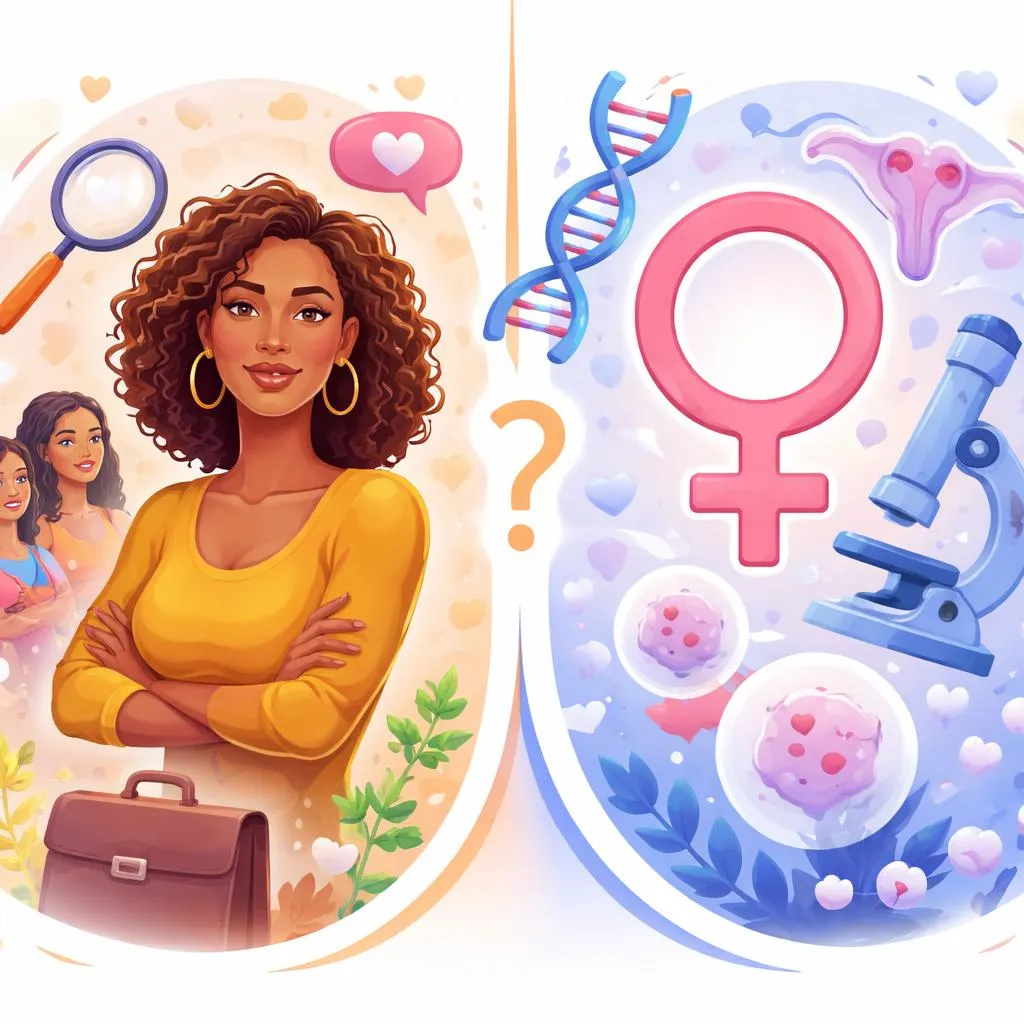

Every family has women and girls. Mothers. Sisters. Grandmothers. Aunts.
Children learn these words early. But two words seem very close. "Woman" and "Female" both describe the same people. Yet they feel very different.
One sounds warm and personal. One sounds scientific and cold.
This article helps families understand both words. You will learn when to say woman. You will also learn when female works better. Let us explore these important words with respect.
What Do These Expressions Mean?
"Woman" means an adult human female. Woman sounds personal and respectful. A woman has lived through girlhood and teenage years. Woman connects to family, work, and community.
For a child, explain it this way. "Woman means a grown-up girl. Your mommy is a woman. Your grandma is a woman. Women can be mothers, aunts, and teachers."
"Female" means a person or animal of the sex that produces eggs or gives birth. Female sounds scientific and biological. Female describes humans, animals, and even plants. Female does not mean adult. Baby girls are female.
Tell your child this. "Female is a science word. It means not male. A baby girl is female. A kitten that is a girl is female. Even flowers can be female."
Both words describe the same gender. Neither word means better or worse than male. Both are normal and natural.
Why do they seem similar? Because a woman is always female. And a female human often becomes a woman. But one word is about adulthood while the other is about biology.
What's the Difference?
The main difference lies in what each word emphasizes.
"Woman" emphasizes adulthood and humanity. A woman is a person. She has a life, a story, and relationships. Woman feels individual and personal.
"Female" emphasizes biology and category. Female is a box you check on a form. Female describes physical traits. Female feels general and impersonal.
One is more about being a grown human person. The other is about biological sex regardless of age.
Another difference involves age. Woman means adult. You cannot call a girl a woman. That would be wrong. Woman starts around eighteen or older.
Female includes all ages. A newborn baby is female. A five-year-old is female. A ninety-year-old is female. Female never changes throughout life.
Tone also differs. "Woman" sounds warm and respectful. "Female" sounds clinical and distant.
Use this simple comparison with your child. "Woman is like a friend's name. Female is like a label on a diagram."
When Do We Use Each One?
We use "woman" for everyday, respectful talk. Think of introducing your mother. Think of talking about a neighbor. Think of describing a hero.
At school, a woman teaches reading. The woman in the office answers the phone. A woman coaches the soccer team.
At home, the woman of the house can mean mom. Women cook meals. Women take care of children.
In stories, a woman saves the day. A woman falls in love. A woman learns a lesson. Woman feels human and real.
We use "female" for science, medicine, and forms. Think of a doctor's chart. Think of a biology textbook. Think of a census questionnaire.
At school, female students line up on the right side. The female praying mantis is larger than the male.
At the doctor, female patients need different screenings. The female hormone estrogen affects many body systems.
On forms, you check "male" or "female." Police reports describe a female suspect. Job applications ask for male or female.
Natural usage tip. Use "woman" for people you know and respect. Use "female" for science, medicine, and official papers.
Example Sentences for Kids
Here are simple sentences for your child to learn.
Woman to:
"The kind woman at the bakery gave us an extra cookie. She had gray hair and a warm smile."
"My mom is the strongest woman I know. She works hard and still has time to play."
"The woman in the red coat helped us find the library. She knew the way."
Female to:
"The female penguin lays one egg. The father keeps it warm on his feet."
"Please write your name and check female or male on this form."
"Scientists studied female dolphins. They live in groups with their mothers for many years."
Read these sentences together. Ask your child. "Who is a woman in our family? What female animals do you know?"
Common Mistakes to Avoid
Many children mix up these words. Here are the most common errors.
Mistake 1: Calling a girl a woman.
Incorrect: "That woman is only eight years old."
Correct: "That girl is only eight years old. She will be a woman when she grows up."
Why? Woman means adult. Girls are not women yet.
Mistake 2: Using female for everyday talk about people.
Incorrect: "The female at the store helped me find shoes."
Correct: "The woman at the store helped me find shoes."
Why? Female sounds strange and cold for everyday conversation. Woman sounds natural.
Mistake 3: Thinking woman and female mean the same thing.
Incorrect: "Woman and female are exactly the same."
Correct: "All women are female, but not all females are women. Baby girls are female but not women."
Tell your child this. "Woman means grown-up person. Female means biology. A girl is female. A woman is both."
Easy Memory Tips
Help your child remember the difference with these fun tricks.
Tip 1: The Grandma and the Scientist
Draw a grandma with a warm smile. That is a woman. Personal. Loving. A person you know.
Draw a scientist with a lab coat. The scientist writes "female" in a notebook. Scientific. Factual. A category.
Ask your child. "Am I talking about a person or a label?"
Tip 2: The Birthday and the Body
Woman needs a birthday. You become a woman around age eighteen. Woman is about age and respect.
Female is about your body. You are born female or male. Female never changes with birthdays.
Your child can say "woman birthday" and "female body."
Tip 3: The Question Test
Teach your child to ask one question. "Am I talking about a specific person I respect, or am I talking about science or forms?"
If a specific person, use woman. If science or forms, use female.
This question guides the right word every time.
Tip 4: The Sound Game
Woman sounds like "warm" — friendly and kind.
Female sounds like "fact" — neutral and precise.
Make the sounds together. Laugh while learning.
Quick Practice Time
Try these simple exercises with your child.
Exercise 1: Multiple Choice
Read each sentence. Choose woman or female.
"The _____ at the grocery store let us go ahead in line. She had a full cart."
Answer: woman
"The _____ lioness does most of the hunting. The male protects the pride."
Answer: female
"My aunt is a brave _____. She climbed Mount Rainier last summer."
Answer: woman
"The _____ patient received a different dosage than the male patient."
Answer: female
Exercise 2: Fill in the Blank
Use woman or female to complete each sentence.
"The _____ firefighter rescued a cat from the tree. Everyone clapped."
Answer: woman
"In bees, the _____ workers do all the jobs. The male drones only mate."
Answer: female
"The young _____ started her own business. She sold handmade soap."
Answer: woman
"Please indicate your _____ or male sex on line five of the medical form."
Answer: female
Check answers together. Praise every effort. If your child makes a mistake, say this. "Good try. Let us remember the grandma and the scientist."
Wrap-up
The key difference is simple. Woman means an adult human female and sounds respectful and personal. Female means the biological sex and sounds scientific and categorical. Now you and your child can use both words correctly. Call the people you know women. Use female for forms and science. Both words have their place. Both help us describe the world with accuracy and respect. Keep practicing. Your English will grow more precise and kind every single day.