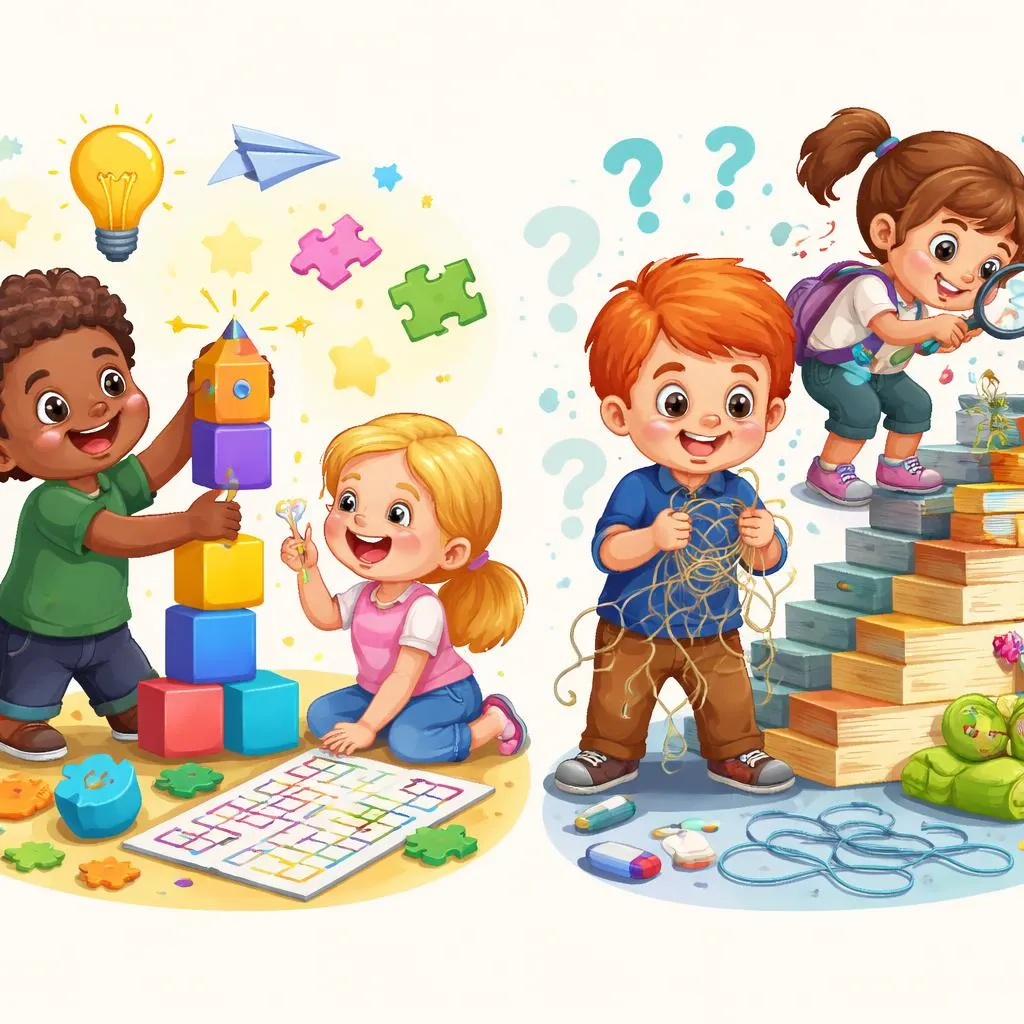

child faces a new task. Maybe it is tying a shoe. Maybe it is learning a new game. You want them to feel calm. Two phrases come to mind. "Easy peasy." "Effortless." Both mean "this is not hard."
But these phrases live in different worlds. One is silly and fun. One is calm and smooth. Children hear both. Understanding the difference helps you choose the right tone.
This article helps families explore these ease phrases. Your child will learn when to be playful and when to be smooth.
What Do These Expressions Mean?
"Easy peasy" means "this task is extremely simple and even a little bit fun." The phrase is playful and childlike. It rhymes. It makes people smile. It says "do not worry at all."
For a child, think of this like putting a round block in a round hole. A parent says "easy peasy." They mean "this is so simple a baby could do it."
"Effortless" means "this task requires no noticeable energy or struggle to complete." The phrase is calm and smooth. It describes ease without playfulness. It says "it happens without trying."
For a child, think of this like a balloon floating in the air. No one pushes it. It just rises. A parent says "the balloon rises effortlessly." They mean "nothing is fighting against it."
These two expressions seem similar because both say "very easy." Both reduce a child's fear. Both encourage trying.
But one is playful and silly. One is calm and smooth.
What's the Difference?
The main difference lies in the tone and formality. "Easy peasy" is very casual and playful. "Effortless" is more calm and descriptive.
One is for fun. One is for quiet confidence.
"Easy peasy" sounds like a game. You use it with young children. You use it for silly tasks. You use it to make a child laugh. It is not serious at all.
"Effortless" sounds more mature. You use it to describe something that flows naturally. You use it when there is no struggle. It is a calm observation.
Another difference involves age. "Easy peasy" works best for younger children. "Effortless" can work for any age but sounds more grown-up.
Also, "easy peasy" is often said with a smile or a giggle. "Effortless" is often said with a calm nod.
So remember: easy peasy = playful, silly, for young kids. effortless = calm, smooth, descriptive.
When Do We Use Each One?
Use "easy peasy" for very simple tasks with young children. Use it to make a child smile. Use it for tasks that feel like a game. Use it in casual, fun moments.
For example, a toddler learns to put on a hat. You say "easy peasy. Just plop it on your head." The rhyme makes the child giggle.
Use "easy peasy" for getting dressed. "Buttoning this big button is easy peasy."
Use "effortless" to describe something that happens without struggle. Use it for natural motions. Use it when you want to sound calm and smooth.
For example, a child watches a bird fly. You say "the bird flies effortlessly. Its wings just know what to do."
Use "effortless" for skills that look smooth. A dancer spins. "She makes that spin look effortless."
Also use "effortless" to encourage calm. "You do not have to try so hard. Let it be effortless."
Remember: playful, silly, young child tasks = "easy peasy." calm, smooth, natural actions = "effortless."
Example Sentences for Kids
Here are simple sentences for "easy peasy":
Putting on your mittens is easy peasy. One hand, then the other.
(This makes a winter task sound fun and simple.)
Easy peasy! You just press this button and the toy lights up.
(This uses rhyme to make an instruction playful.)
Zipping up your coat is easy peasy once you get the teeth together.
(This adds silliness to a practical skill.)
Here are simple sentences for "effortless":
The fish swam through the water effortlessly. It did not even look like it was trying.
(This describes a natural, smooth action.)
Her pencil moved across the page effortlessly. The lines just flowed out.
(This describes a skill that looks smooth and easy.)
You do not have to force the puzzle piece. It will click in effortlessly when it is in the right spot.
(This gives calm, smooth advice.)
Notice how "easy peasy" feels like a game. "Effortless" feels like watching something beautiful happen.
Common Mistakes to Avoid
Many adults say "effortless" to a young child for a simple task. This can sound too grown-up. A toddler puts on a sock. You say "effortless."
Incorrect: Toddler puts on sock. "Effortless."
Correct: "Easy peasy! You did it."
Young children respond better to playful language.
Another mistake: using "easy peasy" for tasks that are not truly easy. This can confuse a child. A task takes real effort. You say "easy peasy." The child thinks something is wrong with them.
Incorrect: Hard task. "Easy peasy."
Correct: "This one takes practice. But you will get it."
Be honest about difficulty. Playful words do not replace truth.
A third mistake: overusing either phrase. If every task is "easy peasy," the phrase loses meaning. If every smooth action is "effortless," the word becomes dull.
Save these special words for moments that truly fit. Use "easy" or "simple" for everyday ease. Keep "easy peasy" for silly fun. Keep "effortless" for truly smooth beauty.
Easy Memory Tips
Here is a fun trick for kids. Think of a clown and a feather.
"Easy peasy" = a clown. The clown has big shoes and a red nose. The clown is silly and makes you laugh. "Easy peasy" is the clown of easy words.
"Effortless" = a feather floating in the air. The feather does not push or struggle. It just floats. "Effortless" is the feather of easy words.
Another memory tip: say the words out loud. "Easy peasy" bounces and rhymes. It feels playful in your mouth. "Effortless" flows out smoothly. It feels calm.
Draw a simple picture. Draw a smiling clown next to "easy peasy." Draw a feather floating in the air next to "effortless." The images help children feel the difference.
Also try this question: "Do I want to be silly and playful or calm and smooth?" If silly, say "easy peasy." If calm, say "effortless."
Quick Practice Time
Try these easy exercises with your child. Fill in the blank with "easy peasy" or "effortless."
Your toddler is learning to put away one toy. You say "________________. Just drop it in the bin."
You watch a figure skater glide across the ice. You say "Her movements look so ________________. No struggle at all."
Your young child needs to put on slip-on shoes. You say "________________. Just slide your foot in."
You watch a cat jump down from a high shelf. It makes no noise. You say "The cat lands ________________. So quiet and smooth."
Answers:
Easy peasy (playful encouragement for a toddler)
Effortless (describing smooth, graceful movement)
Easy peasy (silly, fun instruction for a young child)
Effortless (calm description of a smooth, noiseless action)
Now practice using both phrases at home. For young children learning simple tasks, say "easy peasy" with a silly smile. When you want to describe something that happens smoothly and naturally, say "effortless" with a calm nod. Your child will learn that ease can be silly fun or smooth beauty.
Wrap-up
Use "easy peasy" as a playful, rhyming phrase for very simple tasks with young children when you want to add silliness and fun. Use "effortless" to describe actions that happen smoothly and naturally without any visible struggle. Both say "easy," but one wears a clown nose while one floats like a feather.