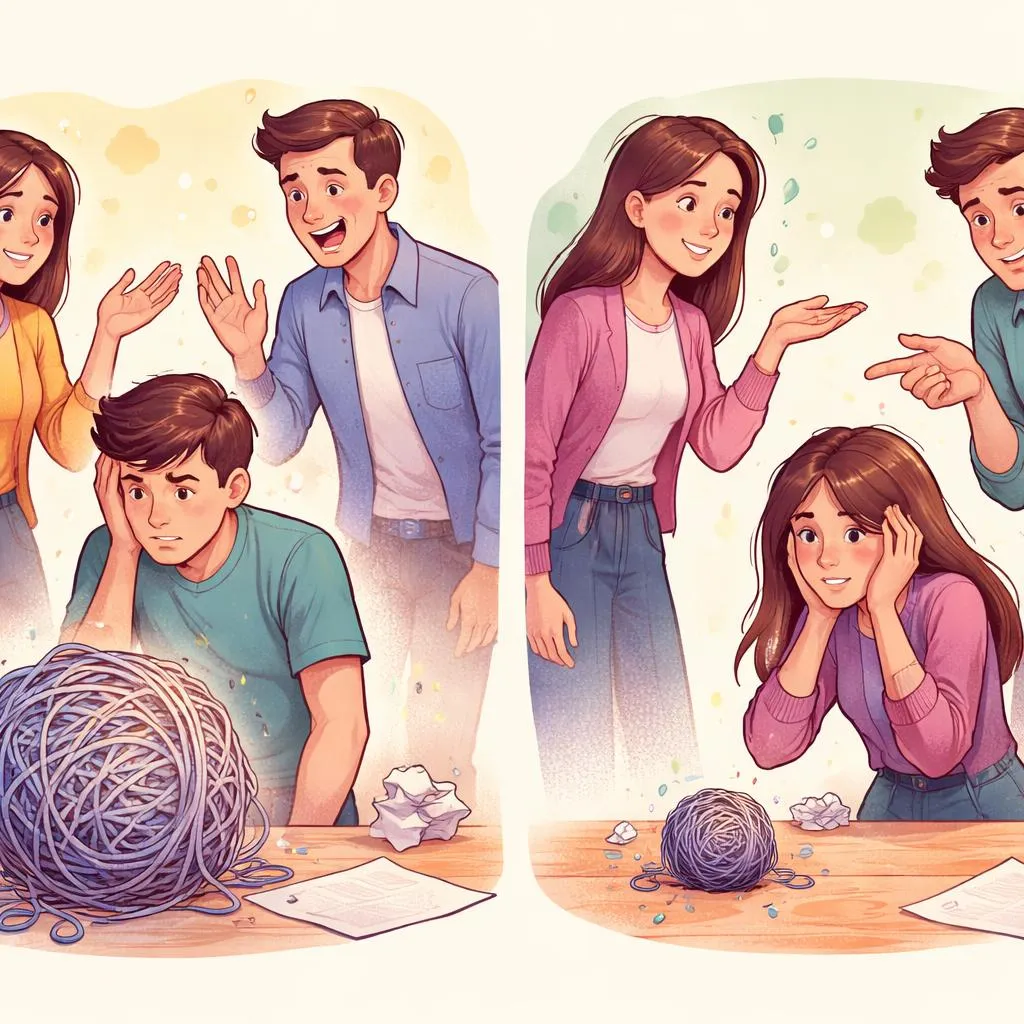

A child cries over a tiny scratch. A parent says "that's nothing." Another child worries about a small mistake in a drawing. A teacher says "it's trivial." Both phrases shrink problems. Both calm worries.
But these phrases feel different. One is simple and everyday. One is more thoughtful. Children hear both words. Understanding the difference helps them learn what truly matters.
This article helps families explore these minimizing phrases. Your child will learn when a problem is truly nothing at all.
What Do These Expressions Mean?
"That's nothing" means "this problem or thing is so small that it does not deserve attention." The phrase is casual and direct. It says "this is not worth your worry."
For a child, think of this like a tiny speck of dust on your shirt. You feel bothered. A parent says "that's nothing." They mean "it is too small to care about."
"It's trivial" means "this matter has very little importance, value, or significance." The phrase is more thoughtful and analytical. It says "compared to bigger things, this is tiny."
For a child, think of this like worrying about which color plate to use for dinner. A parent says "it's trivial." They mean "the plate color does not matter at all. What matters is eating together."
These two expressions seem similar because both make problems seem smaller. Both say "do not waste energy on this." Both come from a place of care.
But one is about size. One is about importance.
What's the Difference?
The main difference lies in the tone and the reasoning. "That's nothing" is casual and comparative. "It's trivial" is more thoughtful and analytical.
One compares to bigger things. One assesses true importance.
"That's nothing" sounds like everyday speech. You use it for very small physical things. A tiny cut. A small mess. A speck of dirt. That is nothing compared to real problems.
"It's trivial" sounds more considered. You use it for choices or worries that have no real importance. The color of a shirt. The order of tasks. The shape of a drawing. These are trivial.
Another difference involves the child's emotion. "That's nothing" works for small physical annoyances. "It's trivial" works for mental worries about preferences or perfection.
Also, "it's trivial" is a less common word. Using it teaches children a new vocabulary word while giving perspective.
So remember: that's nothing = very small physical things. it's trivial = unimportant choices or perfection worries.
When Do We Use Each One?
Use "that's nothing" for small physical things. Use it for tiny cuts or scrapes. Use it for small spills. Use it for minor messes. Use it when a child overreacts to a tiny physical issue.
For example, a child gets a paper cut. They cry. You look at it. It is very small. You say "that's nothing. It will stop hurting in a minute."
Use "that's nothing" for small amounts. A child is sad they only got two candies. "That's nothing? Two is plenty. You can have more tomorrow."
Use "it's trivial" for choices and preferences that do not matter. Use it when a child worries about the "right" way to do something unimportant. Use it for perfectionist worries.
For example, a child spends ten minutes deciding which pencil to use. You say "it's trivial which pencil you choose. They all write the same. Just pick one."
Use "it's trivial" for small mistakes that feel big to a perfectionist child. A child draws a line slightly crooked. "It's trivial. No one will notice but you."
Also use "it's trivial" for worries about what others think. "What if they do not like my shirt?" "It's trivial. Wear what makes you happy."
Remember: small physical things = "that's nothing." Unimportant choices and perfection worries = "it's trivial."
Example Sentences for Kids
Here are simple sentences for "that's nothing":
You have a tiny scratch on your finger. That's nothing. Let me put a bandage on it.
(This addresses a small physical injury.)
You spilled a few drops of water on the table. That's nothing. Wipe it up with this napkin.
(This addresses a tiny mess.)
You lost one penny. That's nothing compared to all the pennies in your piggy bank.
(This compares a small loss to a larger whole.)
Here are simple sentences for "it's trivial":
You are worried about whether to wear the striped shirt or the polka dot shirt. It's trivial. Both look nice on you.
(This addresses an unimportant clothing choice.)
You spent twenty minutes deciding how to arrange your crayons by color. It's trivial. They work the same no matter the order.
(This addresses a perfectionist organizing worry.)
You made the letter "a" with a tiny extra curve. It's trivial. Your writing is still beautiful.
(This addresses a small imperfection in handwriting.)
Notice how "that's nothing" works for physical small things. "It's trivial" works for choices and perfectionist worries.
Common Mistakes to Avoid
Many people say "that's nothing" for a child's emotional worry. This can sound dismissive. A child feels sad about losing a game. You say "that's nothing."
Incorrect: Child sad about losing. "That's nothing."
Correct: "It's trivial in the big picture. The fun was playing, not winning."
Emotional worries need the phrase that addresses importance, not physical size.
Another mistake: using "it's trivial" for physical pain. This sounds cold. A child falls and scrapes a knee. You say "it's trivial."
Incorrect: Scraped knee. "It's trivial."
Correct: "That's nothing. Let me clean it up."
Physical hurts need the physical phrase.
A third mistake: forgetting to validate before minimizing. A child's problem feels big to them. If you say "that's nothing" or "it's trivial" too quickly, the child feels unheard.
First, say "I see you are upset." Then say "let me help you see why this might be smaller than it feels." Then use the phrase. The validation makes the minimizing feel like help, not dismissal.
Easy Memory Tips
Here is a fun trick for kids. Think of a speck of dust and a grain of sand.
"That's nothing" = a speck of dust. You can barely see it. It weighs nothing. It does not hurt. A speck of dust is nothing.
"It's trivial" = a grain of sand. One grain of sand on a beach. It is tiny. It does not matter which grain you pick up. The grain is trivial compared to the whole beach.
Another memory tip: look at the first letters. "Nothing" starts with N like "No size." A thing with no size. "Trivial" starts with T like "Tiny importance."
Draw a simple picture. Draw a tiny speck of dust next to "that's nothing." Draw one grain of sand on a huge beach next to "it's trivial." The images help children feel the difference.
Also try this question: "Is this a small physical thing or a small choice/perfection worry?" If physical, say "that's nothing." If choice or perfection, say "it's trivial."
Quick Practice Time
Try these easy exercises with your child. Fill in the blank with "that's nothing" or "it's trivial."
Your child gets a tiny mosquito bite that itches a little. You say "________________. Do not scratch it."
Your child cannot decide which cereal to eat for breakfast. Both are healthy. You say "________________. Just pick the one you want today."
Your child drops one Cheerio on the floor. They start to cry. You say "________________. We have a whole box left."
Your child worries that their drawing of a tree has one leaf that is too big. You say "________________. Trees have leaves of all sizes."
Answers:
That's nothing (small physical itch)
It's trivial (unimportant breakfast choice)
That's nothing (one lost Cheerio is a tiny physical loss)
It's trivial (perfectionist worry about a drawing detail)
Now practice using both phrases at home. For small physical things like tiny spills or scratches, say "that's nothing" with a calm wave. For worries about choices, preferences, or small imperfections, pause and say "it's trivial" with a gentle smile. Your child will learn that most physical small things are nothing, and most perfectionist worries are trivial.
Wrap-up
Use "that's nothing" for small physical things like tiny cuts, small spills, or minor losses. Use "it's trivial" for unimportant choices, perfectionist worries, and small imperfections that feel big but truly do not matter. Both shrink problems, but one shrinks physical things while one shrinks mental worries.