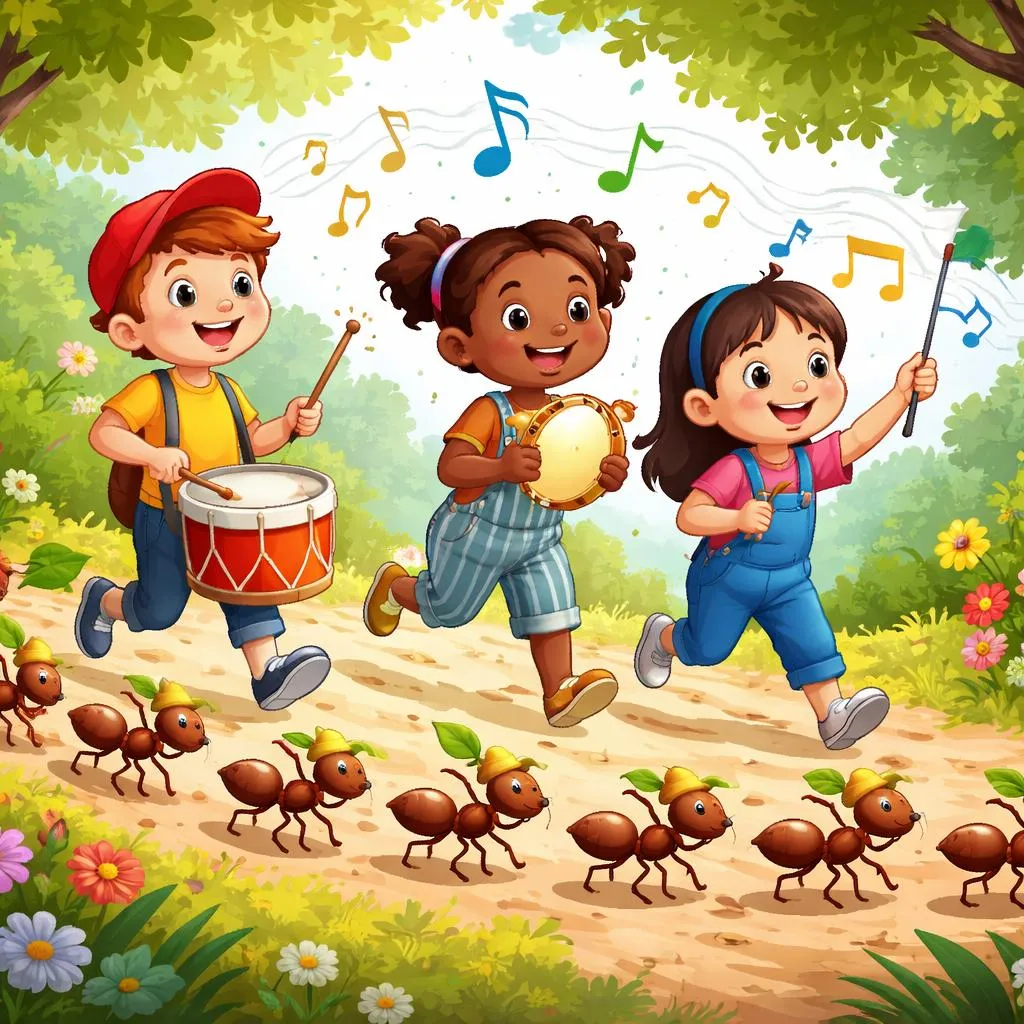

Hello, wonderful educators! Today we are exploring a delightful children's favorite. The "ant march song lyrics" have captivated young learners for generations. This lively tune tells the story of little ants marching. They work together and face challenges. The song offers rich opportunities for learning. We will examine its structure and educational value. We will explore vocabulary, phonics, and grammar points. We will also share engaging classroom activities. This guide will help you maximize this song's potential. Let's discover together what these busy ants can teach our students.
What Is the "Ant March" Rhyme?
This song is also known as "The Ants Go Marching." It tells the story of ants marching one by one. They go to the ground to get out of the rain. The little ant stops for various reasons. Each verse introduces a new number and action. The song builds from one to ten. This cumulative structure makes it perfect for counting. Children love the repetitive pattern. The playful reasons for stopping add humor. The rhyme works well for group singing. It encourages active participation from everyone.
The Lyrics of the Nursery Rhyme
Let us review the complete traditional lyrics. The most common version begins like this:
The ants go marching one by one. Hurrah! Hurrah!
The ants go marching one by one. Hurrah! Hurrah!
The ants go marching one by one.
The little one stops to suck his thumb.
And they all go marching down to the ground.
To get out of the rain. BOOM! BOOM! BOOM!
The song continues with each number. Two by two, the little one stops to tie his shoe. Three by three, the little one stops to climb a tree. Four by four, the little one stops to shut the door. Five by five, the little one stops to take a dive. Six by six, the little one stops to pick up sticks. Seven by seven, the little one stops to go to heaven. Eight by eight, the little one stops to shut the gate. Nine by nine, the little one stops to check the time. Ten by ten, the little one stops to say "THE END!"
Vocabulary Learning from the Song
This rhyme introduces several key vocabulary words. Let us explore each one carefully.
Ants: These are small insects. They live in colonies. They work together in groups. We can show pictures of real ants. We can talk about where ants live. This builds science connections.
Marching: This means walking in a steady rhythm. Soldiers march. Bands march in parades. We can practice marching in the classroom. This builds kinesthetic learning.
Hurrah: This is a cheer. People shout hurrah when they are happy. We can practice cheering together. This adds emotional expression to learning.
Ground: This is the earth's surface. The ants go down to the ground. We can talk about things we find on the ground. This builds basic vocabulary.
Rain: This is water that falls from clouds. The ants want to get out of the rain. We can discuss weather words. This connects to science learning.
Boom: This is a loud sound. It represents thunder. We can make boom sounds together. This adds dramatic effect to the song.
Phonics Points to Practice
The "ant march song lyrics" offer excellent phonics opportunities. Let us focus on specific sounds.
The M Sound: March starts with M. We can practice the /m/ sound. We can feel our lips come together. We can think of other M words. Mom, milk, and moon are good examples. This builds phonemic awareness.
The R Sound: Rain starts with R. We can practice the /r/ sound. We can feel our tongue curl. We can think of other R words. Run, red, and rabbit are good examples.
The CH Sound: March ends with the /ch/ sound. This is a digraph. Two letters make one sound. We can practice other CH words. Chair, cheese, and chicken are good examples.
Rhyming Words: The song has clear rhyming pairs. One and thumb rhyme. Two and shoe rhyme. Three and tree rhyme. Recognizing rhymes builds reading readiness. We can think of other words that rhyme with each number.
Grammar Patterns We Can Teach
The simple sentences in this song provide grammar lessons. Let us look at a few patterns.
Counting and Numbers: The song teaches ordinal numbers. One by one, two by two, three by three. This pattern shows sequence. We can practice counting from one to ten. We can also practice counting backward.
Prepositions: The song uses several prepositions. The ants go marching down to the ground. The little one stops to climb a tree. We can practice using up, down, in, and out. Physical movement helps understanding.
Action Verbs: The song uses many action words. Marching, stops, sucks, ties, climbs, shuts, dives, picks, checks. We can act out these verbs. This builds vocabulary through movement.
Repetition for Emphasis: The song repeats hurrah and boom. Repetition adds emphasis and fun. We can practice using repetition in our own speech.
Learning Activities for the Classroom
Let us explore activities that bring this song to life. These ideas work for various learning styles.
Activity 1: Ant March Line
Have students line up like marching ants. Count them one by one. Practice marching around the room. When you call out a number, that student stops and does an action. This combines movement with number recognition.
Activity 2: Rainstorm Sound Effects
Create a rainstorm using body percussion. Rub hands together for light rain. Snap fingers for medium rain. Clap hands for heavy rain. Stomp feet for thunder. Add boom sounds at the right moments. This builds listening and coordination skills.
Activity 3: Ant Craft
Provide black construction paper and googly eyes. Students cut out ant shapes. They can add pipe cleaner legs. Create a parade of ants on the bulletin board. Count them together. This builds fine motor skills.
Activity 4: Number Action Cards
Create cards with numbers one through ten. On each card, write the action from the song. One sucks thumb. Two ties shoe. Three climbs tree. Students pick a card and act it out. Others guess the number.
Printable Materials for Your Lessons
Visual supports enhance learning for young children. Here are some printable ideas.
Number Sequencing Cards: Create cards showing ants marching in groups. One card shows one ant. Another shows two ants. Continue through ten. Students arrange them in order. This builds counting and sequencing skills.
Vocabulary Flashcards: Create cards for key words. Include ant, march, rain, ground, boom, and hurrah. Use simple pictures on one side. Write the word on the other side. Use these for review games and practice.
Coloring Page: Create a simple coloring page. Show ants marching in a line. Add raindrops and clouds. Students color while listening to the song. This combines art with language exposure.
Mini Book: Create a small folded book. Each page shows one verse of the song. Students illustrate each page. They can take these books home. They can sing the song to their families. This builds home-school connections.
Educational Games to Reinforce Learning
Games make review sessions exciting and effective. Here are some game ideas.
Game 1: Ant Parade Counting
Place number cards around the room. Students march like ants. When the music stops, they go to a number. Call out a number. The students at that number do the corresponding action. This combines movement with number recognition.
Game 2: What's the Action?
Play a guessing game. Do an action from the song without speaking. Students guess which number and verse it represents. This builds observation and recall skills. It also adds fun to review time.
Game 3: Ants in the Rain
Create a safe space as the "ground." Scatter hoops or mats as shelter. Play music. Students march around. When you say "rain," they must find shelter. Count how many fit in each shelter. This teaches counting and quick thinking.
Game 4: Memory Match
Create pairs of cards. One card shows a number. The matching card shows that many ants. Place cards face down. Students take turns flipping two cards. They try to find matches. They must count the ants to check. This builds memory and counting skills.
Game 5: Ants Go Marching Relay
Divide the class into teams. Place a pile of objects at one end of the room. Students march to the pile, pick up one object, and march back. They add it to their team's collection. Count how many each team collects. This builds teamwork and counting.
Game 6: Rhyming Challenge
After learning the song, challenge students to create new verses. Choose a new number and find a rhyming action. For eleven, the little one stops to go to heaven. For twelve, the little one stops to dig and delve. This builds creativity and phonological awareness.
We have explored the rich learning potential of this classic song. The "ant march song lyrics" offer so much to young learners. We looked at vocabulary development. We practiced letter sounds and phonics. We explored simple grammar patterns. We shared engaging classroom activities. We created printable materials. We played educational games. This integrated approach makes learning natural and fun. The song's counting structure builds early math skills. The marching rhythm develops coordination. The teamwork theme teaches cooperation. Use these ideas in your classroom. Adapt them to your students' needs. Watch as your learners sing, march, and grow. These busy little ants will become beloved teachers in your classroom. Their march to escape the rain will lead your students to new learning adventures.