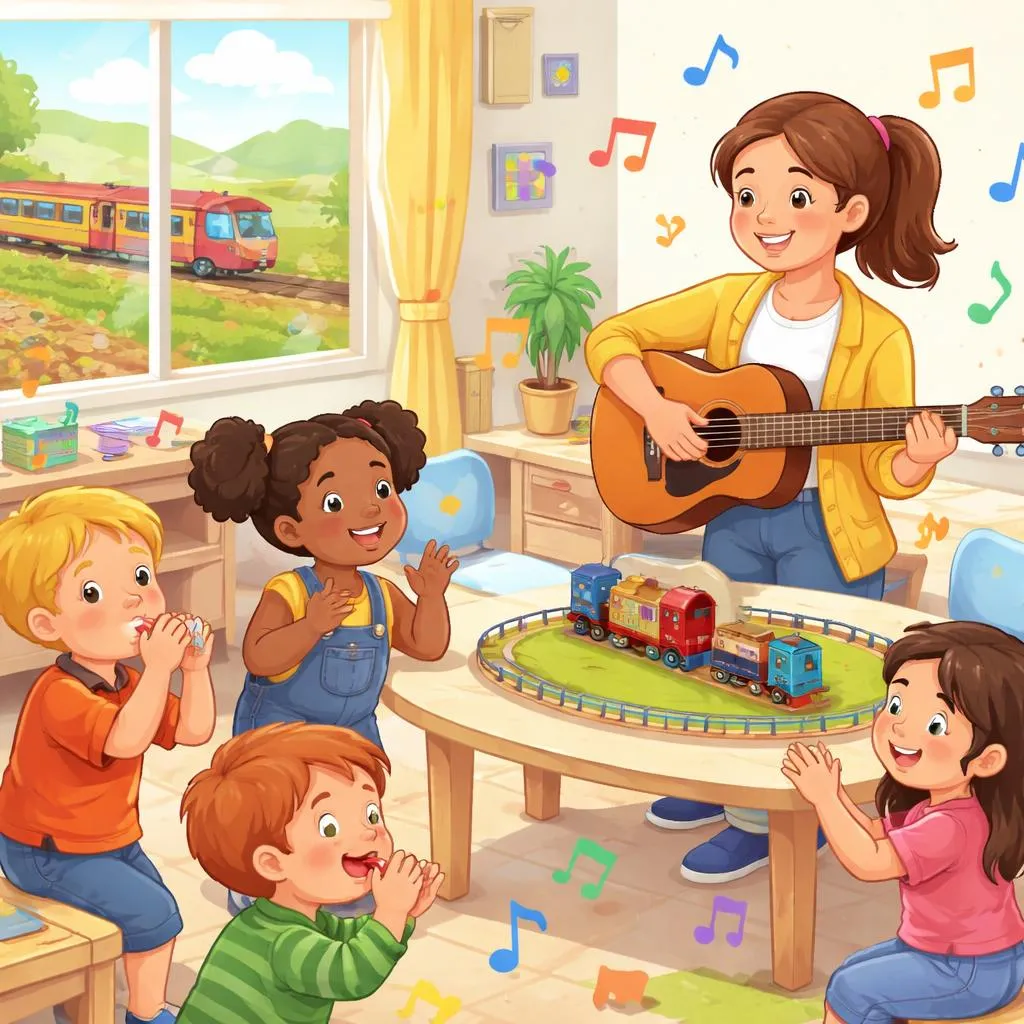

Some songs travel through time. They start in one place and spread across the world. "I Been Working on the Railroad" is one of these timeless tunes. For generations, children have sung this song. They love the steady rhythm and the playful story. The song tells about a hard worker on the railroad. It introduces characters like Dinah and the engineer. The lyrics are rich with language opportunities. By exploring the i been working on the railroad lyrics, teachers can build vocabulary, teach grammar patterns, and connect to American history. Let us discover how to use this classic work song in the young learners' classroom.
What Is the I Been Working on the Railroad Song?
"I Been Working on the Railroad" is an American folk song. It dates back to the nineteenth century. The exact origins are unknown. It may have started as a work song sung by railroad workers. The steady rhythm helped workers coordinate their movements. Over time, it became a children's favorite.
The song has several sections. The main part describes working on the railroad all day long. Another part introduces Dinah, who blows the horn. A third section tells about someone sneaking into the kitchen. The final part is about the engineer blowing the whistle.
Many people know this song from summer camps and music classes. The melody is simple and easy to learn. The verses repeat, which helps children remember the words. The song also has a call and response section in some versions.
The lyrics use informal language. "I been working" is not standard English. It reflects how people actually speak in some regions. This provides an opportunity to discuss formal and informal language.
The Complete I Been Working on the Railroad Lyrics
Here is the most common version of this classic song.
I've been working on the railroad,
All the livelong day.
I've been working on the railroad,
Just to pass the time away.
Can't you hear the whistle blowing?
Rise up so early in the morn.
Can't you hear the captain shouting,
"Dinah, blow your horn!"
Dinah, won't you blow,
Dinah, won't you blow,
Dinah, won't you blow your horn?
Dinah, won't you blow,
Dinah, won't you blow,
Dinah, won't you blow your horn?
Someone's in the kitchen with Dinah,
Someone's in the kitchen I know.
Someone's in the kitchen with Dinah,
Strumming on the old banjo.
And singing, "Fee fi fiddly eye oh,
Fee fi fiddly eye oh,
Fee fi fiddly eye oh,"
Strumming on the old banjo.
Another common verse:
The engineer blows the whistle,
The fireman rings the bell,
The porter shovels the coal,
And the brakeman gives a yell.
This rich text provides material for many lessons. The vocabulary covers work, music, and transportation.
Vocabulary Learning from the Song
The song introduces useful vocabulary across several categories.
Railroad words:
Railroad: The tracks and system for trains.
Whistle: The loud sound a train makes.
Engineer: The person who drives the train.
Fireman: The person who feeds coal to the fire.
Porter: A worker who helps passengers.
Brakeman: The worker who helps stop the train.
Coal: The fuel that powered old trains.
Bell: A metal instrument that rings.
Work words:
Working: Doing a job.
Livelong day: The whole day long.
Pass the time: Make time go by faster.
Shouting: Speaking very loudly.
Blow: Push air through something to make sound.
Music words:
Horn: A brass instrument that makes sound.
Banjo: A string instrument with a round body.
Strumming: Playing strings by brushing them.
Singing: Making music with the voice.
Kitchen words:
Kitchen: The room where food is prepared.
Someone: An unknown person.
Informal language:
I been: Short for I have been.
Won't you: A friendly way to ask someone to do something.
Gives a yell: Shouts loudly.
Use these words in other contexts. Point to a whistle and demonstrate blowing. Show pictures of trains and railroad workers. Bring a toy banjo or show a video of someone playing one.
Phonics Points in the Song
The song offers excellent phonics practice. The rhyming and repetition highlight specific sounds.
The long "a" sound:
Day and away share the long "a" sound. This appears in the first verse. Other words with this sound include play, say, and may.
The "orn" sound:
Morn and horn rhyme. This sound appears in other words like born, corn, and torn. Children can generate more words with this pattern.
The "ow" sound:
Blow and know rhyme. This is the long "o" sound. Other words include show, grow, and slow. The different spelling "oh" in "fiddly eye oh" makes the same sound.
The "ing" ending:
Working, blowing, shouting, strumming, singing. These words all end with -ing. This is a common grammatical ending. Children learn that -ing shows ongoing action.
The "ee" sound:
Fee, see, and me share the long "e" sound. This appears in the nonsense verse. Children enjoy the playful sounds.
Consonant blends:
Strumming starts with "str," a three-consonant blend. Blow starts with "bl." Train starts with "tr." These blends appear throughout the song.
Clap the rhythm as you sing. "I've been work-ing on the rail-road" has seven claps. This builds syllable awareness.
Grammar Patterns in the Lyrics
The song demonstrates several grammar patterns. Children absorb these through repetition.
Present perfect continuous tense:
"I've been working on the railroad" uses the present perfect continuous. This tense describes an action that started in the past and continues. This is a complex grammar point. Children learn it naturally through the song.
Informal contractions:
"I've" is short for "I have." This contraction appears in standard English. "I been" without "have" is informal. Discuss when to use each form.
Questions:
"Can't you hear the whistle blowing?" is a question. It expects the answer yes. This rhetorical question adds drama to the song.
Imperatives:
"Blow your horn" is a command. Dinah is being told what to do. The song uses the polite form "won't you blow" to soften the command.
Present participles:
Blowing, shouting, strumming, singing. These -ing words describe actions happening at the time of the song. They function as adjectives or parts of continuous verbs.
Prepositional phrases:
On the railroad, in the kitchen, on the old banjo. These phrases tell where things happen. Children learn common preposition patterns.
Possessives:
"Someone's in the kitchen" uses the possessive form. It means someone is in the kitchen. This is a contraction of "someone is."
The song provides rich language input. Children absorb these patterns through joyful repetition.
Learning Activities with the Song
Songs become powerful teaching tools when we add activities. Here are ideas for using this song in the classroom.
Railroad Movement Game: Children pretend to be trains. They move around the room in a line. When the whistle blows, they stop. When the bell rings, they go backward. This builds listening skills and coordination.
Make Train Sounds: Practice making different train sounds. The whistle goes "wooo wooo." The bell goes "ding ding." The engine goes "chugga chugga." Use these sounds throughout the song.
Dinah's Kitchen Dramatic Play: Set up a kitchen center. Add a toy banjo or make one from a box with rubber bands. Children pretend to be Dinah in the kitchen. They strum and sing.
Draw the Railroad Workers: After learning about the different jobs, children draw pictures. Draw the engineer blowing the whistle. Draw the fireman shoveling coal. Draw the brakeman yelling. Label each worker.
Train Car Sequencing: Create paper train cars. On each car, write a line from the song. Children arrange the cars in the correct order. This builds comprehension of sequence.
Instrument Exploration: If possible, bring in real or toy instruments. A harmonica can be the train whistle. A bell works for the train bell. A small banjo or ukulele works for strumming. Children experiment with sounds.
Work Rhythms: Explain that work songs helped workers keep a steady rhythm. Children pretend to do work while singing. They shovel, hammer, or sweep in time to the music.
Printable Materials for Classroom Use
Having printable resources makes lesson planning easier. Here are materials to prepare for this song.
Lyric Poster: Create a large poster with the full lyrics. Add simple illustrations of trains, workers, and Dinah with her banjo. Display it during singing time.
Vocabulary Cards: Make flashcards for key words. Railroad, whistle, engineer, fireman, porter, brakeman, coal, horn, banjo, kitchen, strumming. Use pictures on one side and words on the other.
Job Cards: Create cards showing each railroad job. Engineer, fireman, porter, brakeman. Include a simple description of what each person does.
Train Number Cards: Create cards with numbers one through ten on train cars. Use these for counting and ordering activities.
Coloring Pages: Design coloring pages showing scenes from the song. A train on the tracks. Dinah in the kitchen with her banjo. Workers on the railroad. Children color while listening.
Sequencing Pictures: Draw or print pictures representing each part of the song. Children arrange them in story order. They can glue them onto a paper strip.
Word Search: Create a simple word search with words from the song. Children find and circle the words. This builds word recognition.
Educational Games for Deeper Learning
Games make learning joyful. Here are games centered around the song.
Train Whistle Listening Game: Make different sounds. A whistle, a bell, a shout. Children close their eyes and identify each sound. This builds auditory discrimination.
Dinah Says: Play a variation of Simon Says. "Dinah says blow your horn." Children pretend to blow a horn. "Dinah says shovel coal." Children pretend to shovel. This builds listening and following directions.
Who Works on the Railroad?: Name a job. Children act out what that worker does. Engineer steers the train. Fireman shovels coal. Porter helps passengers. Brakeman pulls the brake.
Kitchen Charades: Act out being in the kitchen. Stir a pot. Wash dishes. Strum a banjo. Other children guess the action. This builds observation and vocabulary.
Rhyme Matching Game: Create cards with words from the song. Day and away are a match. Morn and horn are a match. Blow and know are a match. Children find the rhyming pairs.
Musical Trains: Play the song. Children move like trains around the room. When the music stops, they freeze in place. Anyone who moves is out. This builds self-control and listening.
Build a Railroad: Use blocks to build a railroad track. Add train cars. Name each car with a word from the song. This connects building play to vocabulary.
Connecting to American History
The song connects to a important period in American history. Exploring this builds cultural awareness.
Learn About Railroads: Show pictures of old trains. Explain how railroads changed America. They made travel faster. They connected distant places. They created new jobs.
Railroad Workers: Discuss who built the railroads. Many workers came from other countries. Irish and Chinese immigrants did much of the dangerous work. This introduces social studies concepts.
Work Songs: Explain why workers sang. The rhythm helped them work together. Singing made the long hours pass faster. Listen to other work songs from different jobs.
Then and Now: Compare old trains to modern trains. How are they different? How are they the same? Trains today are faster and cleaner. They use electricity instead of coal.
Field Trip: If possible, visit a train station or railroad museum. See real trains up close. Talk to people who work on trains today. This makes the song come alive.
Creating New Verses
Encourage children to create their own verses. This builds creativity and language skills.
New Workers: What other workers might be on the train? A cook who makes food. A cleaner who sweeps floors. A ticket taker who checks passes. Write new verses about these workers.
New Instruments: What if someone played a different instrument? A guitar, a drum, a flute. Change the verse. "Someone's in the kitchen with Dinah, playing on the old guitar."
New Places: Where else might someone be? In the engine room. In the dining car. On the platform. Create verses about these places.
New Actions: What else might workers do? The engineer checks the tracks. The fireman loads the coal. The porter helps with bags. Create verses about these actions.
The i been working on the railroad lyrics carry the spirit of American history. They tell of hard work and simple pleasures. They introduce characters who have entertained children for generations. Through this song, children learn about transportation, work, and music. They develop vocabulary, grammar, and phonemic awareness. They connect to the past while having fun in the present. The steady rhythm of the train becomes the steady rhythm of learning. And that is a journey worth taking.