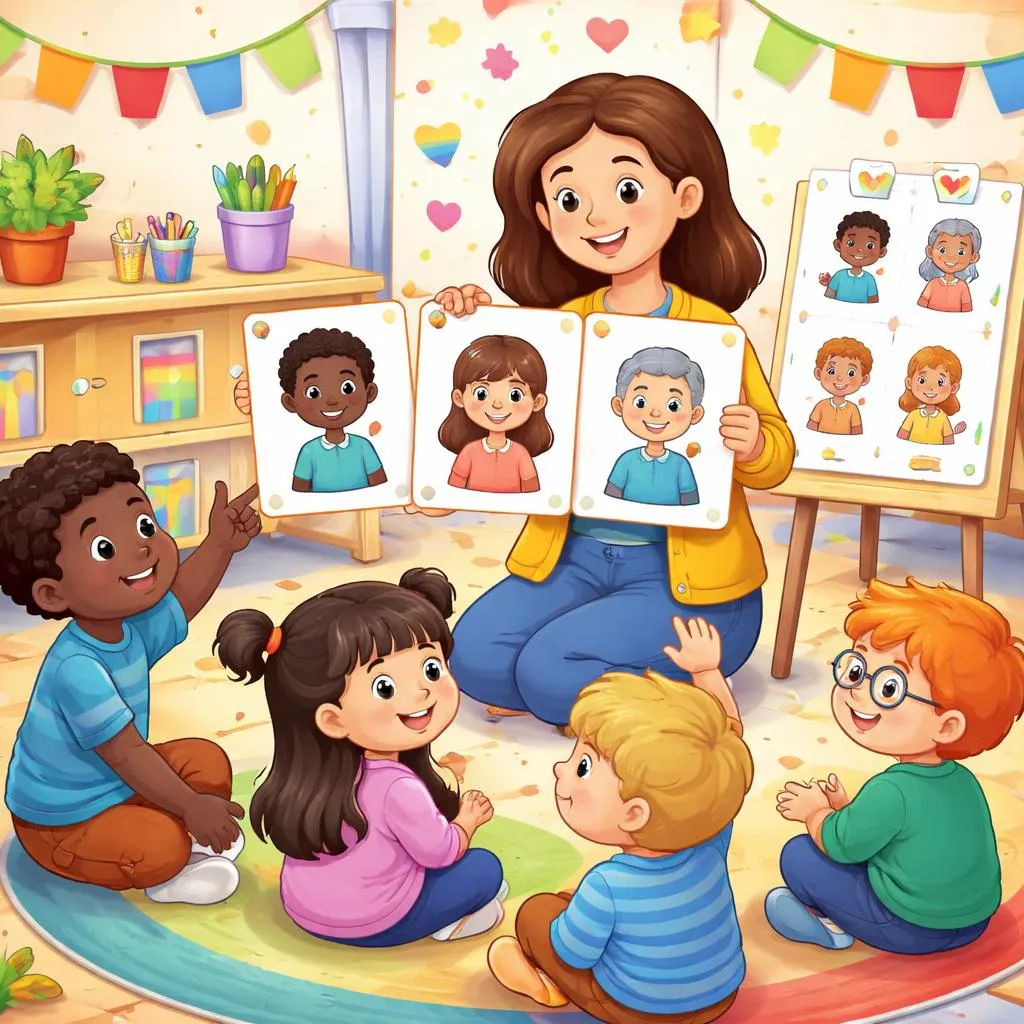

Pronouns are small words with big jobs. They replace nouns in sentences. They keep language from sounding repetitive. Without pronouns, we would say "Sarah went to Sarah's house and Sarah played with Sarah's dog." That sounds strange. Pronouns make language smooth and natural. Teaching the list of pronouns for kids helps them speak and write more fluently. Children need these words to tell stories, ask questions, and describe their world. Let us explore how to guide young learners through this essential grammar topic with clear explanations and engaging activities.
What Are Pronouns for Kids? Pronouns are words that take the place of nouns. A noun names a person, place, or thing. A pronoun stands in for that noun. This avoids repeating the same word over and over.
Simple example without pronouns: Maria has a cat. Maria loves the cat. The cat loves Maria.
Same sentence with pronouns: Maria has a cat. She loves it. It loves her.
The sentences sound much better with pronouns. They flow more naturally. They are easier to say and understand.
Pronouns must match the noun they replace. They match in number. Singular nouns need singular pronouns. Plural nouns need plural pronouns. They also match in gender sometimes. He replaces a boy. She replaces a girl. It replaces an object or animal.
For young learners, start with the most common pronouns. I, you, he, she, it, we, they appear constantly. Children hear these words every day. They need to understand what each one means.
Meaning and Explanation of Different Pronouns Pronouns have different jobs in sentences. Understanding these jobs helps children use them correctly.
Subject pronouns do the action in a sentence. They come before the verb. I run fast. You sing well. He plays soccer. She reads books. It looks cute. We go to school. They eat lunch.
Object pronouns receive the action. They come after the verb or after a preposition. Mom called me. The teacher sees you. Dad helped him. Grandma loves her. The dog followed it. The coach praised us. The crowd cheered them.
Possessive pronouns show ownership. They tell who something belongs to. The book is mine. The pencil is yours. The hat is his. The dress is hers. The toy is its. The classroom is ours. The snacks are theirs.
Reflexive pronouns refer back to the subject. They end with -self or -selves. I made this myself. You can do it yourself. He hurt himself. She dressed herself. The cat cleaned itself. We built this ourselves. They enjoyed themselves.
Start with subject pronouns. These are the easiest for children to understand. Add object pronouns next. Possessive and reflexive pronouns come later.
Categories or Lists of Pronouns for Kids Organizing pronouns into categories helps children see the patterns. Here are the main categories with examples.
Subject Pronouns: I You He She It We They
Object Pronouns: Me You Him Her It Us Them
Possessive Pronouns: Mine Yours His Hers Its Ours Theirs
Possessive Adjectives: My Your His Her Its Our Their
Note that possessive adjectives are not pronouns. They come before nouns. "My book" uses "my" as an adjective. "The book is mine" uses "mine" as a pronoun. This distinction comes later.
Reflexive Pronouns: Myself Yourself Himself Herself Itself Ourselves Yourselves Themselves
Demonstrative Pronouns: This That These Those
Interrogative Pronouns: Who Whom Whose Which What
For young learners, focus on the first three categories. Master subject, object, and possessive pronouns first. Add others gradually as children gain confidence.
Daily Life Examples for Each Pronoun Real examples help children understand how pronouns work. Use classroom situations to demonstrate each one.
Subject pronouns in the classroom: I am the teacher. You are a student. He is at the reading corner. She has a blue backpack. It is a pencil sharpener. We are in kindergarten. They are playing outside.
Object pronouns in daily routines: Please give the crayons to me. The teacher called you. The ball hit him. Mom brought her a snack. The dog followed us. The story interested them.
Possessive pronouns in sharing time: This crayon is mine. That pencil is yours. The red hat is his. The pink dress is hers. The classroom is ours. The playground is theirs.
Reflexive pronouns in action: I poured my juice myself. You tied your shoes yourself. He drew that picture himself. She buttoned her coat herself. The cat cleaned itself. We made the snack ourselves. They built the fort themselves.
Use these examples throughout the day. Point out pronouns when they occur naturally. "Look, Maria is reading. She likes that book." This casual naming builds awareness.
Printable Flashcards for Pronouns Flashcards provide visual support for learning pronouns. Here are ideas for creating and using them.
Subject Pronoun Cards: Create cards for I, you, he, she, it, we, they. Add simple pictures. A boy for he. A girl for she. A group for we. An object for it.
Object Pronoun Cards: Create cards for me, you, him, her, it, us, them. Use pictures showing actions. Someone pointing to themselves for me. Someone giving something to another person for him or her.
Possessive Pronoun Cards: Create cards for mine, yours, his, hers, its, ours, theirs. Use pictures showing ownership. A child holding a toy for mine. A group standing by a classroom for ours.
Sentence Matching Cards: Create cards with sentences missing pronouns. "___ runs fast." Create separate pronoun cards. Children match the correct pronoun to complete the sentence.
Picture Scenes: Create scene cards showing multiple people and objects. Children use pronouns to describe what they see. "He is reading. She is drawing. It is on the table."
Laminate the cards for durability. Use them for games, sorting, and daily review.
Learning Activities for Pronouns Active learning helps children understand pronouns. Here are activities that work well in the classroom.
Pronoun Hunt: Read a story aloud. Every time children hear a pronoun, they raise their hand. List the pronouns on the board. Discuss which noun each pronoun replaces.
Pronoun Replace: Write sentences on the board with nouns repeated. "Maria has a cat. Maria loves the cat." Children replace the second noun with a pronoun. "She loves it." This shows the purpose of pronouns.
Act Out Pronouns: Give children cards with pronouns. Call out a sentence. "She is jumping." The child with "she" jumps. "They are clapping." Children with "they" clap. This connects words to actions.
Pronoun Puppets: Use puppets to demonstrate pronouns. Puppet says "I am hungry." Another puppet says "Give the food to me." Children see pronouns in dialogue.
Pronoun Sorting: Create baskets labeled subject, object, and possessive. Give children pronoun cards. They sort each card into the correct basket. Check answers together.
Fill in the Blank: Create sentences with missing pronouns. "___ want to play outside." Children choose the correct pronoun. Use picture clues for support.
Pronoun Chain: Start a story with one sentence. "The girl went to the park." Next child continues using a pronoun. "She saw a dog." Next child adds another sentence with a pronoun. "It was brown." Continue around the circle.
Educational Games for Pronouns Games make grammar practice joyful. Here are games for learning pronouns.
Pronoun Bingo: Create bingo cards with pronouns in the squares. Call out sentences with missing pronouns. "___ am happy." Children cover the correct pronoun I. The first to cover a row wins.
Pronoun Memory Match: Create two sets of cards. One set has nouns. One set has pronouns. Children match the noun to the correct pronoun. Girl matches she. Boy matches he. Book matches it.
Pronoun Swat: Place pronoun cards on the table. Call out a sentence with a missing pronoun. Two children race to swat the correct pronoun with a fly swatter. The first to swat correctly wins a point.
Pronoun Go Fish: Create a deck of pronoun cards. Children play Go Fish asking for pronouns. "Do you have he?" This builds pronoun recognition through game play.
Pronoun Relay Race: Divide children into teams. Place a pile of noun cards at one end of the room. Call out a pronoun. One child from each team runs, finds a noun that matches that pronoun, and brings it back. First correct answer wins.
Pronoun Charades: Act out sentences without speaking. Point to yourself for I. Point to a boy for he. Point to a group for they. Children guess the pronoun being shown.
Pronoun Story Building: Start a story with a noun. "The elephant was big." Each child adds a sentence using a pronoun. "He had long tusks." "They were very white." "We saw him at the zoo." This builds narrative skills and pronoun use together.
Common Challenges with Pronouns Young learners often struggle with certain pronouns. Knowing these challenges helps teachers provide targeted support.
I and me confusion: Children often say "Me want cookie." Explain that I does the action. Me receives the action. Practice with simple sentences. "I run. The ball hit me."
He and she mixing: Some children confuse gender pronouns. Use clear examples with pictures. Point to a boy and say he. Point to a girl and say she. Repeat often.
It for animals: Some children use he or she for all animals. Explain that we use it when we do not know the animal's gender or when the gender does not matter.
They for one person: Children learn they for groups. Later they learn they for one person when gender is unknown. This comes with more advanced language development.
Possessive confusion: Children may say "That is me pencil." Explain that my comes before the noun. Mine stands alone. "That is my pencil. The pencil is mine."
Address these challenges gently. Model correct usage without making children feel wrong. "Yes, that is your pencil. It is yours."
Using Books to Teach Pronouns Children's books provide excellent examples of pronouns in context. Here are ways to use books for pronoun learning.
Read and Point: While reading, point to pictures that match pronouns. "She is running." Point to the girl. "He is sleeping." Point to the boy. This connects the word to the image.
Pronoun Hunt in Books: Give children sticky notes. Ask them to mark pronouns they find in a familiar book. Count how many of each pronoun appear.
Rewrite a Story: Take a simple story and rewrite it without pronouns. "The cat sat on the mat. The cat liked the mat." Children add pronouns to make it sound better. "It sat on the mat. It liked it."
Create Class Books: Make books about the class using pronouns. "We are in kindergarten. We like to play. They are our friends." Children illustrate each page.
Predictable Pattern Books: Books with repeating patterns help children predict pronouns. "I see a red bird looking at me." The pattern continues with different animals. Children anticipate the pronoun.
The list of pronouns for kids may seem long at first. But children encounter these words every day. They hear them in stories. They use them in conversation. With clear teaching and plenty of practice, pronouns become natural. Children learn to replace nouns without thinking about it. They tell stories smoothly. They ask questions clearly. They describe their world with precision. And that is the power of these small but mighty words.