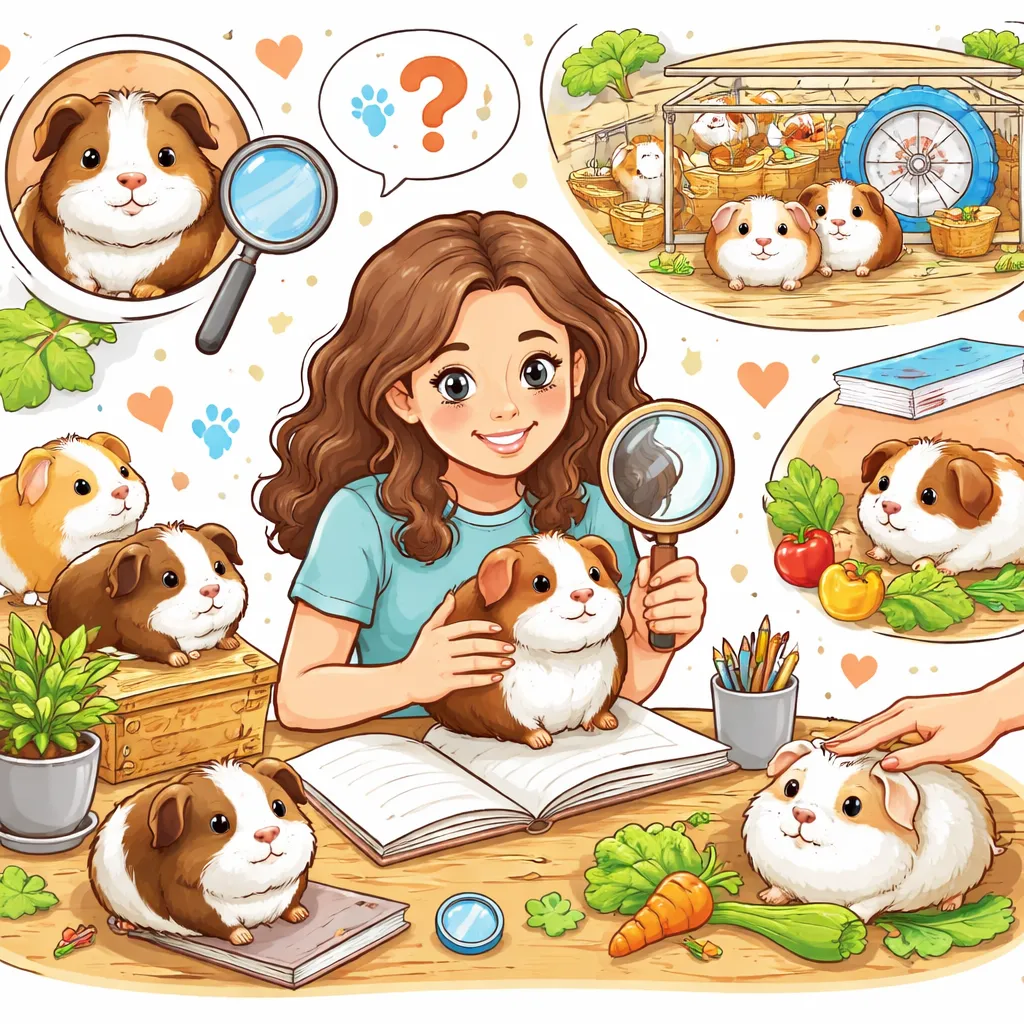

What Is This Animal?
A guinea pig is a small, round rodent with a short body and no tail. It has soft fur in many colors and patterns. Guinea pigs are gentle and social. They make happy sounds like squeaks and wheeks. They are popular pets around the world.
Guinea pigs are not pigs. They are not from Guinea. They come from the Andes mountains in South America. They were domesticated thousands of years ago. People kept them for food and for companionship. Today, they are beloved pets.
These animals live in groups. They are social creatures. They need the company of other guinea pigs. They communicate with sounds. They purr when happy. They wheek loudly when they want food. They popcorn when excited, jumping straight up in the air.
For children, guinea pigs make wonderful pets. Their gentle nature and happy sounds bring joy. Learning about guinea pigs teaches children about pet care, animal behavior, and the importance of companionship.
English Learning About This Animal
Let us learn the English words guinea pig. We say it like this: /ˈɡɪni pɪɡ/. Guinea sounds like “gin-ee.” Pig sounds like “pig.” Put them together: guinea pig. Say it three times. Guinea pig. Guinea pig. Guinea pig.
Now let us learn words about a guinea pig’s body. The fur is soft and can be short or long. The body is round and stocky. The teeth grow all their lives. The whiskers help them sense their surroundings. The pups are baby guinea pigs.
There is a sweet saying about guinea pigs. Pet owners say, “A guinea pig’s wheek is the happiest sound.” This reflects their joyful nature. Another saying is, “Guinea pigs speak with squeaks, purrs, and popcorns.” This describes their many ways of communicating.
These English words help children understand guinea pig anatomy. When they say whiskers, they learn how guinea pigs sense. When they say pups, they know the babies. Parents can practice these words while watching a pet guinea pig. Point to the parts. Say the words together.
Animal Facts and Science Knowledge
Guinea pigs belong to the rodent family Caviidae. Their scientific name means “little pig.” They are also called cavies. They are not related to pigs. Their name may come from the squeaking sounds they make. They come from the Andes Mountains in Peru, Bolivia, and Ecuador.
Wild guinea pigs live in grasslands and rocky areas. They live in groups. They hide in burrows or rock crevices. They are active during the day. They graze on grass and plants. They are prey animals. They depend on their group for safety.
Guinea pigs are herbivores. They eat grass, hay, vegetables, and fruit. They need a constant supply of hay. Their teeth grow all their lives. Chewing hay keeps their teeth healthy. They need vitamin C in their diet. They cannot make their own vitamin C.
Guinea pigs have special abilities. They can run quickly when scared. They can jump straight up in the air when excited. This is called popcorning. They have excellent hearing. They recognize their owners. They purr when petted. They wheek loudly when they hear the refrigerator door.
Guinea pigs are social animals. They need to live with other guinea pigs. A single guinea pig can become lonely and sad. They communicate with many sounds. They groom each other. They sleep together. They play together. Two females or two males can live together peacefully.
How to Interact With This Animal Safely
Guinea pigs make wonderful family pets. They need proper care. If your family is getting guinea pigs, learn about their needs first. They need a large cage, fresh hay, fresh water, and vegetables daily. They need a friend. Never keep a guinea pig alone.
Teach children to handle guinea pigs gently. Guinea pigs are fragile. Sit down when holding them. Support their body with both hands. Let them sit on a lap. Never squeeze them. Do not drop them. A fall can hurt them. Supervise young children with guinea pigs.
Guinea pigs are active during the day. This is when they are awake. Handle them in the day. They enjoy gentle petting. They like being talked to. They will learn their names. They will wheek when they see you coming with food.
Clean the cage regularly. Remove soiled bedding. Provide fresh hay and water. Guinea pigs need a clean home. Involve children in daily care. Let them help with feeding and cleaning. Teach them responsibility.
Guinea pigs need exercise. They need space to run. Provide a safe play area outside the cage. Supervise them. Guinea pigs are curious. They may chew on cords or plants. Keep them safe.
What Can We Learn From This Animal
Guinea pigs teach us about companionship. They need friends. They are happiest in groups. Children learn that friends make life better. Playing with others, sharing, and spending time together bring joy.
Guinea pigs teach us about communication. They use sounds to share feelings. Children learn that talking about feelings helps us. Saying when we are happy, hungry, or scared helps others understand us.
Guinea pigs teach us about gentleness. They are delicate. They need gentle hands. Children learn that being gentle with small creatures shows kindness. Handling pets carefully, speaking softly, and being patient are gentle acts.
Guinea pigs teach us about responsibility. They depend on us for food, water, and care. Children learn that pets need daily care. Feeding, cleaning, and spending time with pets are responsibilities we take seriously.
Fun Learning Activities
Let us make learning about guinea pig fun. One activity is the guinea pig wheek game. Ask your child to make wheeking sounds like a guinea pig. Popcorn by jumping up. Run around and then freeze. Say “guinea pig wheeks” and “guinea pig popcorns.”
Another activity is drawing a guinea pig. Look at pictures of guinea pigs. Notice the round body, short legs, and no tail. Draw a guinea pig eating hay or popcorning. Label the parts. Say the words aloud.
Create a story about two guinea pig friends. Ask your child what they do. Do they eat hay together? Do they wheek for carrots? Do they sleep in their cozy bed? Write a few sentences together. Let your child draw pictures. Read the story aloud.
Make a guinea pig craft. Use brown, white, or black paper for the fur. Add a round body and short legs. Add whiskers from yarn. Add small ears and eyes. Move the craft guinea pig. Practice saying “guinea pig purrs” and “guinea pig popcorns.”
Learn about pet care. If you have guinea pigs, involve children in daily care. Make a chart of tasks. Talk about why each task is important. Use words like “responsibility,” “nutrition,” and “companionship.”
Learn about guinea pig sounds. Listen to recordings of guinea pigs. Identify wheeks, purrs, and chirps. Talk about what each sound means. Use words like “communication,” “happy,” and “excited.”
These simple activities bring learning to life. Children build English vocabulary while playing. They learn science through understanding animal behavior. They develop responsibility through learning about pet care. Learning about guinea pig becomes a journey into the world of gentle, squeaking companions. Each moment spent together strengthens language, curiosity, and a growing appreciation for the small, wheeking creatures that popcorn with joy, teaching us that friends, communication, and gentle care make life sweeter.