
What Is This Animal?
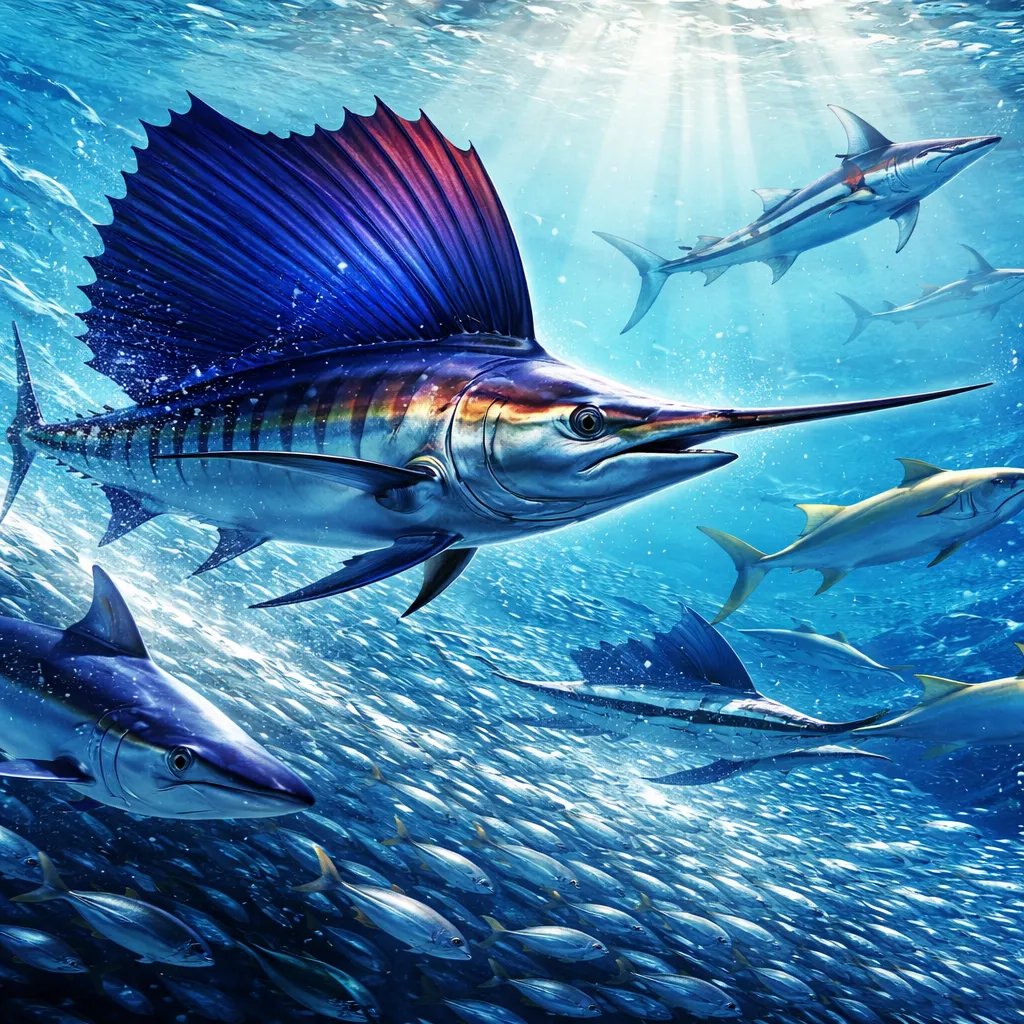
A sailfish is a large, sleek fish with a long, pointed bill and a huge dorsal fin that looks like a sail. Its sail is tall and colorful. It can raise or lower this fin. When raised, it helps the fish herd schools of prey. Sailfish are the fastest fish in the ocean.
Sailfish live in warm tropical and subtropical oceans around the world. They are found in the Atlantic, Pacific, and Indian Oceans. They travel alone or in small groups. They are top predators. They hunt in open water.
These fish are known for their incredible speed. They can swim up to sixty-eight miles per hour. They are built for speed. Their bodies are streamlined. Their bills cut through the water. Their sails help them turn quickly.
For children, sailfish are exciting. Their speed and sail-like fins make them unforgettable. Learning about sailfish teaches children about ocean predators, fish adaptations, and the fastest creatures in the sea.
English Learning About This Animal
Let us learn the English word sailfish. We say it like this: /ˈseɪlfɪʃ/. The word has two parts. Sail sounds like “sale.” Fish sounds like “fish.” Put them together: sailfish. Say it three times. Sailfish. Sailfish. Sailfish.
Now let us learn words about a sailfish’s body. The sail is the large dorsal fin. The bill is long and pointed. The body is streamlined for speed. The eyes are large for spotting prey. The young are called fry.
There is a famous saying about sailfish. Fishermen say, “The sailfish flies through water like a bird through air.” This describes their speed. Another saying is, “The sailfish raises its flag before the hunt.” This refers to their sail.
These English words help children understand sailfish anatomy. When they say sail, they learn about the large fin. When they say fry, they know the young. Parents can practice these words while looking at pictures. Point to the parts. Say the words together.
Animal Facts and Science Knowledge
Sailfish belong to the billfish family Istiophoridae. There are two sailfish species. The Atlantic sailfish lives in the Atlantic Ocean. The Indo-Pacific sailfish lives in the Indian and Pacific Oceans. Sailfish are related to marlins and swordfish.
Sailfish live in warm tropical and subtropical waters. They prefer water temperatures above 75 degrees. They swim near the surface. They migrate with the seasons. They follow warm currents and schools of prey.
Sailfish are carnivores. They eat small fish, squid, and crustaceans. They hunt in groups. They use their sails to herd schools of fish. They slash with their bills to stun prey. They swallow their catch whole.
Sailfish have special abilities. They are the fastest fish in the ocean. They can reach speeds over sixty-eight miles per hour. Their bodies are designed for speed. They have special muscles. Their skin reduces drag. Their bills help them cut through water.
Sailfish are social hunters. They work together. They circle schools of fish. They raise their sails to look bigger. They herd the fish into a tight ball. Then they take turns slashing through the school.
How to Interact With This Animal Safely
Sailfish are wild ocean predators. They are not pets. They are large and powerful. Their bills are sharp. They can be dangerous if threatened. The best way to interact is to learn about them from a distance.
If you go fishing for sailfish, practice catch and release. Sailfish populations need protection. Handle them carefully. Use proper equipment. Let them swim away healthy.
In the wild, never try to touch a sailfish. They are fast and powerful. They can injure people. Watch them from a boat. Keep a safe distance.
Sailfish are important for ocean ecosystems. They are top predators. They help keep fish populations healthy. Overfishing has reduced their numbers. Conservation efforts help protect them.
Learn about sustainable fishing. Choosing sustainable seafood helps protect sailfish. Learning about them helps us make good choices.
What Can We Learn From This Animal
Sailfish teach us about speed. They are the fastest fish. Children learn that speed can be a gift. Moving quickly, acting fast, and being agile help us in life.
Sailfish teach us about teamwork. They hunt together. They herd fish into a ball. Children learn that working together helps us succeed. Helping others, cooperating, and being part of a team are important.
Sailfish teach us about using our tools. They use their sails to hunt. Children learn that we all have tools that help us. Using our strengths, learning new skills, and using what we have are important.
Sailfish teach us about the ocean. They show us that the sea holds the fastest creatures. Children learn that oceans are full of wonders. Protecting the ocean protects sailfish.
Fun Learning Activities
Let us make learning about sailfish fun. One activity is the sailfish hunt game. Ask your child to raise a pretend sail. Swim fast. Circle a school of fish. Herd them together. Slash with a bill. Catch fish. Say “sailfish raises its sail” and “sailfish hunts with its team.”
Another activity is the sailfish speed race. Ask your child to swim like a sailfish. Stretch body long. Move arms like fins. Go fast. Zigzag. Turn quickly. Say “sailfish swims fast” and “sailfish is the fastest fish.”
Draw a sailfish. Look at pictures of sailfish. Notice the tall sail, long bill, and sleek body. Draw a sailfish with its sail raised. Add a school of fish. Label the parts. Say the words aloud.
Create a story about a sailfish hunt. Ask your child how the sailfish hunt. Do they raise their sails? Do they circle the fish? Do they take turns slashing? Write a few sentences together. Let your child draw pictures. Read the story aloud.
Make a sailfish craft. Use blue paper for the body. Add a tall, colorful sail from paper. Add a long, pointed bill. Add a forked tail. Move the craft sailfish. Practice saying “sailfish raises its sail” and “sailfish swims fast.”
Learn about billfish. Compare sailfish to marlins and swordfish. Notice the differences in sails, bills, and speed. Use words like “billfish,” “predator,” and “adaptation.”
Learn about ocean speed. Talk about the fastest ocean animals. Compare sailfish to dolphins, sharks, and tuna. Use words like “speed,” “agility,” and “adaptation.”
These simple activities bring learning to life. Children build English vocabulary while playing. They learn science through understanding ocean predators. They develop appreciation through learning about marine speed. Learning about sailfish becomes a journey into the fast lane of the ocean. Each moment spent together strengthens language, curiosity, and a growing appreciation for the sail-bearing speedsters that teach us that speed, teamwork, and using our gifts help us thrive in the currents of life.