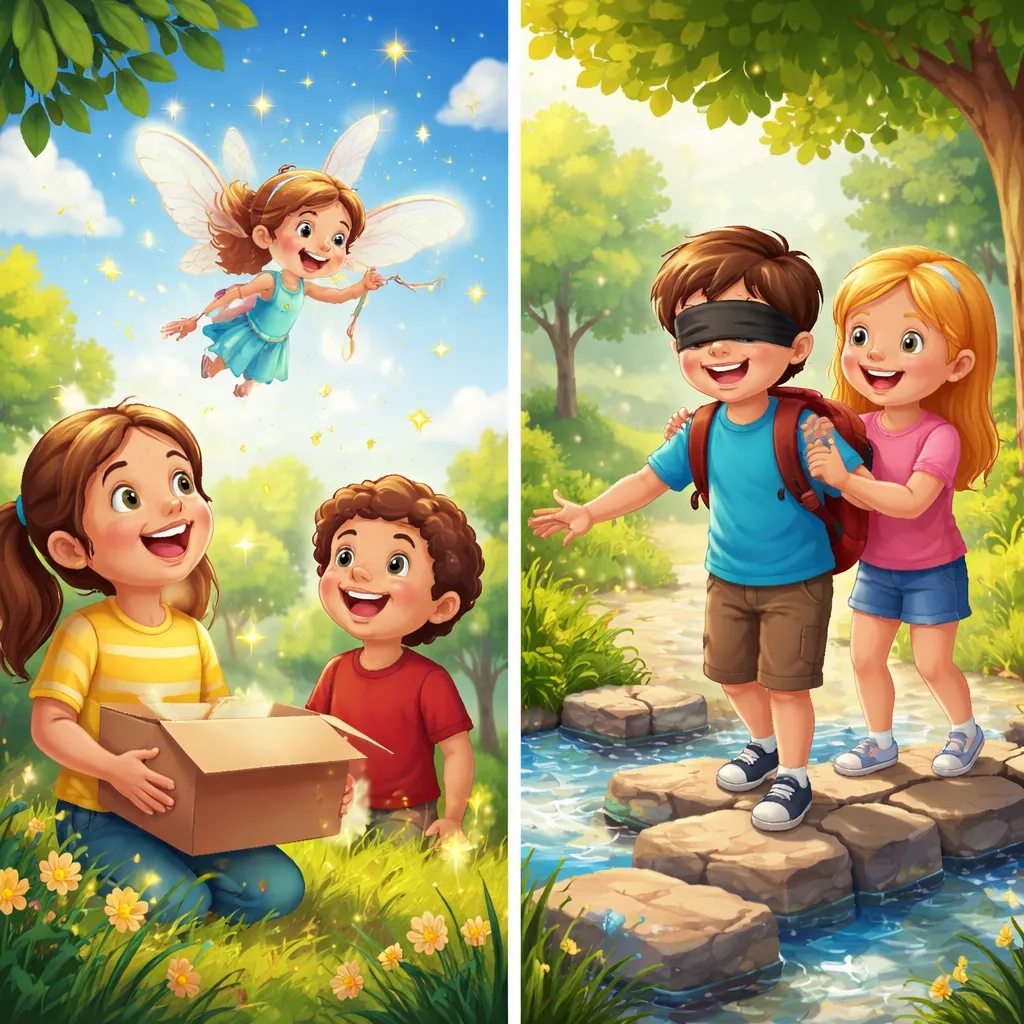

Hello, word explorer! Have you ever been sure about a fact? Or felt safe with a close friend? How do you talk about that? Do you believe in magic? Or do you trust your best friend? They both seem to mean feeling sure about something. But are they the same? They are like two different lights. One is a lightbulb in your mind. One is a warm campfire for your heart. Let's find out! Today, we explore the word friends "believe" and "trust". Knowing their secret is a superpower. It makes you a great thinker and friend. Let's start our confidence adventure!
First, let's be Confidence Detectives. Listen at home. Here are two sentences. "I believe that my lost toy is under the bed, even though I can't see it." "I completely trust my mom to pick me up from school on time." They both talk about being sure. A lost toy. Being picked up. Do they sound the same? One feels like a thought in your head. One feels like a feeling in your heart. Can you sense it? Great observation! Now, let's look at the light.
Adventure! Inside the World of Being Sure
Welcome to the world of being sure! "Believe" and "trust" are two different lights. Think of "believe" as a lightbulb in your mind. It turns on when you think something is true. Think of "trust" as a warm, safe campfire. You sit by it when you feel safe with someone. Both are about confidence. But they shine on different things. Let's learn about each light.
The Mind's Lightbulb vs. The Heart's Campfire Think about the word "believe". "Believe" feels like a lightbulb in your mind. It means to think that something is true or real, even if you aren't 100% certain. It is about your thoughts. I believe in ghosts. Do you believe the story? I believe it will rain. It is about acceptance in your mind. Now, think about "trust". "Trust" feels like a warm campfire. It means to have confidence in someone's honesty, goodness, or ability. It is about a relationship. I trust you to keep a secret. You can trust this rope. "Believe" is the lightbulb. "Trust" is the campfire. One is in the head. The other is in the heart.
Thinking Something is True vs. Relying on Someone Let's compare their focus. "Believe" is about accepting a fact, an idea, or a story. It doesn't have to involve a person. You can believe a rumor, believe in fairies, or believe your eyes. "Trust" is about depending on a person or thing. It involves reliability. You trust a friend, trust a bridge to hold you, or trust a recipe. "Believe" is about truth. "Trust" is about reliability. One is a thought. The other is a bond.
Their Special Word Partners and Grammar Words have best friends. "Believe" loves to team up with facts and ideas. Believe it or not. Believe in yourself. Believe me. It is often followed by "that" or "in". "Trust" teams up with people and character. Trust in someone. Trust fund. Trust fall. Note: We say "I believe you" (I think you are telling the truth). We say "I trust you" (I have confidence in your character). They are different.
Let's visit a school scene. Your teacher says dinosaurs existed long ago. You believe her because she shows you fossils. This is accepting a fact as true. Your teacher asks you to lead a group. You are nervous. She says, "I trust you to do a great job." This is having confidence in your ability. Using "trust" for the dinosaur fact is too strong. Using "believe" for leading the group is okay, but "trust" better shows her confidence in you.
Now, let's go to the playground. A friend says they saw a rare bird. You might believe them or not. This is about accepting their story. You are on a high slide. You need a friend to spot you. You trust them to catch you if you fall. The word "believe" paints the thought about the story. The word "trust" paints the deep reliance on your friend's help.
Our Little Discovery So, what did we find? "Believe" and "trust" are both about feeling sure. But they are different. "Believe" means to think that something is true or real. It happens in your mind. "Trust" means to have confidence in someone's honesty, ability, or goodness. It is a feeling in your heart about a person or thing. You can believe a fact. You trust a person. Knowing this helps you share your thoughts and feelings perfectly.
Challenge! Become a Confidence Word Champion
Ready for a thoughtful test? Let's try your new skills!
"The Best Choice" Challenge Let's imagine a nature scene. A young deer hears a rustle in the bushes. It might believe there is a predator nearby, so it freezes. This is the deer's mind accepting a possibility as true. The young deer always stays close to its mother. It trusts its mother to protect it and show it where to find food. This is the deer's deep reliance and feeling of safety. "Believe" wins for the deer's thought about danger. "Trust" is the champion for the deer's bond with its mother.
"My Sentence Show" Your turn to create! Here is your scene: Working on a team project for school. Can you make two sentences? Use "believe" in one. Use "trust" in the other. Try it! Here is an example: "I believe our project idea is creative and will get a good grade." This is a thought about the idea's quality. "I trust my partner to finish their part of the work on time." This is confidence in the partner's reliability. Your sentences will show two kinds of confidence!
"Eagle Eyes" Search Look at this sentence. Can you find the word that could be better? Let's check a home context. "I really believe this old ladder to hold my weight, so I'll climb it to fix the roof." Hmm. The sentence is about having confidence in an object's reliability. The word "trust" is the correct choice for relying on something. "I really trust this old ladder to hold my weight, so I'll climb it to fix the roof." "Believe" is for thoughts, not for relying on physical objects. Did you spot it? Excellent word work!
Harvest and Action! Turn Knowledge Into Your Superpower
Great exploring! We started thinking "believe" and "trust" were the same. Now we know they are two different lights. We can turn on the mind's lightbulb of "believe". We can sit by the heart's campfire of "trust". You can now talk about your thoughts and feelings with perfect accuracy. This is a great skill for learning and friendship.
What you can learn from this article: You can now feel that "believe" is about thinking that something is true or real, like believing a story, a fact, or an idea. You can feel that "trust" is about having confidence in someone's honesty, ability, or goodness, or in the reliability of something. You know that you can believe in magic, but you trust your best friend. You learned to match the word to the focus: "believe" for thoughts and ideas, "trust" for people and reliability.
Life practice application: Try your new skill today! Think of one thing you believe. Think of one person you trust. Tell them why. Listen to your feelings. Is it a thought (believe) or a feeling of safety (trust)? You are now a master of confidence words! Keep thinking and building trust in your relationships.