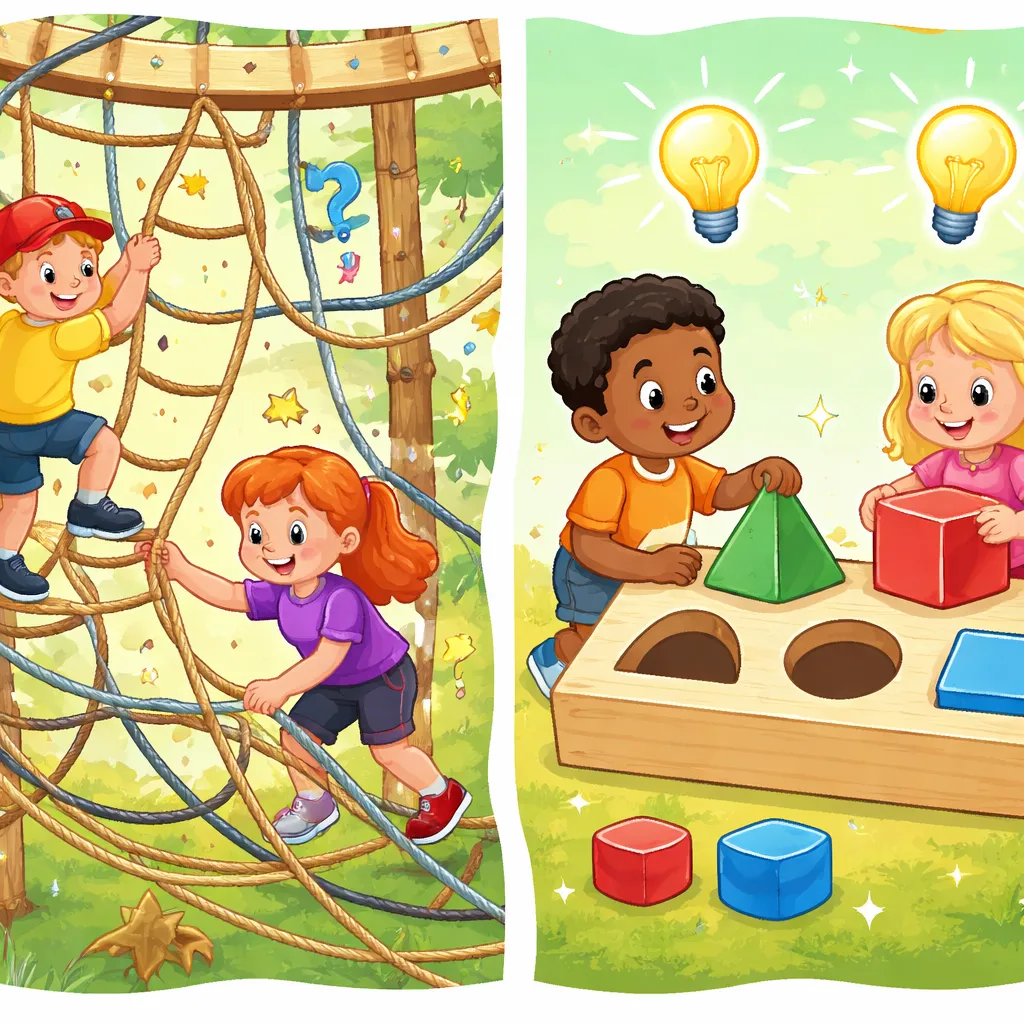

Hello, word explorer! Have you ever finished a puzzle quickly? Or learned a new game fast? How do you describe that? You might say, "That was easy!" or "The rules are simple." They both seem to mean "not hard." But are they the same? They feel like two different paths to the same place. One path is smooth and flat. The other path is straight and clear. Let's find out! Today, we explore the word friends "easy" and "simple". Knowing their secret is a thinking superpower. It helps you explain ideas perfectly. Let's start our adventure!
First, let's be Thought Scientists. Listen at home. Here are two sentences. "This homework question is easy for me." "My grandma gave me a simple recipe to follow." They both talk about something not difficult. Homework. A recipe. Do they sound identical? One feels like it takes little effort. One feels like it has few parts. Can you sense it? Great observation! Now, let's look closer with our word microscope.
Adventure! Inside the World of "Not Hard"
Welcome to the world of "not hard"! "Easy" and "simple" are two different tools. Think of "easy" as a smooth, flat road. It is about how little effort you need. Think of "simple" as a clear, straight path. It is about how few twists and turns there are. Both get you there without trouble. But they describe different things. Let's learn about each one.
The Smooth Road vs. The Straight Path Think about the word "easy". "Easy" feels like a smooth, flat road. It focuses on the effort needed. It means not requiring much work or skill. The test was easy. It is easy to ride a bike. The action feels light. Now, think about "simple". "Simple" feels like a clear, straight path. It focuses on the structure. It means not complicated or having few parts. The plan is simple. A simple drawing. The idea feels clear. "Easy" is about the energy you use. "Simple" is about the number of steps or parts. One is about effort. The other is about design.
The Level of Effort vs. The Level of Complexity Let's compare their focus. "Easy" talks about how hard something is to do. It is about the challenge level. It is often about actions. Breathing is easy. This game is easy to play. "Simple" talks about how complicated something is. It is about the number of elements. It is often about things or ideas. A simple machine. A simple explanation. A math problem can be simple (one step) but not easy (if the step is tricky). A task can be easy (like clicking a button) but not simple (if the machine behind it is complex). They look at different sides.
Their Special Word Partners and Common Phrases Words have best friends. "Easy" loves to team up with verbs. It often comes before "to" plus a verb. It is easy to see. This book is easy to read. It also pairs with nouns about tasks. An easy job. An easy decision. "Simple" loves to team up with nouns about ideas or objects. A simple life. A simple answer. A simple fact. Note the common phrase: "It's as simple as that!" (meaning very straightforward). "Easy" has phrases like "Take it easy" (relax) and "Easy does it" (be careful). They are different teams.
Let's visit a school scene. Your teacher explains a new concept. She uses only two clear steps. You think, "That explanation was simple." This means it was clear and not complicated. Then, she gives you a practice exercise. You finish it in one minute. You say, "That was easy." This means it required little effort for you. Using "easy" for the explanation is okay, but "simple" better describes its clear structure. Using "simple" for the exercise is fine, but "easy" better describes your low effort.
Now, let's go to the playground. Your friend explains a new game. The rules are just: run to the tree and back. You say, "The rules are simple." This describes the low number of rules. You play the game and win without trying hard. You say, "That game is easy." This describes the low challenge for you. The word "simple" paints the clear rules. The word "easy" paints the low effort to win.
Our Little Discovery So, what did we find? "Easy" and "simple" are both positive, but they focus on different things. "Easy" is about low effort or low difficulty. It answers "How hard is it to do?". "Simple" is about low complexity or few parts. It answers "How complicated is it?". Something can be simple but not easy. Something can be easy but not simple. Knowing this helps you choose the right word for the right idea.
Challenge! Become a Word Choice Champion
Ready for a fun test? Let's try your new skills!
"The Best Choice" Challenge Let's imagine a nature scene. A bird builds a nest. The nest is made of only twigs and grass. The design is not complicated. The design is... what? Simple or easy? The design is simple. It has few parts. Now, for the bird, collecting twigs is a normal, everyday task. It does it without much trouble. For the bird, building is easy. This describes the low effort for the bird. "Simple" wins for the design. "Easy" is the champion for the bird's effort.
"My Sentence Show" Your turn to create! Here is your scene: Learning to write your name. Can you make two sentences? Use "easy" in one. Use "simple" in the other. Try it! Here is an example: "Writing the letter 'O' is easy for me now." This focuses on the low effort. "My name has a simple spelling." This focuses on the lack of complicated letters. Your sentences will highlight two different ideas!
"Eagle Eyes" Search Look at this sentence. Can you find the word that could be better? Let's check a home context. "The instructions for the toy were easy, with over twenty steps and many diagrams." Hmm. The phrase "over twenty steps" suggests complexity, not low effort. The word "simple" would be odd here because twenty steps is not simple. But the sentence says the instructions were "easy". Maybe the steps were clear? Actually, the word "simple" is wrong because of the many steps. The word "easy" might fit if the steps were clear to follow. But the point is: with twenty steps, they are not simple. Let's rephrase: The instructions were not simple because they had over twenty steps. But they might have been easy to follow. The mistake is using "easy" to describe the complexity. A better version: "The instructions for the toy were not simple, with over twenty steps." Did you spot it? Great thinking!
Harvest and Action! Turn Knowledge Into Your Superpower
Great exploring! We started thinking "easy" and "simple" were the same. Now we know they look at two different sides. We can feel the smooth road of "easy". We can see the straight path of "simple". You can now describe tasks and ideas with perfect accuracy. This is a powerful thinking tool.
What you can learn from this article: You can now feel that "easy" describes how little effort or skill is needed to do something. You can feel that "simple" describes how few parts or how little complexity something has. You know that a recipe can be simple (few ingredients) but not easy (requires skill). You learned to ask: "Am I talking about effort (easy) or about design (simple)?"
Life practice application: Try your new skill today! Look at a task, like making your bed. Is it easy (takes little effort) or simple (has few steps)? Tell a friend about a simple game. Tell them about an easy homework problem. Listen to how adults use these words. You are now a master of precision! Keep exploring the wonderful world of words.