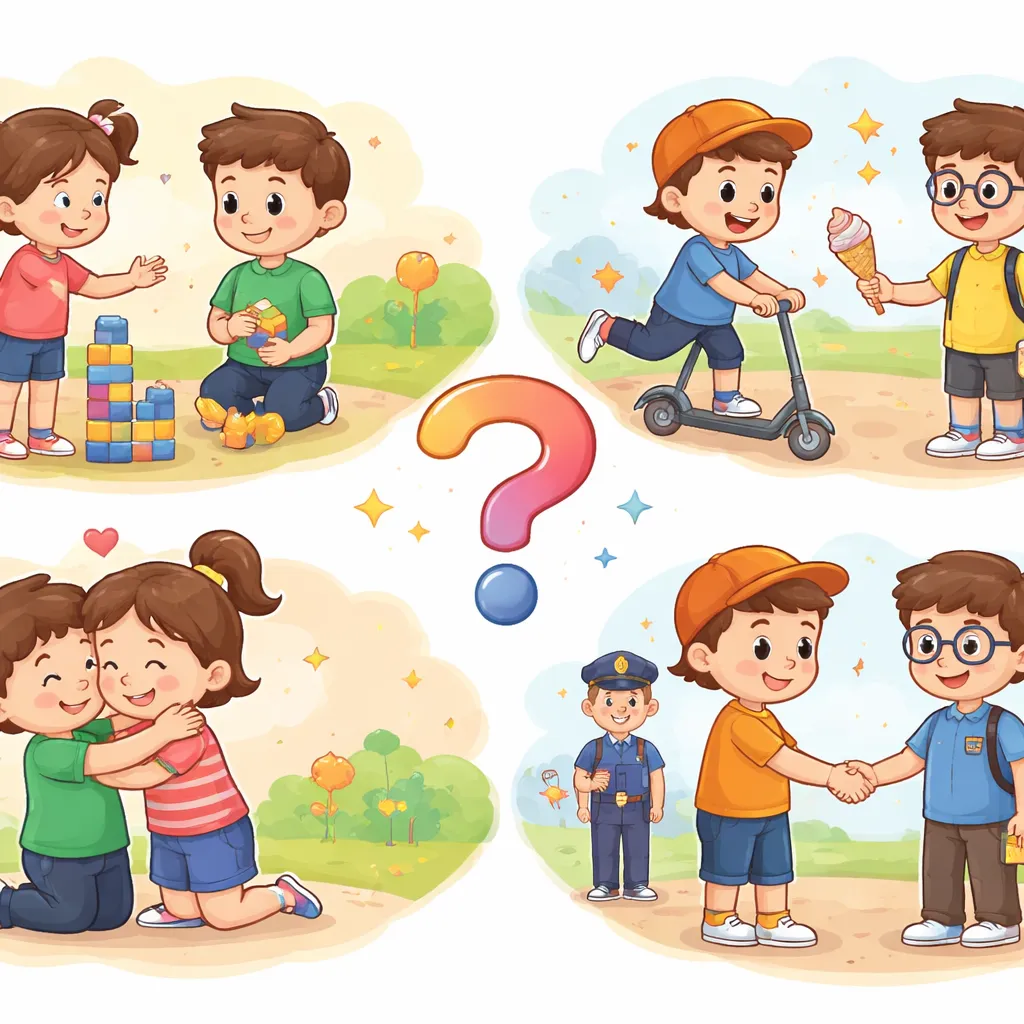

Hello, friendship hero! Have you ever been really upset with a friend? What made you feel better? Did you forgive them? Or did you pardon them? They both seem to mean letting go of a bad feeling. But are they the same? They are like two different ways to fix a broken toy. One is a warm, heartfelt hug. One is an official stamp. Let's find out! Today, we explore the word friends "forgive" and "pardon". Knowing their secret is a superpower. It makes you a true peacemaker. Let's start our mending adventure!
First, let's be Heart Detectives. Listen at home. Here are two sentences. "I decided to forgive my sister for using my crayons after she said she was truly sorry." "The teacher said she would pardon my late homework this one time because of my sick day." They both talk about not punishing someone. Used crayons. Late homework. Do they sound the same? One feels like a personal, warm feeling in your heart. One feels like an official rule or a formal excuse. Can you sense it? Great observation! Now, let's look at the mending.
Adventure! Into the World of Letting Go
Welcome to the world of mending hurts! "Forgive" and "pardon" are two different fixers. Think of "forgive" as a warm, heartfelt hug between friends. It happens in your heart. It is personal and emotional. Think of "pardon" as an official stamp on a paper. It is more formal. It is about rules, not feelings. Both can stop a punishment. But one mends hearts, the other mends rules. Let's learn about each fixer.
The Heart's Warm Hug vs. The Official Stamp Think about the word "forgive". "Forgive" feels like a warm hug. It is a personal, emotional word. It means to stop feeling angry or upset with someone. You let the bad feeling go. Can you forgive me? I forgave my friend. Please forgive my mistake. It is about your heart. Now, think about "pardon". "Pardon" feels like an official stamp. It is a more formal, legal word. It often means an official order that excuses a crime or mistake. It stops the punishment. The governor can pardon someone. Pardon me? She was pardoned. "Forgive" is the hug. "Pardon" is the stamp. One is personal. The other is official.
A Personal Feeling vs. A Formal Excuse Let's compare their nature. "Forgive" is about your personal feelings. You choose to forgive someone in your heart. It is about relationships and emotions. You forgive a friend for a secret. You forgive someone's rudeness. "Pardon" is usually about authority and rules. A judge, a governor, or a teacher can pardon. It excuses someone from a formal penalty. You might say "Pardon me" to be very polite. This is a fixed phrase. "Forgive" is for hearts. "Pardon" is for rules. One is an emotion. The other is a decision.
Their Special Word Partners and Common Uses Words have best friends. "Forgive" loves to team up with people and personal things. Forgive someone. Forgive and forget. Please forgive me. It is deeply personal. "Pardon" teams up with official things. Pardon an offense. Grant a pardon. Pardon me? (a polite interruption). Note: "I beg your pardon" is a formal phrase. It means "excuse me" or "what did you say?"
Let's visit a school scene. Your best friend said something mean. It hurt your feelings. After talking, you feel better. You tell them, "I forgive you." This is about healing your friendship and your heart. The principal has a rule. Three late slips mean detention. You have two. You get a third, but with a good note. The principal might pardon this one late slip. This is an official excuse from the rule's punishment. Using "pardon" for your friend's mean words sounds cold and strange. Using "forgive" for the late slip is too emotional; "pardon" fits the rule.
Now, let's go to the playground. A teammate didn't pass the ball. Your team lost. You are angry. Later, they explain they were scared. You decide to forgive them. This is a personal choice to let go of anger. The referee makes a bad call. Everyone shouts! The referee says, "I pardon that mistake. Let's replay the point." The word "forgive" paints your personal feeling. The word "pardon" paints the referee's official correction.
Our Little Discovery So, what did we find? "Forgive" and "pardon" can both mean to excuse. But they are used in very different ways. "Forgive" is a personal, emotional word. It is about stopping anger in your heart. It is for relationships. "Pardon" is a formal, official word. It is about excusing someone from a punishment or rule. It is for authorities. You forgive a friend. A king might pardon a prisoner. Knowing this helps you use the right word for the right situation.
Challenge! Become a Peacemaker Word Champion
Ready for a heart test? Let's try your new skills!
"The Best Choice" Challenge Let's imagine a nature scene. Two young foxes are play-fighting. One bites too hard. The hurt one yelps and runs away. Later, the biter brings a gift of a berry. The hurt fox sniffs it, then nuzzles the other. It seems to forgive its sibling. This is a personal, emotional choice to be friends again. In the animal kingdom, the Lion King makes a law. "No hunting near the river." A young antelope breaks it. The Lion King listens to its reason. He decides to pardon the antelope this time. This is a formal, ruler's decision. "Forgive" wins for the fox's heart. "Pardon" is the champion for the Lion King's law.
"My Sentence Show" Your turn to create! Here is your scene: Your little brother accidentally tore your favorite poster. Can you make two sentences? Use "forgive" in one. Use "pardon" in the other. Try it! Here is an example: "It was an accident, so I will forgive my brother even though I'm sad." This is about your personal feelings. "My mom said she would pardon him from his early bedtime as a one-time exception." This is about an official rule change. Your sentences will show two types of excuses!
"Eagle Eyes" Search Look at this sentence. Can you find the word that could be better? Let's check a home context. "After I ate the last cookie, I asked my dad to forgive my snack crime with a smile." Hmm. This is a playful, family situation. The word "pardon" is the more fitting, playful, and formal-sounding word here. It matches the joke about a "snack crime." "After I ate the last cookie, I asked my dad to pardon my snack crime with a smile." Using "forgive" is okay, but "pardon" makes the joke about a silly "law" funnier. Did you spot it? Excellent word work!
Harvest and Action! Turn Knowledge Into Your Superpower
Great exploring! We started thinking "forgive" and "pardon" were the same. Now we know they are two different fixers. We can give the heartfelt hug with "forgive". We can give the official stamp with "pardon". You can now talk about mending mistakes with perfect accuracy. This is a great skill for a kind heart and a smart mind.
What you can learn from this article: You can now feel that "forgive" is the warm, personal word you use when you stop being angry or upset with someone in your heart, like forgiving a friend for breaking a promise or forgiving someone for a hurtful word. You can now feel that "pardon" is a more formal word, often used by someone in authority to officially excuse a mistake or cancel a punishment, like a teacher pardoning late work, or in the polite phrase "pardon me." You know that you forgive your sister after a fight, but a principal might pardon a minor rule break. You learned to match the word to the situation: "forgive" for personal feelings and relationships, "pardon" for formal excuses and authority.
Life practice application: Try your new skill today! Think about a time someone upset you. Did you choose to forgive them in your heart? Think about a rule. Can someone in charge pardon a small break? Talk to a family member about a time you chose to forgive. Make a silly rule at home and "pardon" someone! You are now a master of peacemaker words! Keep using your big heart and smart words.